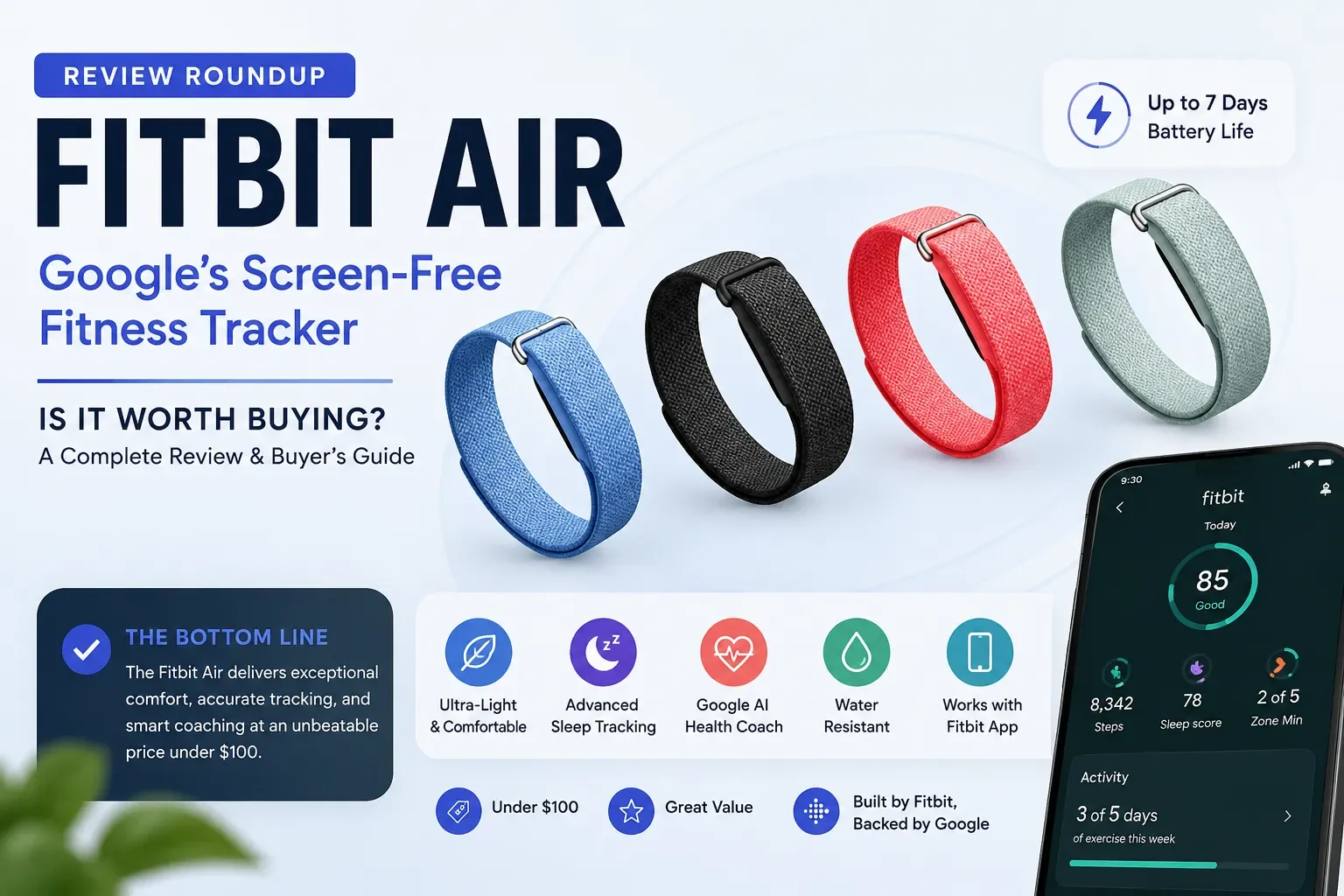
Google has taken a bold step in wearable technology with the launch of the Fitbit Air, a lightweight, screen-free fitness tracker that prioritizes comfort, health insights, and long battery life over notifications and smartwatch features. Instead of competing directly with devices like the Apple Watch or Galaxy Watch, Fitbit Air targets users who want a wearable that quietly tracks their health without constantly demanding attention.
The concept is simple: remove the display, reduce distractions, improve comfort, and let the companion app deliver all your health data. It's a philosophy that's increasingly appealing to users who want better sleep tracking and wellness insights without another glowing screen on their wrist.
So, is the Fitbit Air worth buying? Here's our review roundup based on publicly available information, expert impressions, and the device's overall feature set.
Quick Verdict
Rating: 4.6/5
Best For
Sleep tracking
Everyday fitness
Beginners
People who dislike bulky smartwatches
Users wanting long battery life
Android users invested in Google's ecosystem
Not Ideal For
People who want a smartwatch display
Users needing on-wrist notifications
Athletes who require advanced training metrics
Buyers who don't want AI-assisted health features
What Makes Fitbit Air Different?
Most fitness trackers try to become mini smartphones. Fitbit Air goes in the opposite direction.
Instead of adding more features to your wrist, Google has removed the screen entirely. The tracker quietly collects health and fitness data while the Fitbit app becomes the primary place to view metrics, trends, and coaching.
This minimalist approach reduces distractions while encouraging users to focus on long-term health habits rather than constantly checking notifications.
Design: Simplicity Takes Center Stage
One of Fitbit Air's biggest strengths is its understated design. Without a display, it resembles a stylish bracelet more than a traditional fitness tracker.
The lightweight construction makes it easy to wear throughout the day, and many users report forgetting it's even on their wrist. That matters because consistency is key to collecting accurate health data, especially for sleep tracking.
The device is also water-resistant, making it suitable for workouts, rainy days, and everyday use.
Comfort: The Standout Feature
Across early impressions and reviews, one theme appears consistently: comfort.
Unlike many smartwatches that can feel heavy during workouts or sleep, Fitbit Air is designed to stay out of the way. Its lightweight build and slim profile make it especially appealing for users who wear a tracker 24/7.
Comfort is more than a luxury—it improves data quality. If you're willing to wear the device day and night, you'll get more complete insights into sleep, heart rate, and recovery.
Verdict: ★★★★★
Battery Life: A Refreshing Change
Battery anxiety is a common complaint with smartwatches. Fitbit Air addresses this with a battery life that lasts around a week under typical usage.
For many users, this means:
Fewer charging interruptions
Continuous sleep tracking
Reliable fitness monitoring during travel
Less time worrying about battery percentages
Fast charging further reduces downtime, allowing users to get back to tracking quickly.
Verdict: ★★★★★
Sleep Tracking Is One of Fitbit Air's Biggest Strengths
Sleep tracking has long been one of Fitbit's strongest features, and Fitbit Air continues that tradition.
The tracker monitors:
Sleep duration
Sleep stages
Sleep score
Resting heart rate
Overnight trends
Automatic nap detection
Instead of simply showing numbers, the Fitbit app presents trends over time, helping users identify habits that improve—or reduce—sleep quality.
For anyone trying to improve recovery, energy levels, or overall wellness, this is arguably the device's most valuable feature.
Google AI Coach: A New Approach to Fitness
One of Fitbit Air's defining additions is Google's AI-powered coaching experience.
Rather than offering generic workout reminders, the AI can suggest personalized plans, answer health-related questions, and recommend activities based on your goals.
For beginners, this can make fitness feel less intimidating by providing structured guidance instead of expecting users to create their own routines.
However, it's worth remembering that AI-generated suggestions are designed for general wellness—not medical advice or personalized healthcare.
Nutrition and Hydration Tracking
Fitbit Air extends beyond exercise by supporting healthy lifestyle habits.
Users can log meals, monitor hydration, and track nutritional goals through the Fitbit app. This creates a more complete wellness experience rather than focusing solely on steps or calories burned.
The emphasis on building healthy routines makes Fitbit Air particularly attractive for users beginning a long-term fitness journey.
Living Without a Screen
The biggest question surrounding Fitbit Air is simple:
Can you live without a display?
The answer depends entirely on how you use wearable technology.
If you primarily use a smartwatch to:
Read messages
Reply to notifications
Check the time constantly
Control music
Install apps
then Fitbit Air will probably feel limiting.
But if your wearable mainly exists to:
Track sleep
Count steps
Measure heart rate
Encourage healthier habits
then the lack of a display may actually become one of its greatest advantages.
Many users appreciate that it reduces digital distractions while still collecting meaningful health data.
Fitbit Air vs Traditional Smartwatches
| Feature | Fitbit Air | Traditional Smartwatch |
|---|---|---|
| Screen | No | Yes |
| Notifications | No | Yes |
| Battery | Around one week | Usually 1–2 days |
| Sleep Comfort | Excellent | Good to average |
| Health Tracking | Strong | Strong |
| Apps | Phone companion | On-device apps |
The choice depends less on specifications and more on lifestyle.
Fitbit Air vs Whoop
Both devices focus on health tracking rather than smartwatch features, but there are notable differences.
Fitbit Air offers a lower entry price and integrates tightly with Google's health ecosystem, while Whoop focuses heavily on recovery analytics and requires an ongoing membership.
For casual fitness users, Fitbit Air is likely the more approachable option.
Software Experience
The Fitbit app remains one of the platform's biggest strengths.
It organizes data into clear categories, making it easy to review:
Daily activity
Sleep history
Heart rate trends
Workout summaries
Wellness insights
When combined with Google's AI-powered recommendations, the software creates an experience that feels more personal than simply displaying raw fitness data.
Where Fitbit Air Could Improve
No device is perfect.
Potential drawbacks include:
No watch face
No notifications
Heavy reliance on the smartphone app
Some premium features require a subscription
AI suggestions may occasionally misunderstand user input
These limitations won't bother everyone, but they are worth considering before purchasing.
Who Should Buy Fitbit Air?
Fitbit Air is an excellent choice if you:
Prioritize comfort
Want better sleep tracking
Prefer fewer digital distractions
Need longer battery life
Like Google's ecosystem
Want an affordable fitness tracker
Who Should Skip It?
You may want another wearable if you:
Need smartwatch functionality
Frequently reply to notifications
Want standalone apps
Prefer seeing health data directly on your wrist
Don't want AI-assisted coaching
Pros
Extremely lightweight and comfortable
Excellent sleep tracking
Around a week of battery life
Fast charging
Helpful AI coaching features
Affordable entry price
Clean, minimalist design
Cons
No display
Requires phone for all detailed information
Some advanced features need a premium subscription
AI recommendations aren't always perfect
Frequently Asked Questions
Is Fitbit Air a smartwatch?
No. Fitbit Air is a dedicated fitness tracker designed without a display.
Does Fitbit Air track sleep?
Yes. Sleep tracking is one of its strongest features, offering detailed nightly insights and long-term trends.
How long does the battery last?
Google advertises up to approximately one week of battery life, depending on usage.
Is Fitbit Air waterproof?
It offers water resistance suitable for everyday activities and workouts, though users should always follow Google's official care recommendations.
Is Google Health Premium required?
No. Fitbit Air works without it, but Premium unlocks additional AI-powered coaching, wellness insights, and advanced analytics.
Final Verdict
Fitbit Air represents a refreshing shift in wearable technology. Instead of trying to replace your phone or become another smartwatch, it focuses on doing a handful of things exceptionally well: tracking health, encouraging better habits, and staying comfortable enough to wear all day and night.
Its minimalist design won't appeal to everyone, especially those who rely on wrist notifications or interactive apps. But for users seeking a distraction-free fitness tracker with reliable sleep monitoring, long battery life, and thoughtful AI-powered guidance, Fitbit Air stands out as one of the most compelling options in its price range.
If your goal is to improve your health without adding another screen to your daily life, Fitbit Air is well worth considering.