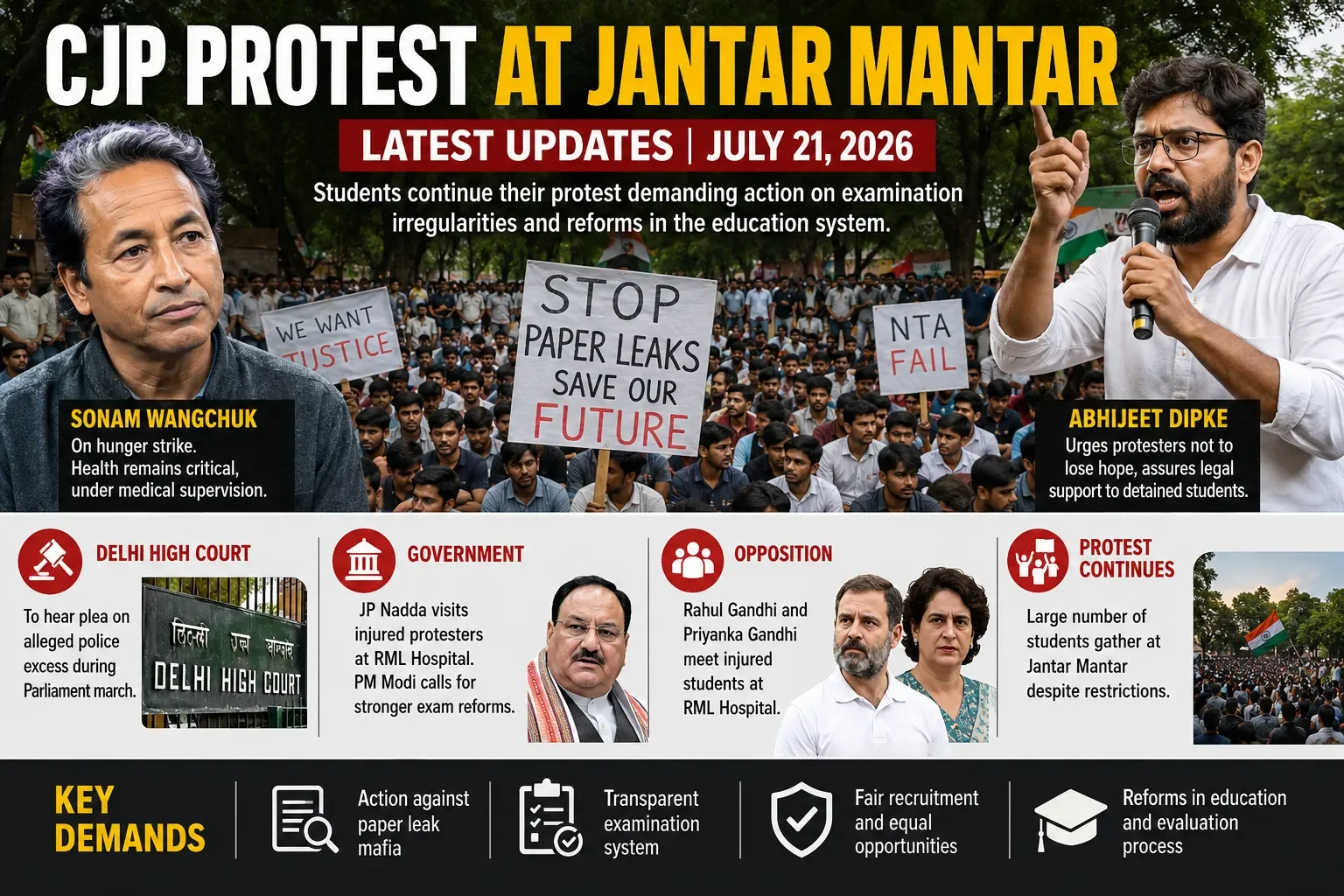
The ongoing Cockroach Janta Party (CJP) protest at Jantar Mantar, New Delhi, has become one of India's biggest youth-led demonstrations of 2026. What started as a movement demanding accountability over alleged examination irregularities has evolved into a nationwide conversation around education reforms, youth employment, police action, and democratic protest.
CJP Protest at Jantar Mantar: Latest Updates on Sonam Wangchuk, Delhi HC Hearing & Government Response
On July 21, 2026, the situation remained tense as thousands of protesters gathered once again at Jantar Mantar following clashes with Delhi Police during the previous day's Parliament march. Authorities continued to maintain restrictions around the protest site while political leaders, courts, and civil society closely monitored developments.
Why Is the CJP Protest Happening?
The Cockroach Janta Party (CJP) has been leading demonstrations demanding accountability over alleged examination paper leaks and broader reforms in India's public examination system.
The movement has gained significant support from students, parents, educators, and activists across the country. Protesters have also demanded greater transparency in recruitment processes and stronger safeguards to prevent future examination irregularities.
What Happened on July 21?
Tuesday witnessed fresh developments at the protest site:
- Protesters returned to Jantar Mantar despite heightened security.
- Delhi Police continued enforcing restrictions around the Parliament area.
- Large crowds gathered throughout the day.
- Student leaders urged protesters to continue peaceful demonstrations.
- Several detained protesters sought legal assistance through CJP's legal support initiative.
Abhijeet Dipke Urges Protesters Not to Lose Hope
CJP convener Abhijeet Dipke addressed supporters after Monday's clashes, encouraging students to remain peaceful and continue their movement.
According to updates shared during the protest, Dipke also visited injured protesters receiving treatment in hospitals and assured legal support for those detained during the demonstrations.
Sonam Wangchuk's Health Remains a Major Concern
Environmental activist Sonam Wangchuk, who has been observing a prolonged hunger strike in solidarity with the movement, continues to remain under medical supervision.
Hospital officials stated that he has reportedly declined intravenous fluids despite repeated medical advice. During proceedings before the Delhi High Court, medical experts emphasized that Wangchuk requires continuous monitoring due to his health condition.
Delhi High Court to Hear Plea on Police Action
A fresh legal development emerged when the Delhi High Court agreed to hear a petition alleging excessive police force during Monday's Parliament march.
The petition seeks judicial examination of the crowd-control measures used against protesters and raises questions regarding the handling of peaceful demonstrations.
Separately, the court has also been hearing matters related to Sonam Wangchuk's medical care and treatment.
Government Response
Union Minister J. P. Nadda visited injured protesters at Ram Manohar Lohia Hospital and held discussions with doctors regarding their treatment.
Meanwhile, Prime Minister Narendra Modi called for strengthening India's public examination system and emphasized the need for a more reliable and transparent process amid growing public concern.
Opposition Leaders Visit Injured Students
Senior opposition leaders, including Rahul Gandhi and Priyanka Gandhi, visited injured protesters receiving treatment at RML Hospital.
The opposition has criticized the police response while demanding a detailed discussion on the issue during Parliament's Monsoon Session.
Key Timeline of Events
| Date | Development |
|---|---|
| July 17 | Delhi HC directs continuous monitoring of Sonam Wangchuk's health. |
| July 18 | Wangchuk shifted from Jantar Mantar to hospital amid controversy. |
| July 20 | Parliament march witnesses clashes between protesters and police. |
| July 21 | Protest resumes at Jantar Mantar; Delhi HC agrees to hear plea on police action. |
Frequently Asked Questions (FAQ)
Why are students protesting at Jantar Mantar?
The protests are centered on demands for accountability over alleged examination irregularities, reforms in India's examination system, transparency in recruitment, and action against those responsible for paper leaks.
Who is Abhijeet Dipke?
Abhijeet Dipke is the convener of the Cockroach Janta Party (CJP), which has been leading the ongoing youth-led protests in Delhi.
Why is Sonam Wangchuk involved?
Environmental activist Sonam Wangchuk joined the movement through a hunger strike in support of the protesters' demands. His health has since become a major focus of court proceedings and public attention.
What is the Delhi High Court hearing about?
The court is examining matters related to Sonam Wangchuk's medical treatment as well as a separate plea alleging excessive police force during the Parliament march.
What Happens Next?
The coming days are expected to remain significant as:
- The Delhi High Court hears petitions concerning the protest.
- Medical updates on Sonam Wangchuk continue.
- Parliament's Monsoon Session addresses concerns raised by opposition parties.
- Protest organizers decide the next phase of their movement.
- Authorities review security arrangements around Jantar Mantar.
Conclusion
The CJP protest has emerged as one of the most closely watched public movements of 2026, bringing together questions about educational reforms, youth aspirations, democratic rights, and governance. With legal proceedings underway, political attention increasing, and thousands continuing to participate, developments over the next few days are likely to shape the future direction of the movement. Readers should continue following verified updates, as the situation remains dynamic.