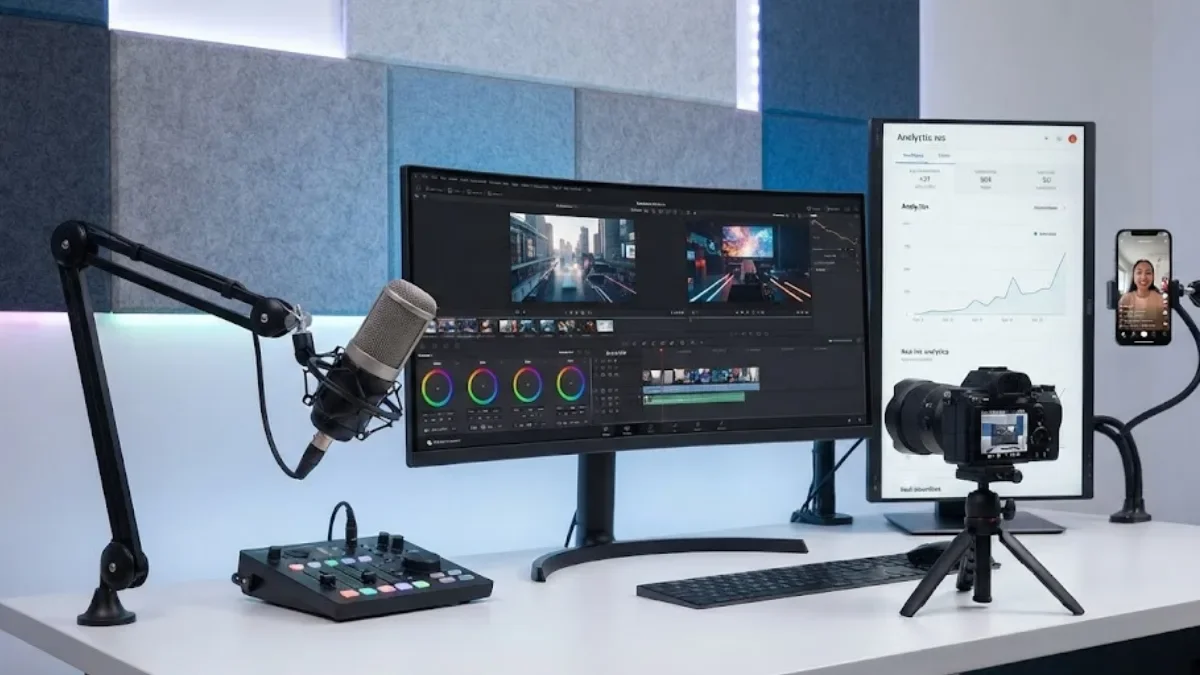
The digital landscape has crossed a definitive threshold. Content creation is no longer viewed merely as an experimental hobby or a casual weekend side hustle. According to recent market reports by Future Market Insights, the global content creation market is valued at approximately USD 277.2 billion, while India's localized creator ecosystem continues to surge at a compound annual growth rate exceeding 20 percent. With millions of active creators entering the market, prospective digital entrepreneurs are increasingly asking a fundamental question: Is entering content creation in 2026 still a viable and profitable decision?
The Shift from Hobby to Structured Enterprise
In previous years, building an audience relied heavily on viral luck and raw video output. Today, the sector operates as a formal digital economy. Major platforms like YouTube, Instagram, and specialized subscription networks have introduced sophisticated monetization layers, shifting reliance away from pure ad-revenue splits toward multi-stream business models.
Independent creators now capture a dominant share of platform end-use demand, leveraging direct-to-consumer digital products, community memberships, and targeted affiliate marketing. This maturation means that individual operators function essentially as micro-media companies, requiring structured strategies in search optimization, audience retention, and brand partnerships.
The Role of Generative AI in Production
A major catalyst shaping the sector is the integration of accessible generative artificial intelligence. Rather than replacing human creators, AI tools have lowered technical barriers, enabling multi-language translation, automated audio dubbing, streamlined script ideation, and advanced caption generation. For Indian creators in particular, AI tools offer a distinct scaling advantage by opening up regional language markets—such as Hindi, Tamil, Telugu, and Bengali—allowing a single creator to address multilingual audiences efficiently.
Market Realities: Challenges and Income Concentration
Despite explosive macro growth, industry analysts highlight significant structural challenges. Market data indicates an income concentration curve where a small percentage of top-tier creators capture the majority of lucrative brand sponsorships, while micro and nano-creators face aggressive competition and lower initial payouts.
Furthermore, growing digital regulations, data protection frameworks, and platform compliance requirements mean that creators must navigate stricter content guidelines. Saturation in mainstream niches also demands higher creative differentiation; generic lifestyle vlogs face heavier audience friction, pushing successful operators toward niche educational, technical, and localized content.
What Lies Ahead for Aspiring Creators?
Entering the content ecosystem in 2026 requires moving past vanity metrics like subscriber counts and focusing on community-led distribution, watch time, and high-retention engagement. As corporate marketing budgets increasingly shift from traditional advertising to creator-led commerce, disciplined operators who treat content as a structured business can build sustainable revenue streams.
Frequently Asked Questions (FAQ)
Is content creation still profitable given the high market saturation?
Yes, content creation remains profitable, but success increasingly depends on specialization, niche authority, and diversified monetization channels such as digital products, subscriptions, and targeted affiliate marketing rather than relying solely on ad revenue.
How are AI tools impacting individual content creators?
AI tools help streamline backend production tasks like video editing, script formatting, auto-dubbing, and multi-language translation. This allows individual creators to produce professional-grade output efficiently without requiring large production teams.