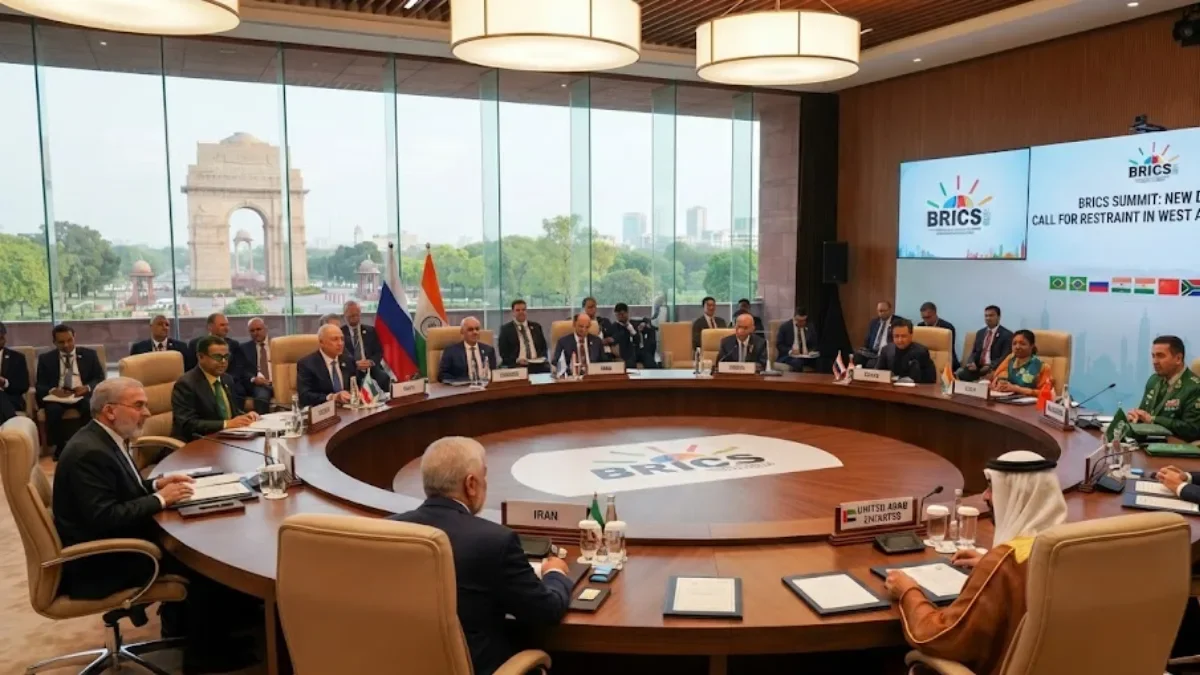
In a significant diplomatic development, Iran and the United Arab Emirates have endorsed a joint declaration by the BRICS group of emerging nations, calling for "maximum restraint" in the ongoing West Asia conflict. Adopted during the 11-member BRICS summit in New Delhi chaired by Prime Minister Narendra Modi, the consensus marks a crucial milestone for two regional powers previously locked in sharp friction due to escalating hostilities.
On the sidelines of the summit, Iranian President Masoud Pezeshkian and Abu Dhabi Crown Prince Sheikh Khaled bin Mohamed bin Zayed Al Nahyan held high-level talks. This encounter represented the highest-level direct engagement between the two nations since the regional conflict intensified, signaling a willingness to keep difficult diplomatic channels open despite underlying geopolitical tensions.
What Led to the Joint Declaration?
The path to consensus required intense negotiations. Ever since regional hostilities flared up following direct exchanges involving the United States, Israel, and Iran, tensions had spilled over into the Persian Gulf. Iran previously sought explicit condemnations of Western actions, while Gulf states like the UAE pressed for accountability regarding security threats near their borders.
Diplomats worked to bridge this divide, ultimately agreeing on neutral, inclusive language that avoided naming specific state actions while emphasizing core principles of international law. The resulting New Delhi Declaration addresses several critical priorities:
Urging Restraint: Calling on all parties involved in the Middle East crisis to avoid actions that could further aggravate the situation.
Protecting Civilians: Highlighting the urgent need to safeguard human lives, civilian infrastructure, and regional stability.
Securing Global Supply Chains: Stressing the protection of maritime security, global trade, and energy flows, which are vital for worldwide economic health.
Why This Matters for Global Stability
While a joint declaration alone cannot immediately resolve deep-seated geopolitical conflicts, foreign policy experts view the agreement as a vital pressure valve. By bringing adversarial countries to the same table, multilateral platforms like BRICS demonstrate that dialogue remains possible even during active military crises. For ordinary citizens and global markets, maintaining open communication channels helps mitigate risks to energy supplies and international trade routes.
Furthermore, the consensus highlights India’s unique diplomatic balancing act. By successfully forging unity among diverse economies—including Russia, China, Iran, and the UAE—New Delhi has reinforced its role as a bridge-builder between major global players and emerging nations.
What Lies Ahead?
The diplomatic engagement initiated in New Delhi sets a precedent for future regional talks. Observers will be watching closely to see whether this multilateral momentum translates into tangible local de-escalation steps between Tehran and its Gulf neighbors. As the BRICS bloc continues to expand its international footprint and advocate for multilateral reform, its ability to manage internal disagreements among member states will remain a true test of its growing global influence.