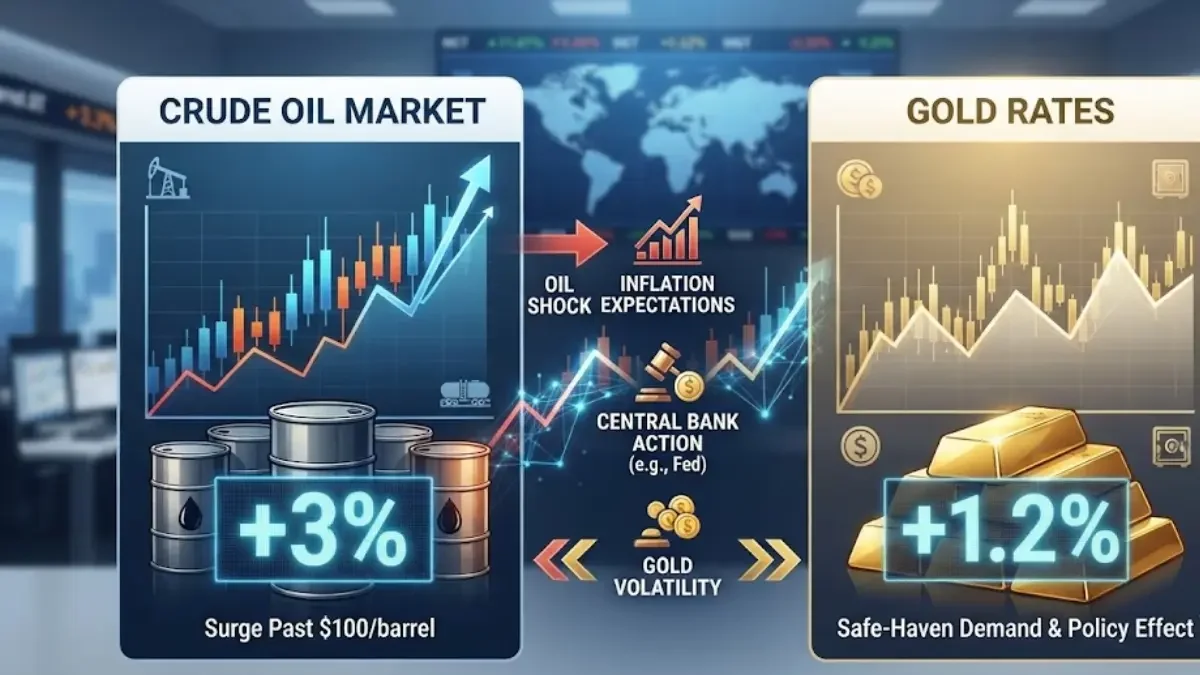
The intricate relationship between the energy and precious metals markets has once again taken center stage as global crude oil prices cross critical thresholds. When oil prices jump significantly—such as a sharp 3% surge driven by supply concerns and geopolitical tensions—the shockwaves do not remain confined to fuel pumps and transportation costs. Instead, they trigger a complex chain reaction across global financial markets, directly altering the trajectory of gold rates. Understanding this dynamic is crucial for investors trying to navigate an increasingly volatile macroeconomic landscape.
The Direct Link: How Oil Shocks Fuel Inflation Expectations
Crude oil acts as the lifeblood of the global economy. When energy costs spike, the cost of manufacturing, transport, and utilities climbs simultaneously. This widespread increase in operational expenses translates directly into rising consumer and producer price inflation.
Historically, conventional market wisdom suggests that higher inflation should be universally bullish for gold, since the precious metal is traditionally viewed as an ultimate hedge against currency devaluation and rising prices. However, modern market reactions to oil surges are rarely straightforward.
The Monetary Policy Trap: Why Gold Can Face Downward Pressure
When an oil price shock triggers broad inflationary pressures, central banks—most notably the United States Federal Reserve—are forced to evaluate whether tighter monetary policy is required. If policymakers believe that persistent energy inflation will become entrenched, they may lean toward raising interest rates or keeping them higher for longer to cool economic demand.
This policy response creates a competing force for gold:
The Opportunity Cost Dilemma: Unlike bonds or equities, gold is a non-yielding asset that does not generate interest or dividends. When expectations of interest rate hikes drive up Treasury yields and strengthen the US dollar, the opportunity cost of holding gold increases.
Safe-Haven Counterbalance: Simultaneously, severe geopolitical escalations or supply disruptions that push oil up also spark fear and uncertainty, driving investors toward gold as a safe-haven asset.
Consequently, when oil spikes, gold often experiences a tug-of-war between rising safe-haven demand and the dampening effect of aggressive monetary tightening.
What This Means for Everyday Investors and Consumers
For ordinary savers and retail investors, these commodity fluctuations carry practical implications. Higher energy and gold volatility usually signal underlying economic instability. For consumers, a 3% or higher jump in crude prices eventually trickles down to everyday goods, squeezing household budgets. For investors, it highlights the importance of asset diversification. Relying solely on a single asset class during periods of energy-driven inflation can expose portfolios to sudden policy shifts.
Looking Ahead: What to Watch Next
As markets monitor unfolding supply bottlenecks and upcoming central bank rate decisions, the gold-to-oil ratio will remain a key metric for institutional and retail analysts. If oil prices stabilize, the pressure on interest rates may ease, allowing gold to resume its broader defensive momentum. However, if energy shocks persist, market participants must prepare for continued high volatility across both commodities.
Frequently Asked Questions (FAQ)
Why do oil prices affect gold rates if they serve different purposes?
While oil is a vital industrial energy commodity and gold is a safe-haven asset, they are connected through macroeconomic factors like inflation. Higher oil prices increase overall inflation, which influences central bank interest rate decisions that directly impact gold's appeal.
Does an increase in oil prices always cause gold prices to drop?
No. While rising oil can spark interest rate hike fears that pressure gold, severe geopolitical conflicts that drive up oil also increase safe-haven demand for gold. The net effect depends on which market force is stronger at any given time.
How do interest rate hikes impact non-yielding assets like gold?
When interest rates rise, the returns available on interest-bearing assets like government bonds and fixed-income securities increase. This raises the opportunity cost of holding gold, which does not pay interest, often making it less attractive to short-term investors.
Why is the gold-to-oil ratio important for market analysts?
The gold-to-oil ratio helps investors gauge market sentiment, economic stress, and inflation risks. Extreme spikes in this ratio often indicate that markets are prioritizing capital preservation and safety over economic growth during turbulent times.