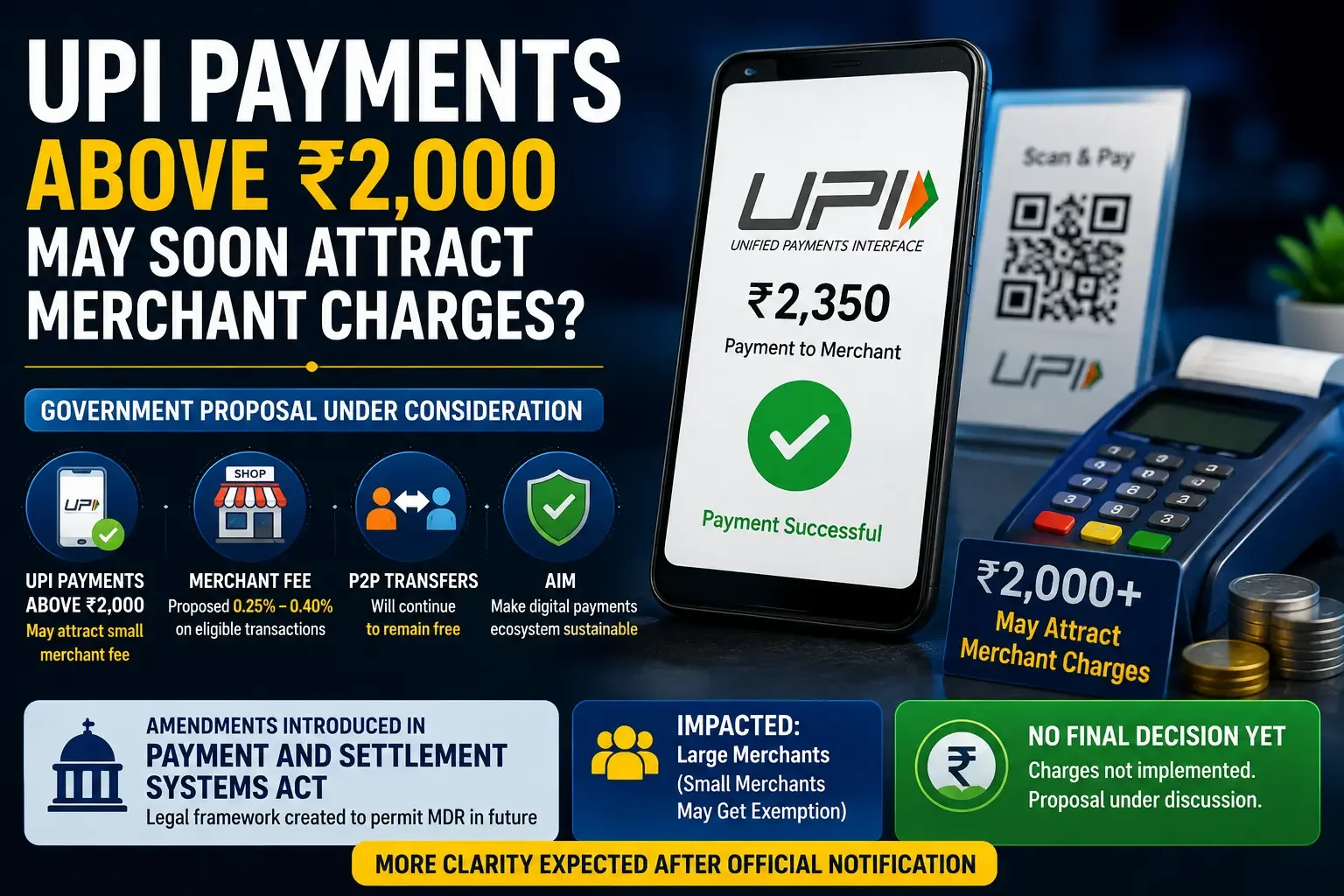
India's digital payments ecosystem could soon witness a significant policy shift. The Central Government has introduced amendments that may allow the return of Merchant Discount Rate (MDR) on certain UPI merchant transactions, ending the legal barrier created under the current zero-MDR regime. One proposal under discussion is to allow a small merchant fee on UPI payments above ₹2,000, though no final decision has been announced yet.
Importantly, person-to-person (P2P) UPI transfers are expected to remain free, meaning sending money to friends or family would not be affected by the proposal.
What Is Changing?
The government has introduced amendments to the Payment and Settlement Systems Act, giving it the legal authority to permit MDR on digital payment systems, including UPI, in the future. This does not automatically introduce charges, but it creates the framework for doing so if required.
According to reports, one of the leading proposals includes:
- Merchant fee of around 0.25% to 0.40%
- Applicable only on merchant UPI transactions above ₹2,000
- Person-to-person transfers remain free
- Large businesses are more likely to be affected than small merchants
What Is MDR?
Merchant Discount Rate (MDR) is the fee that merchants pay to banks and payment service providers whenever a customer pays digitally.
The fee is generally shared among:
- Banks
- Payment gateways
- Payment service providers
- Card networks (where applicable)
For UPI, the government introduced a zero-MDR policy in 2020 to encourage digital payments, making UPI free for both merchants and consumers.
Will Consumers Have to Pay?
As of now, there is no proposal to charge consumers for sending money through UPI.
If implemented, the proposed MDR would be paid by merchants, not directly by customers. However, some businesses could choose to absorb the cost, while others might adjust product prices or billing practices over time.
Likely to remain free:
- Sending money to friends
- Paying family members
- Personal bank-to-bank UPI transfers
Could be affected:
- Paying large merchants
- High-value retail purchases above ₹2,000
- Business payments, depending on the final policy
Why Is the Government Considering This?
UPI has grown into the world's largest real-time payment system and continues to process record transaction volumes. Maintaining a zero-fee ecosystem has placed financial pressure on banks and payment companies, which must continue investing in infrastructure, fraud prevention, and system reliability.
Industry stakeholders have argued that a limited MDR on high-value merchant transactions could:
- Improve sustainability
- Support banks
- Help fintech companies recover operating costs
- Encourage continued investment in payment infrastructure
Which Businesses Could Be Impacted?
Reports suggest that the proposal is primarily aimed at large merchants rather than small businesses.
Potentially affected sectors include:
- Electronics retailers
- Large supermarkets
- Consumer durable stores
- Automobile dealers
- Premium fashion brands
- Travel services
Small merchants may continue receiving exemptions under the final framework.
What Could This Mean for Merchants?
If MDR returns, businesses may need to:
- Factor digital payment costs into pricing
- Review payment acceptance strategies
- Compare UPI with cards and other payment methods
- Optimize transaction costs for high-value purchases
For many merchants, UPI remains more affordable than traditional card payment networks.
Impact on Fintech Companies
Payment companies such as:
- PhonePe
- Google Pay
- Paytm
- Razorpay
could benefit if merchant fees are eventually permitted, as MDR would create a sustainable revenue stream for payment processing.
Why This Is a Big Deal
India has built one of the world's most successful digital payment ecosystems through:
- Zero-cost UPI
- Instant transfers
- QR-based payments
- High merchant acceptance
- Strong smartphone adoption
Reintroducing MDR, even for selected transactions, would represent one of the biggest policy shifts since UPI became mainstream.
Frequently Asked Questions (FAQs)
Will UPI payments above ₹2,000 become chargeable?
Not yet. The government has introduced legal amendments that would allow MDR in the future, but no final notification has imposed these charges.
Who would pay the fee?
Current proposals indicate that merchants, not consumers, would bear the MDR on eligible transactions.
Will sending money to friends remain free?
Yes. Reports indicate that person-to-person UPI transfers will continue to be free under the proposal.
Why is MDR being considered again?
The move aims to make India's digital payments ecosystem more financially sustainable by helping banks and payment providers recover infrastructure and operating costs.
Final Thoughts
The government's proposal does not mean that UPI users will immediately start paying for transactions above ₹2,000. Instead, it lays the legal groundwork for a possible return of Merchant Discount Rate (MDR) on selected merchant payments, with the objective of making India's rapidly expanding digital payments ecosystem more sustainable.
For consumers, everyday UPI transfers are expected to remain free. For businesses and payment providers, however, the proposal could mark a significant shift in how digital payments are funded in the years ahead. Until the government issues a final notification, the fee structure remains under consideration.
Source - The Times of India