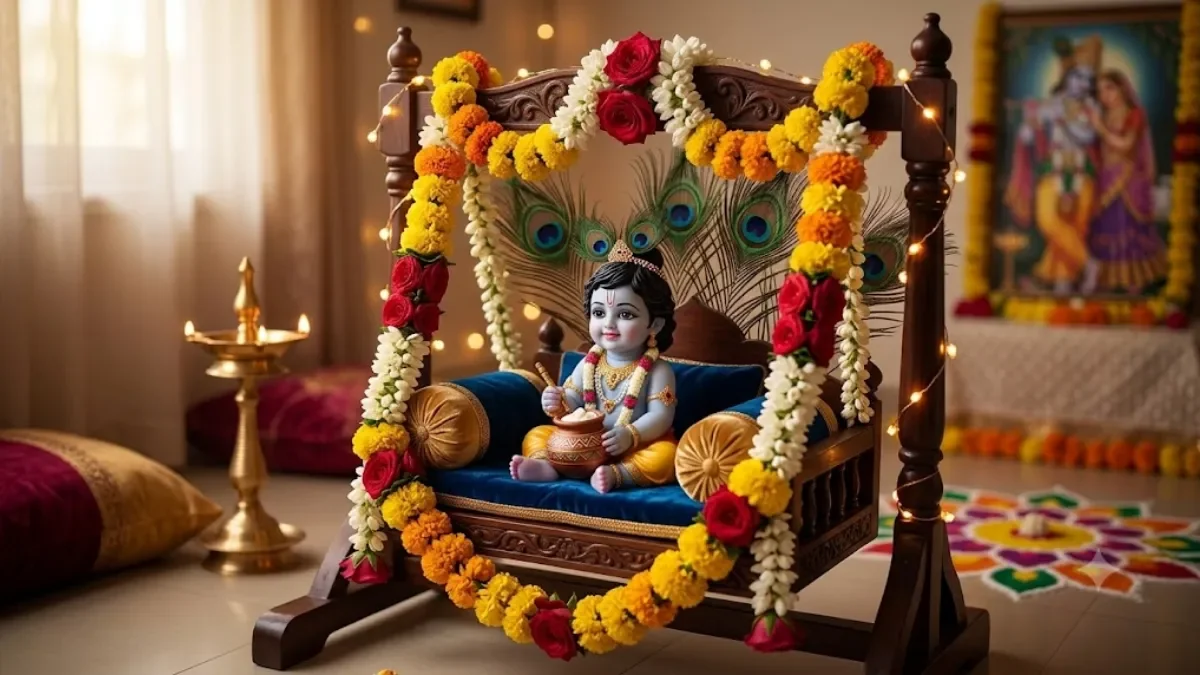
Krishna Janmashtami 2026 will be observed on Friday, September 4, 2026 by most households following the Smarta tradition, while ISKCON and many Vaishnava temples will celebrate on Saturday, September 5, 2026. The festival marks the 5,253rd birth anniversary of Lord Krishna, the eighth avatar of Lord Vishnu.
The Ashtami Tithi (eighth lunar day) begins at 2:25 AM on September 4 and ends at 12:13 AM on September 5. The most auspicious time for Krishna puja, known as Nishita Kaal (midnight period), falls approximately between 11:57 PM on September 4 and 12:43 AM on September 5 in Delhi, with timings varying by city based on local sunrise and sunset.
Whether you're observing a full-day fast, preparing for midnight puja, or simply want to celebrate Krishna's birth at home, here's everything you need to know about Janmashtami 2026.
When Is Krishna Janmashtami 2026?
Primary observance: Friday, September 4, 2026 (Smarta tradition, most households across India)
Alternative observance: Saturday, September 5, 2026 (ISKCON, many Vaishnava temples)
Dahi Handi: Saturday, September 5, 2026 (day after main Janmashtami)
Why Two Different Dates?
You may see both September 4 and September 5 listed for Janmashtami 2026. This isn't an error — it reflects genuine differences in how different Hindu traditions calculate the festival date.
Smarta tradition (followed by most households):
Prioritizes Ashtami Tithi (eighth lunar day)
Observes Janmashtami when Ashtami prevails during the day
Date: September 4, 2026
Vaishnava/ISKCON tradition:
Follows different calculation methods
May prioritize Rohini Nakshatra or different tithi rules
Date: September 5, 2026
Both dates are valid within their respective traditions. Most households in North India, Gujarat, and many other regions follow the Smarta date (September 4). ISKCON temples and many Vaishnava communities observe it on September 5.
Tithi and Nakshatra Timings
Ashtami Tithi:
Begins: 2:25 AM on Friday, September 4, 2026
Ends: 12:13 AM on Saturday, September 5, 2026
Rohini Nakshatra:
Begins: 12:29 AM on Friday, September 4, 2026
Ends: 11:59 PM on Friday, September 4, 2026
(Source: Drik Panchang, Shubh Panchang)
The combination of Ashtami Tithi and Rohini Nakshatra is considered especially auspicious, as tradition holds that Lord Krishna was born under this specific astrological combination at midnight in Mathura.
Janmashtami 2026 Tithi and Nishita Kaal
What Is Nishita Kaal?
Nishita Kaal refers to the midnight period — specifically, the middle of the night between sunset and sunrise. This time is considered the most auspicious for Krishna puja on Janmashtami because tradition holds that Lord Krishna was born at midnight.
Nishita Kaal is not a fixed clock time; it's calculated based on local sunset and sunrise. This is why puja timings vary from city to city.
Nishita Kaal / Puja Muhurat by City
| City | Nishita Kaal (Puja Muhurat) |
|---|---|
| Delhi | 11:57 PM (Sep 4) to 12:43 AM (Sep 5) |
| New Delhi | 11:57 PM (Sep 4) to 12:43 AM (Sep 5) |
| Mumbai | 12:14 AM to 1:01 AM (Sep 5) |
| Kolkata | 11:13 PM to 11:59 PM (Sep 4) |
| Jaipur | 12:03 AM to 12:49 AM (Sep 5) |
| Bengaluru | 11:55 PM (Sep 4) to 12:42 AM (Sep 5) |
| Chennai | 11:45 PM (Sep 4) to 12:31 AM (Sep 5) |
| Hyderabad | 11:52 PM (Sep 4) to 12:38 AM (Sep 5) |
| Pune | 12:10 AM to 12:57 AM (Sep 5) |
| Gurgaon | 11:58 PM (Sep 4) to 12:44 AM (Sep 5) |
| Noida | 11:57 PM (Sep 4) to 12:42 AM (Sep 5) |
Important: These timings are approximate and may vary slightly based on your exact location. For precise timings, check your local Panchang or consult with your temple priest.
Midnight Moment
The exact midnight moment (when Krishna is believed to have been born) in Delhi is approximately 11:36 PM on September 4, 2026. Many temples perform the main abhishek (sacred bath) and janmotsav (birth celebration) at this exact moment.
Janmashtami 2026 Puja Muhurat
When Should You Perform Krishna Puja?
The most auspicious time for Krishna puja on Janmashtami is during Nishita Kaal (midnight period). However, if staying awake until midnight is not possible, you can perform puja in the evening after sunset.
Recommended puja window:
Ideal: During Nishita Kaal (approximately 11:57 PM to 12:43 AM in Delhi)
Alternative: Evening after sunset (approximately 7:00 PM onwards)
Morning puja: Some families perform a morning puja before the main midnight celebration
The midnight puja typically includes:
Abhishek (sacred bath) of Krishna idol
Dressing and decorating Krishna
Placing Krishna in the jhula (cradle)
Offering bhog/prasad
Performing aarti
Chanting Krishna mantras and bhajans
What If You Can't Stay Awake Until Midnight?
Many families, especially those with young children or elderly members, find it difficult to stay awake until midnight. This is completely acceptable.
Options:
Evening puja: Perform the main puja in the evening after sunset, then gather for bhajans and aarti around midnight if possible
Morning puja: Some families perform puja in the morning and celebrate Krishna's birth symbolically at midnight with bhajans
Simplified midnight ritual: If you can't perform full puja, at least offer flowers, tulsi, and a simple aarti at midnight
The key is devotion, not perfection. Krishna accepts even the simplest offering made with love.
When Should You Keep and Break the Janmashtami Fast?
When Does the Vrat Begin?
The Janmashtami fast traditionally begins at sunrise on September 4, 2026, after you complete your morning rituals and take sankalpa (vow to observe the fast).
Morning routine on September 4:
Wake up early, take a bath
Wear clean clothes (preferably yellow or traditional attire)
Clean the puja area and decorate it
Take sankalpa (vow) to observe the fast
Begin the fast after morning puja
When Can You Break the Fast (Parana)?
There are different traditions for when to break the Janmashtami fast. The timing depends on your family tradition and the type of fast you're observing.
Option 1: After Midnight Puja (Common Household Practice)
Time: From 12:43 AM on September 5 (once Nishita Kaal ends and janmotsav aarti is completed)
Who: Most households, families with children
Practice: Break the fast after midnight puja with prasad and light food
Option 2: After Sunrise (Dharma Shastra Traditional)
Time: After 6:01 AM on September 5, 2026
Who: Strict observers, those following traditional Dharma Shastra rules
Practice: Complete the fast the next morning after sunrise
Option 3: After Ashtami Tithi Ends
Time: After 12:13 AM on September 5 (once Ashtami Tithi has fully ended)
Who: Those who prioritize tithi completion
Practice: Break the fast once the tithi has ended
Important Note: According to Drik Panchang, both Ashtami Tithi and Rohini Nakshatra are already over before sunrise on September 5. This means the fast is traditionally broken after sunrise, not delayed into a second full day.
Parana Muhurat (Fasting Conclusion)
| Tradition | Parana Time |
|---|---|
| After midnight puja | From 12:43 AM on September 5 |
| After tithi ends | After 12:13 AM on September 5 |
| After sunrise (traditional) | After 6:01 AM on September 5 |
| Mumbai | After 6:24 AM on September 5 |
Your family tradition or temple guidance should determine which parana time you follow.
Janmashtami Vrat Rules and What You Can Eat
Types of Janmashtami Fasts
Different devotees observe different types of fasts on Janmashtami, depending on their health, age, and family tradition.
| Fast Type | Rules | Who It's For |
|---|---|---|
| Nirjala Vrat | No food, no water until after midnight puja | Strict devotees, those in good health |
| Phalahar Vrat | Fruits, milk, curd, makhana, sabudana, dry fruits allowed | Most devotees, families with children |
| Sattvic Fast | No grains, no onion, no garlic; milk, fruits, nuts allowed | Families with elderly, children |
| Partial Fast | Single light meal before sunrise, then fast | Those with health conditions, elderly |
What You Can Eat During Phalahar Vrat
If you're observing a phalahar (fruit-based) fast, which is the most common type, you can consume:
Allowed:
Fruits (bananas, apples, pomegranate, grapes, etc.)
Milk and milk products (curd, buttermilk, paneer)
Makhana (fox nuts)
Sabudana (tapioca pearls)
Kuttu (buckwheat)
Singhara (water chestnut)
Rajgira (amaranth)
Dry fruits (almonds, cashews, raisins)
Sendha namak (rock salt) instead of regular salt
Water, tea, coffee (without regular salt)
Avoid:
Grains (rice, wheat, dal, pulses)
Onion and garlic
Regular salt (use sendha namak instead)
Non-vegetarian food
Alcohol
Can You Drink Milk During Janmashtami Fasting?
Yes. Milk and milk products are allowed and commonly consumed during Janmashtami phalahar vrat. Many devotees drink milk, eat curd, or consume paneer-based dishes during the fast.
Can You Eat Fruits During Janmashtami Vrat?
Yes. Fruits are not only allowed but are a staple of the phalahar fast. Many devotees survive on fruits and milk alone during the fast.
What Breaks the Fast?
The fast is traditionally broken with prasad (food first offered to Krishna) after the midnight puja or the next morning, depending on your family tradition.
Common parana foods:
Panjiri (sweet flour-based dish)
Makhana kheer
Sabudana khichdi
Fruits
Milk-based sweets
How to Perform Krishna Janmashtami Puja at Home
Here's a simple, practical step-by-step guide for performing Krishna Janmashtami puja at home. You don't need elaborate arrangements — even a simple puja with devotion is acceptable.
Step 1: Clean the Puja Area
Clean your home, especially the puja area where Krishna's idol or image will be placed
Take a bath and wear clean clothes (yellow or traditional attire is considered auspicious)
Spread a red or yellow cloth on a small platform (chowki) for the idol
Step 2: Prepare Krishna Idol or Image
Place the Laddu Gopal (baby Krishna) idol or Krishna image on the prepared platform
If you don't have an idol, a printed image or even a picture of Krishna is sufficient
Position the idol/image facing east or north for auspiciousness
Step 3: Light the Lamp
Light a ghee lamp (diya) or oil lamp in front of Krishna
The lamp symbolizes the removal of darkness and the presence of divine light
Keep the lamp burning throughout the puja
Step 4: Take Sankalpa (Vow)
Take water, raw rice, a flower, and a coin in your right palm
Chant the sankalpa mantra, pledging to perform the Janmashtami puja for Lord Krishna's pleasure and grace
This formally begins your puja and vrat observance
Step 5: Perform Abhishek (Sacred Bath)
At midnight (or during your puja time):
Gently bathe the Krishna idol with Ganga Jal (holy water) or clean water
Perform Panchamrit abhishek using: milk, curd, ghee, honey, and sugar (in this order)
Pour the Panchamrit through a conch (shankha) if available
Chant Krishna mantras or Purusha Suktam during abhishek
Conclude with clean warm water
Note: If you have a Laddu Gopal idol that shouldn't be bathed, skip the abhishek and proceed to dressing and decoration.
Step 6: Dress and Decorate Krishna
Gently dry the idol with a soft, clean cloth
Dress Krishna in vibrant yellow attire (vastra)
Decorate with:
Crown (mukut)
Jewelry (necklaces, bracelets)
Peacock feather (mor pankh)
Tiny flute in hands
Apply sandalwood paste (chandan) and kumkum tilak on Krishna's forehead
Place unbroken rice grains (akshata) on the tilak
Step 7: Place Krishna in the Jhula (Cradle)
Prepare a small cradle (jhula) decorated with flowers, fabric, and lights
Gently place the dressed Krishna idol in the jhula
This symbolizes celebrating Krishna's birth
Gently rock the jhula while singing bhajans or chanting Krishna's name
Step 8: Offer Flowers and Tulsi
Offer fresh yellow flowers at Krishna's feet
Offer tulsi leaves (tulsi dal) — this is considered very auspicious
Tulsi is believed to be dear to Krishna
Chant "Om Namo Bhagavate Vasudevaya" or "Hare Krishna Hare Rama" mantra
Step 9: Offer Bhog/Prasad
Prepare bhog (food offerings) for Krishna
Common offerings:
Makhan mishri (butter and sugar crystals)
Panjiri (sweet flour dish)
Makhana kheer
Sabudana khichdi
Fruits
Milk-based sweets
Offer the bhog to Krishna with devotion
After offering, distribute as prasad to family and devotees
Step 10: Perform Aarti
Perform Krishna aarti with a ghee lamp
Common aartis:
"Jai Shri Krishna" aarti
"Hari Om Jai Shri Krishna" aarti
Traditional Janmashtami aarti
Ring the bell during aarti
Offer flowers after aarti
Step 11: Midnight Janmotsav (Birth Celebration)
At the exact midnight moment (approximately 11:36 PM in Delhi):
Gently cut open a cucumber (kheera) containing a small coin or wrapped thread
This symbolizes cutting the umbilical cord and Krishna's birth
Some families perform a symbolic birth ritual by placing the baby Krishna in the jhula at this exact moment
Sing bhajans, chant Krishna's name, and celebrate with joy
Step 12: Complete the Puja
Offer final prayers and pranam (prostration)
Distribute prasad to family members and devotees
If observing a fast, break it with prasad (after midnight or next morning, per your tradition)
Keep the lamp burning if possible, or safely extinguish after puja
What If You Don't Have All the Puja Samagri?
Don't worry. Krishna accepts even the simplest offering made with devotion.
Minimum requirements:
Krishna image or idol (even a printed picture works)
A lamp (diya)
Flowers or tulsi leaves
Some fruit or sweet as bhog
Water for offering
As Krishna says in the Bhagavad Gita: "Patram pushpam phalam toyam yo me bhaktya prayacchati" — "Whoever offers me a leaf, a flower, a fruit, or water with devotion, I accept it."
What to Offer Krishna on Janmashtami
Traditional Offerings
Makhan Mishri (Butter and Sugar Crystals)
Krishna's favorite offering
Symbolizes his childhood love for butter
Mix fresh white butter with sugar crystals (mishri)
Offer in a small silver or brass bowl
Panjiri
Sweet dish made with wheat flour, ghee, sugar, and dry fruits
Considered auspicious and nutritious
Often prepared for parana (breaking the fast)
Can be made with kuttu or singhara flour for vrat
Tulsi Leaves
Tulsi is considered very dear to Krishna
Offer 3, 5, or 7 tulsi leaves (odd numbers are auspicious)
Place at Krishna's feet or in his hands
Yellow Flowers
Yellow is Krishna's favorite color
Offer marigold, rose, or any fresh yellow flowers
Avoid wilted or dried flowers
Fruits
Bananas, pomegranate, grapes, apples
Offer whole fruits or cut pieces
Avoid fruits that are considered inauspicious in your tradition
Milk-Based Sweets
Kheer (rice pudding)
Rabri
Basundi
Shrikhand
Avoid if observing strict phalahar vrat (check your tradition)
What NOT to Offer
Non-vegetarian food (obviously)
Onion and garlic (considered rajasic/tamasic)
Leftover food
Food tasted before offering
Alcohol or intoxicants
Janmashtami Foods and Bhog Ideas
Vrat-Friendly Bhog Recipes
Makhan Mishri (Butter and Sugar)
Fresh white butter: 1 cup
Sugar crystals (mishri): 1/2 cup, crushed
Mix gently and serve in a silver or brass bowl
Simple, traditional, and Krishna's favorite
Kuttu Ki Panjiri (Buckwheat Sweet)
Kuttu flour (buckwheat): 1 cup
Ghee: 1/4 cup
Sugar or mishri: 1/2 cup
Dry fruits (almonds, cashews, raisins): 2 tbsp
Cardamom powder: 1/4 tsp
Roast kuttu flour in ghee until fragrant
Add sugar and dry fruits
Serve warm or at room temperature
Makhana Kheer (Fox Nut Pudding)
Makhana (fox nuts): 1 cup
Milk: 1 liter
Sugar: 1/2 cup
Cardamom: 4-5 pods
Dry fruits: 2 tbsp
Roast makhana lightly in ghee
Boil milk with cardamom
Add makhana and cook until soft
Add sugar and dry fruits
Serve warm or chilled
Sabudana Khichdi (Tapioca Stir-Fry)
Sabudana (tapioca pearls): 1 cup, soaked
Potatoes: 2, boiled and cubed
Peanuts: 1/4 cup, roasted
Sendha namak (rock salt): to taste
Green chilies: 2, chopped
Ghee: 2 tbsp
Heat ghee, add peanuts and potatoes
Add sabudana and green chilies
Cook for 5-7 minutes
Add sendha namak and serve
Fruit Platter
Bananas, apples, pomegranate, grapes
Arrange beautifully on a plate
Garnish with mint leaves
Simple, healthy, and vrat-friendly
Non-Vrat Bhog (For After Parana)
Once the fast is broken, you can prepare more elaborate bhog:
Puris and Aloo Sabzi
Kheer (Rice Pudding)
Halwa (Suji, Moong, or Carrot)
Pakoras
Samosas
Sweets (Laddoos, Barfis, Jalebis)
Drinks
During Vrat:
Milk
Buttermilk
Fruit juices
Tea/coffee (with sendha namak if needed)
Coconut water
Lemon water with sendha namak
After Parana:
Badam milk
Thandai
Traditional Indian beverages
How Mathura, Vrindavan and Other Regions Celebrate Janmashtami
Mathura and Vrindavan (Krishna's Birthplace and Childhood Home)
Mathura and Vrindavan celebrate Janmashtami with unparalleled grandeur, as these are the places where Krishna was born and spent his childhood.
Mathura (Krishna Janmabhoomi):
Shri Krishna Janmabhoomi Temple: The main celebration happens here, at the exact spot where Krishna is believed to have been born
Midnight Janmotsav: At the exact midnight moment, priests perform abhishek, dress baby Krishna, and place him in the jhula
VIP Darshan: Special darshan passes are available for midnight janmotsav (book in advance)
Temple decorations: The entire temple complex is decorated with flowers, lights, and Krishna-themed displays
Bhajans and Kirtans: Continuous chanting and singing throughout the day and night
Annakut: Elaborate food offerings to Krishna
Vrindavan:
Prem Mandir, ISKCON Temple, Banke Bihari Temple: All major temples celebrate with grand festivities
Ras Leela: Traditional dance-dramas depicting Krishna's life are performed
Jhulanotsav: Krishna idols are placed in decorated swings (jhulas)
Street processions: Devotees carry Krishna idols in processions
Cultural programs: Bhajans, kirtans, and Krishna-themed performances
What to Expect:
Massive crowds (lakhs of devotees)
Heavy security and traffic restrictions
Advance booking essential for accommodation and darshan
Special train and bus services from major cities
Maharashtra (Dahi Handi Celebrations)
Maharashtra, especially Mumbai and Pune, is famous for Dahi Handi celebrations on the day after Janmashtami (September 5, 2026).
Dahi Handi:
Young men (Govindas) form human pyramids to break a clay pot (handi) filled with curd, butter, and milk
The handi is suspended high above the ground
Celebrates Krishna's childhood butter-stealing (Makhan Chor) leela
Competitive teams compete for prizes
Major events in Mumbai (Dadar, Khetwadi, Andheri), Pune, and other cities
Home Celebrations:
Families prepare special bhog
Children dress as Krishna and Radha
Cultural programs and bhajans in communities
Gujarat
Dwarka: Major celebrations at Dwarkadhish Temple (one of the Char Dham)
Home celebrations: Similar to North India with fasting, puja, and bhog
Cultural programs: Bhajans, kirtans, and Krishna-themed performances
South India (Gokulashtami)
In Tamil Nadu, Karnataka, Andhra Pradesh, and Kerala, Janmashtami is celebrated as Gokulashtami or Sri Krishna Jayanti.
Tamil Nadu:
Kolam/Rangoli: Beautiful kolams (rangoli) with Krishna footprints drawn from entrance to puja area
Krishna idol: Small Krishna idol is placed in a decorated cradle
Fasting: Many observe fast until midnight
Bhog: Special preparations like seedai, murukku, and other traditional sweets
Karnataka:
Krishna temples: Major celebrations at Udupi Krishna Temple and other temples
Home puja: Similar to North India with regional variations
Bhog: Traditional Karnataka sweets and savories
Andhra Pradesh/Telangana:
Fasting: Strict fasting until midnight
Puja: Elaborate puja with abhishek and alankaram (decoration)
Bhog: Traditional Andhra sweets like boorelu, ariselu
North India (Delhi, UP, Rajasthan, Punjab)
Home celebrations: Fasting, puja, bhog, and midnight janmotsav
Temples: Major celebrations at ISKCON temples, local Krishna temples
Cultural programs: Bhajans, kirtans, Krishna-themed plays
Community celebrations: Many communities organize joint celebrations
What Is Dahi Handi and When Is It Celebrated?
What Is Dahi Handi?
Dahi Handi is a traditional festival celebrated on the day after Janmashtami (September 5, 2026) that commemorates Krishna's childhood butter-stealing (Makhan Chor) leela.
The Tradition:
A clay pot (handi) filled with curd, butter, milk, and sometimes money is suspended high above the ground
Young men (called Govindas) form human pyramids to reach and break the handi
The person who breaks the handi is considered especially blessed
Celebrates Krishna's playful childhood antics of stealing butter with his friends
When Is Dahi Handi 2026?
Date: Saturday, September 5, 2026 (day after main Janmashtami)
Where Is Dahi Handi Especially Popular?
Maharashtra: Mumbai, Pune, Nagpur, Nashik
Goa: Major celebrations
Parts of Karnataka: Especially coastal regions
Gujarat: Some regions
Other cities: Major Dahi Handi events are organized in Delhi, Bangalore, and other metros
Major Dahi Handi Events 2026
While specific event details for 2026 may not be fully announced yet, major annual events typically happen in:
Mumbai: Dadar, Khetwadi, Andheri, Borivali (some events offer prize money of ₹10-20 lakhs)
Pune: Multiple locations across the city
Other cities: Check local event listings closer to the date
Safety Note: In recent years, there have been concerns about safety in human pyramid formations. Many organizers now implement safety guidelines, height restrictions, and age limits to prevent accidents.
Is Dahi Handi the Same as Janmashtami?
No. While related, they are distinct:
Janmashtami: Celebrates Krishna's birth (September 4, 2026)
Dahi Handi: Celebrates Krishna's childhood butter-stealing leela (September 5, 2026)
Observance: Janmashtami is observed across India; Dahi Handi is especially popular in Maharashtra and some regions
Easy Janmashtami Decoration Ideas
Krishna Jhula (Cradle) Decoration
The jhula (cradle) is the centerpiece of Janmashtami home decoration.
Simple Ideas:
Fabric draping: Use yellow, orange, or pink fabric to drape the jhula
Flower garlands: Hang marigold or rose garlands around the jhula
Fairy lights: Battery-operated fairy lights add a magical touch
Peacock feathers: Place peacock feathers around the jhula (Krishna's favorite)
Small curtains: Create a miniature canopy with decorative fabric
Budget-Friendly:
Use old dupattas or scarves for draping
Make paper flowers with children
Use diyas (earthen lamps) instead of electric lights
Create rangoli around the jula base
Krishna Footprints
A beautiful tradition is to create Krishna's footprints entering your home.
How to:
Mix kumkum or red food color with water
Dip your child's feet (or use a stencil)
Create small footprints from the entrance to the puja area
Symbolizes Krishna entering your home
Home Decoration Ideas
Entrance:
Rangoli with Krishna themes (flute, peacock, footprints)
Toran (door hanging) with flowers or beads
Diyas on both sides of the entrance
Puja Area:
Yellow or orange fabric backdrop
Flower arrangements (marigold, rose)
Fairy lights or diyas
Krishna pictures or posters
Small peacock feathers
Living Area:
Krishna-themed wall hangings
Yellow cushions or throws
Small Krishna idols in different corners
Flower arrangements
Eco-Friendly Decoration
Use fresh flowers instead of plastic decorations
Earthen diyas instead of electric lights where possible
Cloth banners instead of plastic banners
Reusable decorations you can use year after year
Natural materials (leaves, flowers, fabric) instead of plastic
Simple Low-Cost Decoration
You don't need to spend a lot to create a beautiful celebration:
Rangoli: Use rice flour or colored powder (₹50-100)
Flowers: Local marigold and roses (₹100-200)
Fabric: Use existing dupattas or scarves
Diyas: Earthen diyas are inexpensive (₹50-100 for a pack)
Krishna picture: Print a beautiful Krishna image (₹20-50)
Total budget: ₹300-500 can create a beautiful, devotional atmosphere.
Janmashtami Wishes, Messages and Status
10 Janmashtami Wishes
"May Lord Krishna's blessings fill your life with love, joy, and prosperity. Happy Krishna Janmashtami!"
"On this auspicious occasion of Krishna Janmashtami, may Kanha bless you with happiness, health, and success. Jai Shri Krishna!"
"May the divine blessings of Lord Krishna bring peace and prosperity to your home. Happy Janmashtami 2026!"
"Celebrate the birth of love, joy, and divinity. Wishing you a blessed Krishna Janmashtami filled with devotion and happiness."
"May Lord Krishna's flute fill your life with sweet melodies of love and devotion. Happy Krishna Janmashtami to you and your family!"
"On this Janmashtami, may Krishna bless you with the strength to overcome all challenges and the wisdom to choose the right path. Jai Shri Krishna!"
"Wishing you a Janmashtami filled with devotion, love, and the sweet blessings of Kanha. May your life be as colorful as Krishna's peacock feather!"
"May the mischievous Kanha bring joy to your home and the divine Krishna guide your path. Happy Krishna Janmashtami!"
"As we celebrate Krishna's birth, may your life be filled with the same love, joy, and devotion that Krishna brought to the world. Happy Janmashtami 2026!"
"May Lord Krishna's blessings protect you and your family always. Wishing you a blessed and joyful Krishna Janmashtami!"
5 Short WhatsApp/Instagram Status Lines
"Jai Shri Krishna! ✨ Celebrating love, devotion, and Kanha's blessings. #Janmashtami2026"
"May Kanha's flute fill your life with sweet melodies. Happy Krishna Janmashtami! ?"
"Devotion in the heart, Krishna in the soul. Jai Shri Krishna! ✨ #KrishnaJanmashtami"
"Celebrating the birth of divinity. Happy Janmashtami to all Krishna bhakts! ?"
"Kanha's blessings, forever and always. Jai Shri Krishna! ✨ #Janmashtami"
5 Krishna Quotes/Messages
From Bhagavad Gita (verified):
"Karmanye vadhikaraste ma phaleshu kadachana" — "You have the right to perform your prescribed duties, but you are not entitled to the fruits of your actions." (Bhagavad Gita 2.47)
"Yada yada hi dharmasya glanir bhavati bharata" — "Whenever there is a decline in righteousness and an increase in unrighteousness, O Arjuna, at that time I manifest myself." (Bhagavad Gita 4.7)
"Karmanya vadhikaraste" teaches us to do our duty without attachment to results — a timeless message for modern life.
Original devotional messages:
"Krishna's life teaches us that love conquers all, devotion opens all doors, and righteousness always prevails."
"In every challenge, remember Krishna's words: 'I am with you always.' His blessings guide us through darkness to light."
Note: The Bhagavad Gita verses are authentic translations. Other messages are original devotional thoughts inspired by Krishna's teachings.
Frequently Asked Questions
When is Krishna Janmashtami in 2026?
Krishna Janmashtami 2026 falls on Friday, September 4, 2026, for most households following the Smarta tradition. ISKCON and many Vaishnava temples observe it on Saturday, September 5, 2026.
What is the date of Janmashtami 2026?
Janmashtami 2026 is on September 4 (Smarta) or September 5 (Vaishnava/ISKCON).
What is the Nishita Kaal on Janmashtami 2026?
In Delhi, Nishita Kaal runs from approximately 11:57 PM on September 4 to 12:43 AM on September 5, 2026. Timings vary by city based on local sunrise and sunset.
When should I perform Krishna Janmashtami puja?
The most auspicious time is during Nishita Kaal (midnight period). If that's not possible, you can perform puja in the evening after sunset.
When should Janmashtami fasting begin?
The fast begins at sunrise on September 4, 2026, after morning rituals and sankalpa (vow).
When can I break the Janmashtami fast?
You can break the fast after midnight puja (from 12:43 AM on September 5), after Ashtami Tithi ends (after 12:13 AM), or after sunrise (after 6:01 AM on September 5), depending on your family tradition.
What is the Janmashtami parana time?
Parana time varies: after midnight puja (12:43 AM), after tithi ends (12:13 AM), or after sunrise (6:01 AM) on September 5, 2026.
What foods can I eat during Janmashtami vrat?
During phalahar vrat, you can eat fruits, milk, curd, makhana, sabudana, kuttu, singhara, rajgira, dry fruits, and sendha namak. Avoid grains, pulses, onion, garlic, and regular salt.
Can I drink milk during Janmashtami fasting?
Yes, milk and milk products are allowed and commonly consumed during Janmashtami phalahar vrat.
Can I eat fruits during Janmashtami vrat?
Yes, fruits are not only allowed but are a staple of the phalahar fast.
What should I offer Krishna on Janmashtami?
Offer makhan mishri (butter and sugar), panjiri, tulsi leaves, yellow flowers, fruits, and milk-based sweets. Krishna accepts even the simplest offering made with devotion.
What is Nishita Kaal?
Nishita Kaal is the midnight period — the middle of the night between sunset and sunrise. It's considered the most auspicious time for Krishna puja on Janmashtami because Krishna was born at midnight.
Why is Krishna's birth celebrated at midnight?
According to Hindu tradition, Lord Krishna was born at midnight in Mathura under the Ashtami Tithi and Rohini Nakshatra. This is why the midnight moment is considered especially sacred.
What is the significance of Ashtami?
Ashtami is the eighth lunar day (tithi) in the Hindu calendar. Krishna was born on Krishna Paksha Ashtami (eighth day of the waning moon) in the month of Bhadrapada, making this tithi sacred for Krishna worship.
What is Dahi Handi?
Dahi Handi is a festival celebrated on the day after Janmashtami (September 5, 2026) that commemorates Krishna's childhood butter-stealing leela. Young men form human pyramids to break a clay pot filled with curd and butter suspended high above the ground.
What is the difference between Janmashtami and Dahi Handi?
Janmashtami (September 4) celebrates Krishna's birth. Dahi Handi (September 5) celebrates Krishna's childhood butter-stealing antics. Janmashtami is observed across India; Dahi Handi is especially popular in Maharashtra.
How do you perform Janmashtami puja at home?
Clean the puja area, prepare Krishna idol, light a lamp, take sankalpa, perform abhishek (sacred bath), dress and decorate Krishna, place in jhula, offer flowers and tulsi, offer bhog, perform aarti, and celebrate janmotsav at midnight. See the detailed step-by-step guide above.
What should I prepare for Janmashtami?
Prepare puja samagri (lamp, flowers, tulsi, incense), bhog items (makhan mishri, panjiri, fruits), decorations (jhula, fabric, lights), and plan your fasting and parana according to your family tradition.
What are traditional Janmashtami foods?
Traditional foods include makhan mishri, panjiri, makhana kheer, sabudana khichdi, kuttu ki puri, fruits, milk-based sweets, and after parana, elaborate meals with puris, aloo sabzi, halwa, and traditional sweets.
How is Janmashtami celebrated in Mathura and Vrindavan?
Mathura and Vrindavan celebrate with grand temple festivities, midnight janmotsav at Krishna Janmabhoomi Temple, continuous bhajans and kirtans, elaborate temple decorations, ras leela performances, and massive crowds of devotees. Special darshan passes are available for midnight janmotsav.
Is Janmashtami on September 4 or 5 in 2026?
Both dates are observed. September 4 is for Smarta tradition (most households). September 5 is for Vaishnava/ISKCON tradition. Follow your family or community tradition.
Why do ISKCON and Smarta traditions have different dates?
Smarta tradition prioritizes Ashtami Tithi, while Vaishnava/ISKCON tradition may prioritize Rohini Nakshatra or follow different calculation methods. Both are valid within their respective traditions.
Can I eat grains during Janmashtami vrat?
No, traditional phalahar vrat avoids grains (rice, wheat, dal, pulses). Use kuttu, singhara, or rajgira flour instead.
What is Rohini Nakshatra and why does it matter?
Rohini Nakshatra is the lunar mansion under which Krishna was born. The combination of Ashtami Tithi and Rohini Nakshatra is considered especially auspicious for Krishna worship.
Do Janmashtami timings vary by city?
Yes, Nishita Kaal and puja timings vary by city because they're calculated based on local sunrise and sunset. Check your local Panchang for exact timings.
What if I can't stay awake until midnight for puja?
Perform puja in the evening after sunset. Midnight is ideal but not mandatory. You can gather for bhajans and aarti around midnight even if you don't perform full puja.
Can children observe Janmashtami vrat?
Yes, children can observe a modified fast with fruits, milk, makhana, and light foods. Full nirjala (no water) fast is not recommended for children.