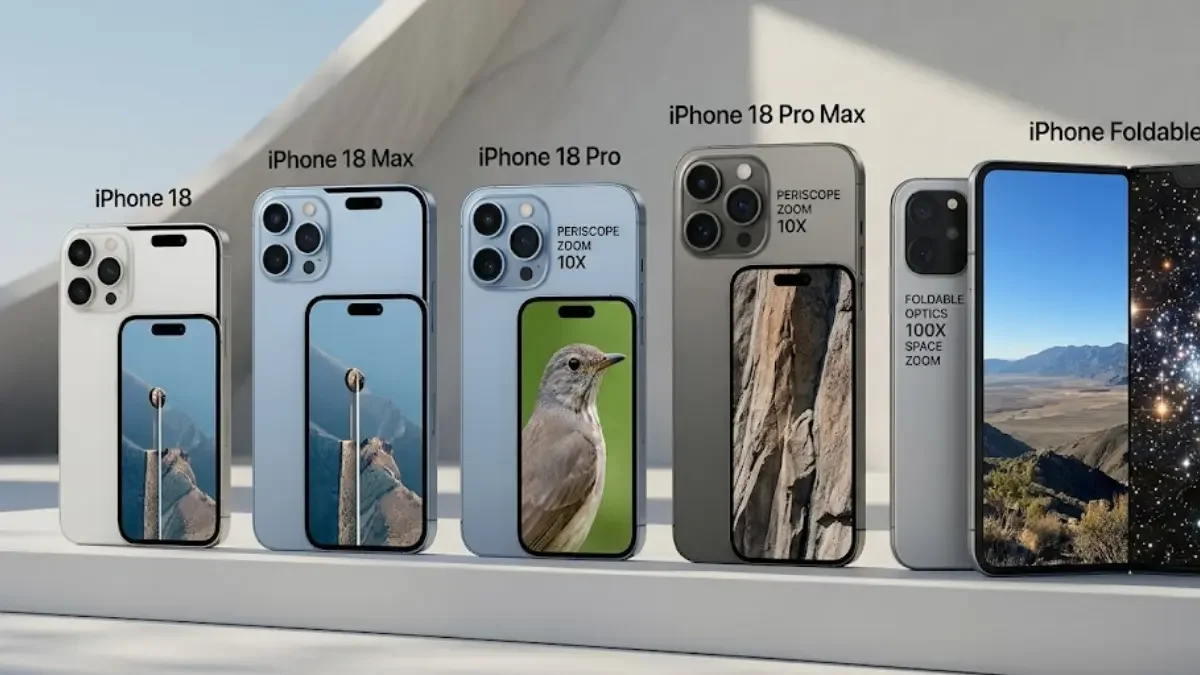
Apple has officially announced its annual autumn hardware keynote for September 9, 2026. Scheduled to broadcast live from Apple Park at 10:30 PM IST for viewers in India, the event carries the tagline "Surprise and shine". Marking the first major product launch under new Apple CEO John Ternus, this keynote is positioned to be one of the most consequential hardware transitions for the company in nearly a decade.
Industry supply chain reports and regulatory filings indicate that Apple will unveil the premium iPhone 18 Pro and iPhone 18 Pro Max, while also introducing its highly anticipated debut into the foldable market, tentatively referred to in leaks as the iPhone Fold or iPhone Ultra.
+-------------------------------------------------------------------------+
| APPLE SEPTEMBER 9 KEYNOTE SNAPSHOT |
+-------------------+-----------------------------------------------------+
| Event Date & Time | Sept 9, 2026 | 10:30 PM IST (10:00 AM PT) |
| Key Products | iPhone 18 Pro, iPhone 18 Pro Max, First iPhone Fold |
| Core Processor | A20 Pro (2-nanometer architecture) |
| Software Debut | iOS 20 with upgraded Siri AI integration |
+-------------------+-----------------------------------------------------+
iPhone 18 Pro & Pro Max: Key Upgrades Explained
While foldable technology will capture global headlines, the iPhone 18 Pro series represents Apple's core flagship update for 2026. Apple is reportedly shifting its launch calendar: the flagship Pro models and the foldable will debut this autumn, while the standard entry-level iPhone 18 models are expected to follow in early 2027.
1. The 2-Nanometer A20 Pro Chipset
The primary hardware upgrade across the Pro lineup is the introduction of TSMC's 2-nanometer process node for the A20 Pro processor.
Performance Boost: The A20 Pro is expected to yield up to an 18% increase in processing performance and up to 30% reduction in power consumption compared to the previous A19 generation.
On-Device AI Execution: Built specifically to handle generative AI models under the upgraded Siri ecosystem, the chip incorporates advanced Wafer-Level Multi-Chip Module (WMCM) packaging to process multi-modal tasks locally with reduced thermal throttling.
2. Variable Aperture and Upgraded Camera Hardware
Camera performance sees structural hardware revisions:
Mechanical Variable Aperture: Industry sources confirm Apple is testing a mechanical variable aperture system for the primary wide camera lens. This allows physical adjustments to light intake, enabling hardware-level bokeh and improved low-light dynamic range.
Stacked Sensors: A new three-layer stacked image sensor architecture helps decrease digital noise in high-contrast exposures.
Redesigned Dynamic Island: Under-display Face ID component integration allows Apple to reduce the physical footprint of the Dynamic Island cutout by approximately 35% on Pro models.
Apple's First Foldable iPhone: What Is Confirmed vs. Leaked
Apple’s long-rumored entry into the foldable space aims to directly challenge dominant market devices like Samsung's Galaxy Z Fold series. Supply chain analyses from TF International Securities point to a book-style folding mechanism designed to double as a compact iPad.
Confirmed Development & OS Integration
References within recent iOS developer code confirm native operating system support for dual-screen state management, hinge posture detection, and split-window multitasking.
+-------------------------------------------------------------------------+
| LEAKED SPECIFICATIONS: APPLE FOLDABLE |
+-------------------+-----------------------------------------------------+
| Outer Display | ~5.5-inch OLED (4:3 aspect ratio) |
| Inner Display | ~7.8-inch flexible OLED (iPad mini dimensions) |
| Hinge Technology | Liquid metal alloy with sub-0.15mm crease depth |
| Biometrics | Power-button Touch ID (No Face ID sensor array) |
| Expected Price | Starting above $2,000 (~₹1,75,000+ in India) |
+-------------------+-----------------------------------------------------+
Display Crease and Hinge Structural Innovations
The primary engineering delay for Apple’s foldable hardware was solving display crease visibility. Supply chain reports indicate Apple finalized a custom flexible glass substrate combined with a liquid metal hinge mechanism. The design reportedly keeps the central crease depth under 0.15mm, rendering it virtually invisible during active panel illumination.
Biometric Changes: Return of Touch ID
Due to extreme internal space constraints within the ultra-thin chassis—reportedly under 5.5mm when unfolded—Apple has omitted the TrueDepth Face ID sensor array on the foldable device. Biometric authentication will rely on an integrated Touch ID power button, similar to the design used on iPad Air and iPad mini models.
Expected Pricing and India Availability
With high manufacturing costs associated with 2-nanometer silicon chips and specialized flexible display panels, retail prices are projected to rise across top-tier variants.
iPhone 18 Pro & Pro Max: Expected to start at ₹1,34,900 and ₹1,49,900 respectively in India for base storage configurations.
iPhone Fold / Ultra: Expected to occupy a super-premium tier, with global estimates starting at $2,000. In India, local import duties and taxes could place the retail launch price between ₹1,75,000 and ₹1,95,000.
Pre-orders in India are anticipated to begin on Friday, September 11, 2026, following the keynote, with official store availability starting September 18, 2026. However, initial stock for the foldable model may face longer shipping lead times due to component yield limits.
also read : Instagram Renames Its AI Creator Label to “AI-Generated Profile”: What It Means