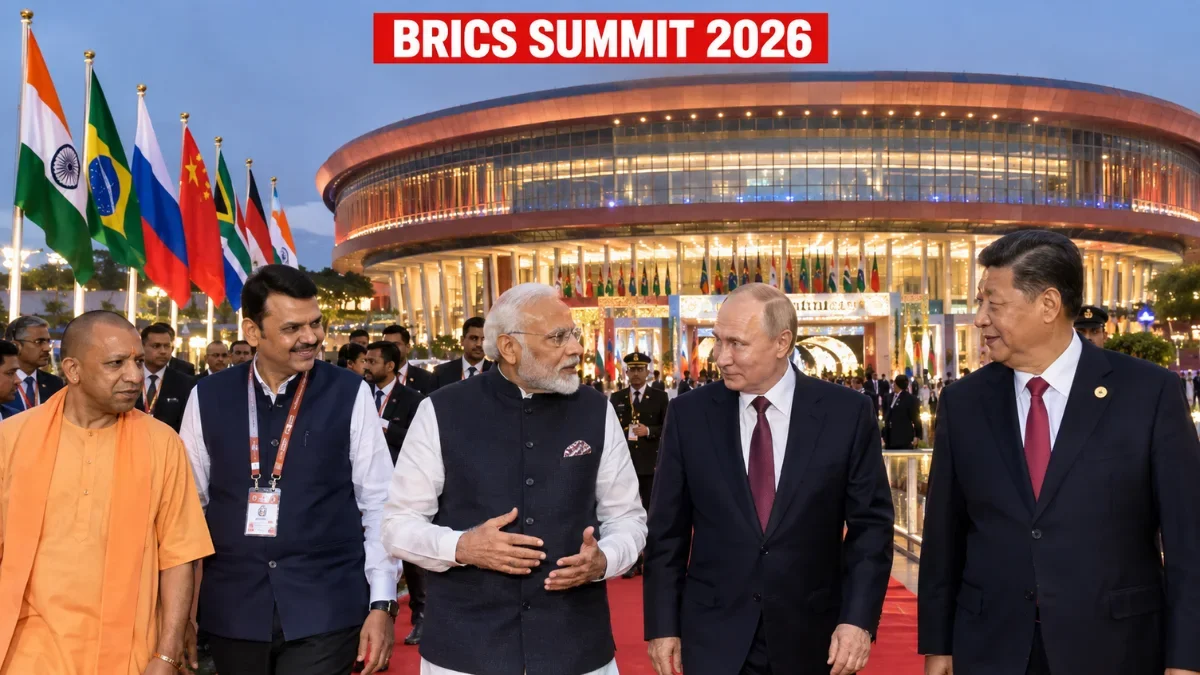
The 18th BRICS Leaders' Summit in New Delhi brought together international heavyweights, including Russian President Vladimir Putin and Chinese President Xi Jinping, alongside India's top leadership. Hosted by Prime Minister Narendra Modi at the state-of-the-art Bharat Mandapam, the summit served as a crucial platform for discussing global governance, economic cooperation, and regional stability.
What marked a distinctive domestic dimension at this international event was the active participation of prominent regional leaders. Senior Chief Ministers, including Uttar Pradesh Chief Minister Yogi Adityanath and Maharashtra Chief Minister Devendra Fadnavis, joined Union Ministers and national dignitaries to welcome global counterparts and attend high-level engagements, reflecting a unified national approach to foreign diplomacy.
Why Domestic Leadership Engagement Matters in Diplomacy
The inclusion of key state chief ministers alongside Prime Minister Modi underscores a growing trend of cooperative federalism in India's external engagements. As states like Uttar Pradesh and Maharashtra drive substantial shares of India's economic output, manufacturing growth, and infrastructure expansion, international summits provide an opportunity to showcase regional capabilities to global investors.
During the summit events, leaders focused heavily on multilateral trade, resilient supply chains, and financial stability. While Prime Minister Modi held crucial bilateral discussions with President Putin and President Xi to address long-standing border frameworks and trade imbalances, the presence of regional executives demonstrated India's administrative depth and coordinated governance framework to visiting international delegations.
Key Highlights and Diplomatic Takeaways
The two-day summit featured intensive dialogue on pressing geopolitical challenges, ranging from maritime security and regional conflicts to digital trade and energy cooperation.
Bilateral Dialogues: PM Modi's talks with President Xi Jinping emphasized that border differences must not turn into active disputes, reinforcing mutual respect and strategic stability. Meanwhile, discussions with President Putin reaffirmed strong energy and defense ties.
Cultural Diplomacy: Visiting dignitaries and domestic leaders, including Chief Ministers Yogi Adityanath and Devendra Fadnavis, partook in cultural showcases and state banquets celebrating India's heritage.
Economic Focus: Discussions centered around expanding local currency settlements, boosting MSME growth, and enhancing technological cooperation across BRICS member nations.
What Lies Ahead for India's Global Stance?
As India concludes its prominent role in shaping multilateral dialogue through the BRICS framework, the focus shifts toward implementing the economic and strategic understandings reached in New Delhi. For ordinary citizens and domestic industries, the strengthened supply chains and diplomatic stability translate into long-term economic predictability, greater foreign investment inflows, and enhanced regional security. The seamless synergy between central leadership and state administrators during high-stakes global events signals India's readiness to shoulder greater responsibilities on the world stage.