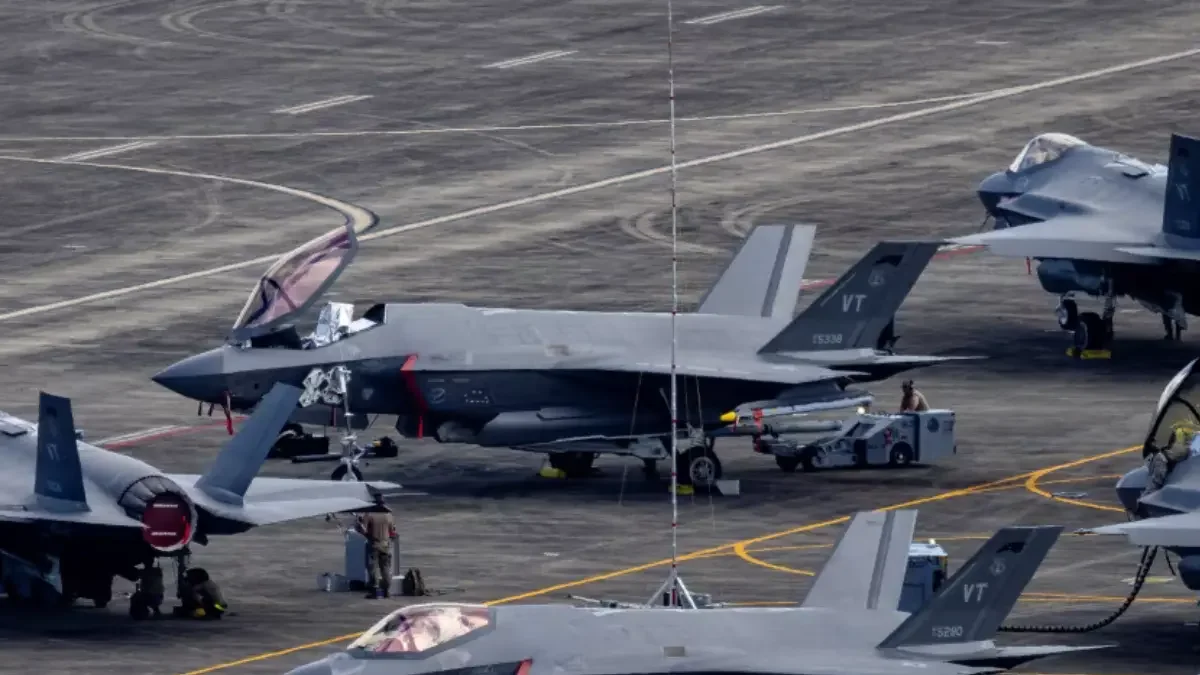
The US State Department has formally approved a potential Foreign Military Sale to Saudi Arabia valued at an estimated $24.3 billion. The landmark defense package includes 48 Lockheed Martin F-35A Lightning II stealth fighter jets and 49 Pratt & Whitney F135 engines, alongside advanced cryptographic systems, electronic warfare support, spare parts, and comprehensive pilot training programs.
If finalized, the transaction would make Saudi Arabia the first Arab nation to operate fifth-generation stealth fighters, significantly upgrading the air power landscape in the Gulf region.
Key Details of the $24.3 Billion Defense Package
Saudi Arabia requested two full fighter squadrons—comprising 48 conventional takeoff and landing F-35A aircraft—to modernize its Royal Saudi Air Force fleet. Riyadh currently relies on Boeing F-15s and European Eurofighter Typhoons as its core fighter backbone.
The proposed agreement has now been submitted for a mandatory 30-day review period in the US Congress. US State Department officials stated that the sale supports American strategic goals by bolstering a major non-NATO ally, adding that the transaction will not alter the military balance in the Middle East. Lockheed Martin and Pratt & Whitney will serve as the primary defense contractors.
Regional Impact and Security Dynamics
The announcement comes during heightened geopolitical tensions across the Middle East, including ongoing exchanges involving Houthi forces in Yemen and broader security conflicts near vital Gulf trade corridors. Stealth technology allows aircraft to evade radar detection, enabling long-range strike capability and advanced intelligence gathering.
Washington has historically evaluated advanced arms transfers to Arab partners against its legal commitment to preserve Israel's Qualitative Military Edge (QME), ensuring Israel maintains tactical air superiority in the region. Israel has operated the F-35 since 2016. Additionally, US lawmakers and intelligence analysts have raised scrutiny regarding Saudi Arabia's defense and technology links with China, evaluating measures to protect sensitive operational hardware.
What Happens Next?
The proposed sale now enters a 30-day congressional scrutiny window during which US lawmakers may evaluate or attempt to block the deal. If Congress raises no formal objections, Washington and Riyadh will move to negotiate final procurement contracts, manufacturing schedules, and delivery timelines. For international observers and global energy markets, changes in Middle East defense capabilities remain a critical factor for long-term regional stability and trade security.
also read ; US Passes Russia Sanctions Bill: What 100% Tariffs Mean for India