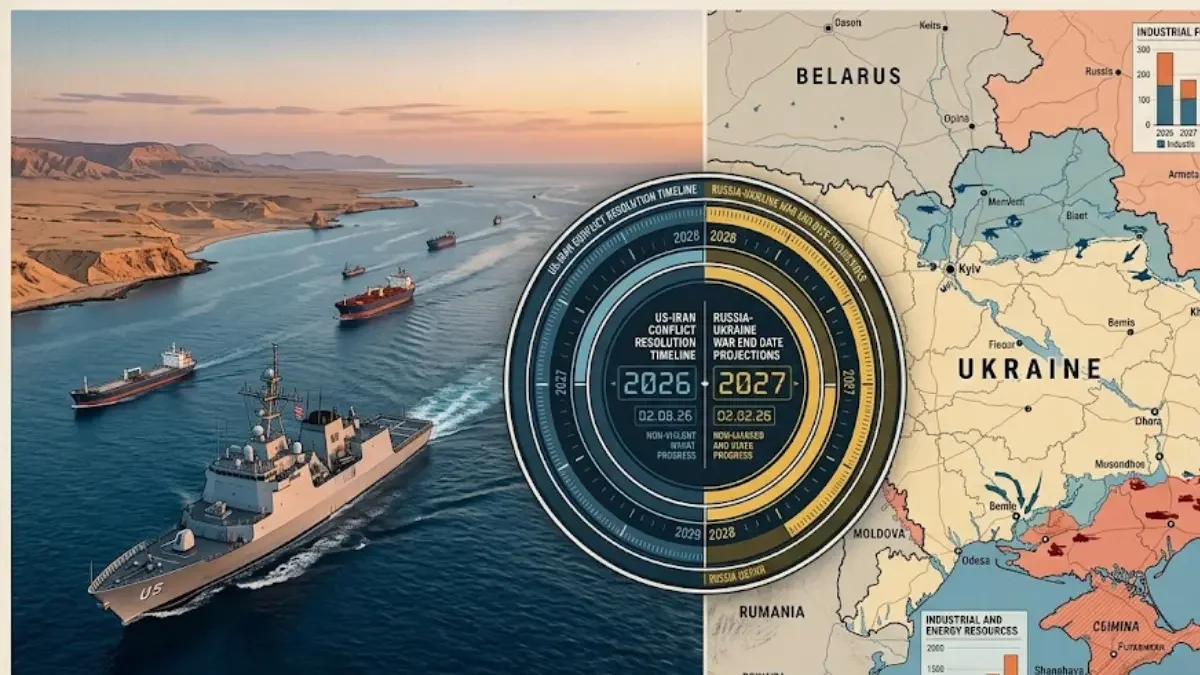
The global geopolitical landscape entering September 2026 remains heavily defined by two multi-theater conflicts: the seven-month-old direct military exchanges between the United States and Iran, alongside the long-running war between Russia and Ukraine.
With critical global shipping routes disrupted and defense expenditures soaring, citizens, markets, and international observers are asking one primary question: How much time will it realistically take to resolve these wars?
While military campaigns rarely follow strict schedules, strategic analyses from defense institutions, economic data, and diplomatic negotiations offer clear markers for when and how these twin crises might settle.
Part 1: The US-Iran Conflict Timeline
US-Iran War Key Milestones (2026)
├─ Feb 2026: Conflict Erupts over Shipping Lanes
├─ June 2026: Provisional Memorandum Sign-off
├─ Aug 2026: Restored Sanctions & Reciprocal Strikes
└─ Projections: Diplomatic Resolution Expected Late 2026 – Early 2027
Current Status (September 2026)
The US-Iran conflict—which erupted in late February 2026—entered a volatile new phase after the US military conducted strikes against launch positions on Larak Island to prevent renewed naval minelaying in the Strait of Hormuz. Iran responded with targeted drone and missile strikes toward regional bases, sustaining a high-stakes military stalemate.
Key Factors Shaping the Timeline
Economic Isolation: The United States has aggressively expanded economic sanctions to cripple Iranian trade.
Energy Security Pressures: Despite active patrols, daily commercial oil transits through the Strait of Hormuz remain fluctuating around two-thirds of pre-war volumes, applying steady inflationary pressure on Western markets.
Diplomatic Channels: Mediation efforts led by Qatar and Pakistan remain active, anchored around a revised June framework involving maritime navigation guarantees and economic relief.
Estimated Time to Resolution: 6 to 12 Months
Because neither Washington nor Tehran seeks an open-ended ground invasion, military analysts project that intense economic pressure and diplomatic intervention could force a formal ceasefire and negotiated maritime access deal between late 2026 and early 2027.
Part 2: The Russia-Ukraine War Timeline
Russia-Ukraine War Frontline Dynamics (2026)
├─ March–Aug 2026: Russian Spring/Summer Offensive Stalls
├─ July 2026: Peak Equipment & Casualty Losses
└─ Projections: Long-term Attrition Continuing through 2027–2028
Current Status (September 2026)
In Eastern Europe, Russia’s 2026 spring and summer offensive stalled short of its strategic objectives in the Donetsk region, held off by dense drone networks and deep defensive lines. While aerial strike exchanges against major urban centers like Kyiv persist, ground forces face structural attrition challenges.
Key Factors Shaping the Timeline
Industrial Capacity & Drones: Ukrainian drone saturation has restricted traditional mechanized armor pushes, converting ground operations into localized battles of position.
Manpower & Supply Mobilization: High casualty rates and recruitment shortfalls limit either side’s capacity to execute rapid, decisive territorial breakthroughs across the whole front.
Sustained Western Support: Continuous financial, air defense, and logistical support from allied nations remains central to Ukraine’s defense sustainability.
Estimated Time to Resolution: 18 to 36 Months
Unlike the localized maritime standoff in the Middle East, the Russia-Ukraine war is an attrition-based conflict over vast territorial boundaries. Current military assessments indicate that major combat operations are likely to continue through 2027 or 2028, with meaningful negotiation pathways dependent on major shifts in economic endurance, domestic mobilization capacities, or leadership policy.
also read : Nepal Floods 2026: Affected Areas, Cause, PM Statement & International Aid