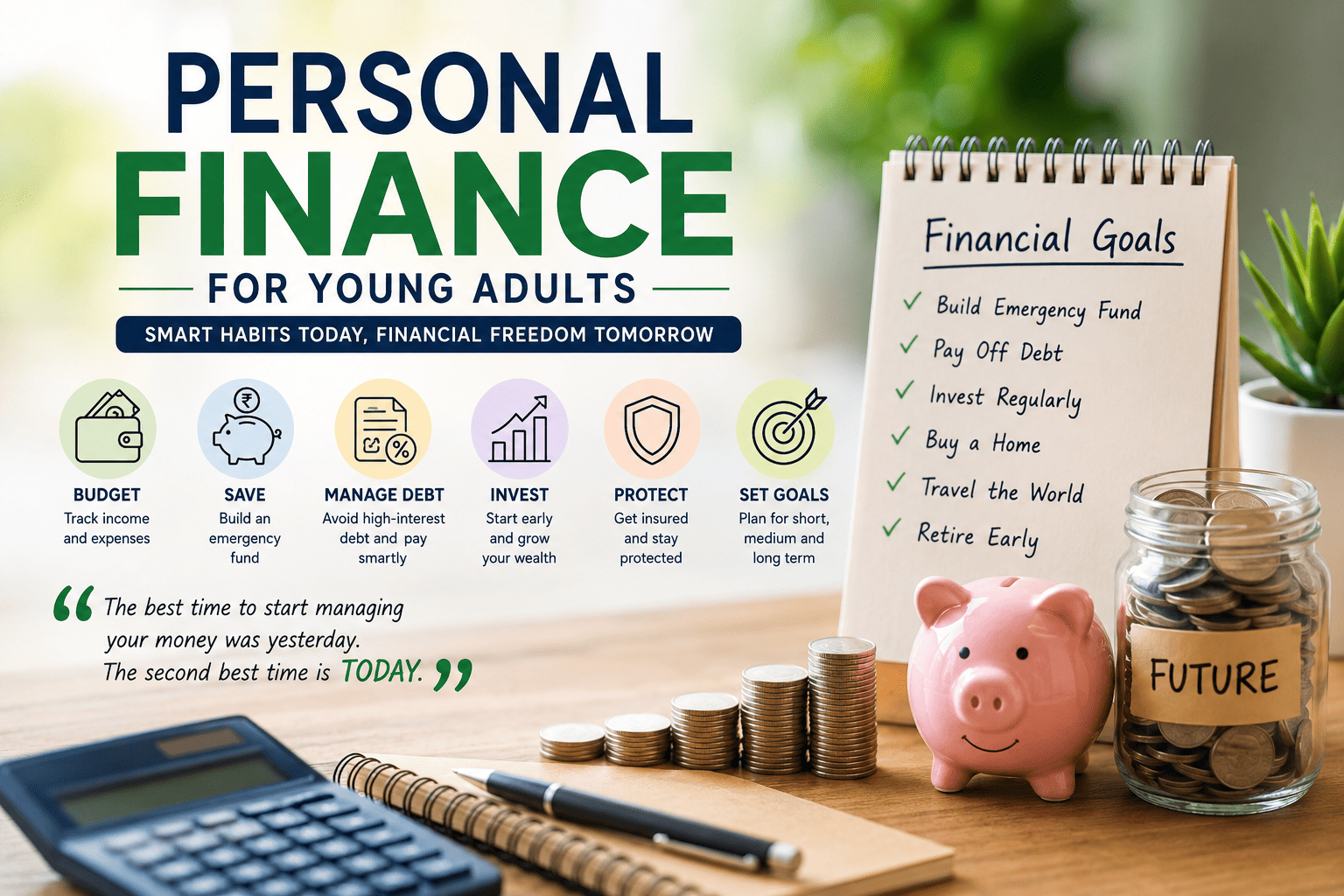
Personal Finance for Young Adults: Start Early, Build Wealth Faster
Managing money can feel overwhelming when you're just starting your career, paying bills, and planning for the future. However, learning personal finance at a young age is one of the most powerful decisions you can make. The financial habits you develop in your 20s and early 30s can significantly impact your future wealth, lifestyle, and financial security.
Whether you're a student, a recent graduate, or a young professional, understanding the basics of personal finance can help you avoid common financial mistakes and build a strong foundation for long-term success.
Why Personal Finance Matters
Personal finance isn't just about saving money—it's about making informed decisions that help you achieve your life goals.
Good financial management helps you:
- Reduce financial stress
- Build an emergency fund
- Avoid unnecessary debt
- Invest for the future
- Achieve financial independence
- Prepare for major life events
The earlier you start, the more time your money has to grow through the power of compounding.
Create a Budget That Works
A budget is the foundation of financial success. It helps you understand where your money goes and ensures you're spending within your means.
Popular Budgeting Rule: 50/30/20
- 50% for necessities (rent, food, utilities)
- 30% for wants (entertainment, dining out, hobbies)
- 20% for savings and investments
Tracking your income and expenses regularly can reveal spending patterns and opportunities to save more.
Budgeting Tips
- Use budgeting apps or spreadsheets
- Review expenses monthly
- Set spending limits for discretionary purchases
- Avoid impulse buying
Build an Emergency Fund
Life is unpredictable. Unexpected medical expenses, job loss, or car repairs can create financial stress if you're unprepared.
Aim to save:
- 3–6 months of living expenses
- Keep funds in a high-yield savings account
- Use it only for genuine emergencies
An emergency fund acts as a financial safety net and prevents you from relying on credit cards during difficult times.
Understand and Manage Debt
Not all debt is bad, but high-interest debt can severely impact your financial future.
Common Types of Debt
- Student loans
- Credit card debt
- Personal loans
- Car loans
Smart Debt Management Strategies
- Pay more than the minimum payment
- Prioritize high-interest debt first
- Avoid unnecessary borrowing
- Maintain a good credit score
Responsible debt management can save thousands in interest over time.
Start Investing Early
One of the biggest advantages young adults have is time.
Even small investments can grow significantly over decades through compound growth.
Investment Options for Beginners
- Index funds
- Mutual funds
- Exchange-Traded Funds (ETFs)
- Retirement accounts
- Stocks (with proper research)
Benefits of Early Investing
- Long-term wealth accumulation
- Protection against inflation
- Potential passive income
- Financial independence
For example, investing ₹5,000 monthly from age 25 can potentially generate a much larger corpus than starting at age 35 with the same amount.
Improve Your Financial Literacy
Financial education is a lifelong process.
Topics worth learning include:
- Investing basics
- Tax planning
- Insurance
- Retirement planning
- Credit management
- Wealth creation strategies
The more you understand money, the better financial decisions you'll make.
Set Clear Financial Goals
Goals provide direction and motivation.
Short-Term Goals (1–3 Years)
- Build an emergency fund
- Pay off credit card debt
- Buy a laptop or vehicle
- Save for travel
Medium-Term Goals (3–10 Years)
- Purchase a home
- Start a business
- Higher education
Long-Term Goals (10+ Years)
- Retirement planning
- Financial independence
- Wealth creation
Write down your goals and track your progress regularly.
Protect Yourself with Insurance
Many young adults overlook insurance because they feel healthy and financially secure.
Important types include:
- Health insurance
- Life insurance (if you have dependents)
- Vehicle insurance
- Disability coverage
Insurance protects your finances from unexpected setbacks.
Avoid Lifestyle Inflation
As income increases, many people immediately increase their spending.
Examples include:
- Expensive gadgets
- Luxury vehicles
- Frequent dining out
- Unnecessary subscriptions
Instead of spending every raise, consider:
- Increasing investments
- Paying off debt
- Building savings
- Investing in personal development
This approach accelerates wealth creation.
Build Multiple Income Streams
Relying on a single source of income can be risky.
Additional income opportunities include:
- Freelancing
- Online businesses
- Content creation
- Dividend investments
- Rental income
- Consulting services
Multiple income streams can provide greater financial security and faster wealth growth.
Develop Smart Money Habits
Successful personal finance often comes down to consistent habits.
Habits to Adopt
✅ Save before spending
✅ Invest regularly
✅ Track expenses
✅ Avoid unnecessary debt
✅ Maintain a financial plan
✅ Continue learning about money
Small financial decisions repeated over time create significant results.
Common Financial Mistakes Young Adults Should Avoid
- Living beyond their means
- Ignoring savings
- Delaying investments
- Carrying high-interest debt
- Not having an emergency fund
- Following financial trends without research
- Neglecting retirement planning
Avoiding these mistakes can put you years ahead financially.
Final Thoughts
Personal finance is not about becoming rich overnight. It's about developing disciplined habits that help you build stability, security, and wealth over time.
Young adults who learn budgeting, saving, investing, and debt management early gain a tremendous advantage. Even small financial decisions made today can have a significant impact on your future.
The best time to start managing your money wisely was yesterday. The second-best time is today.
Remember: Financial freedom is not determined by how much you earn—it's determined by how well you manage and grow what you earn.