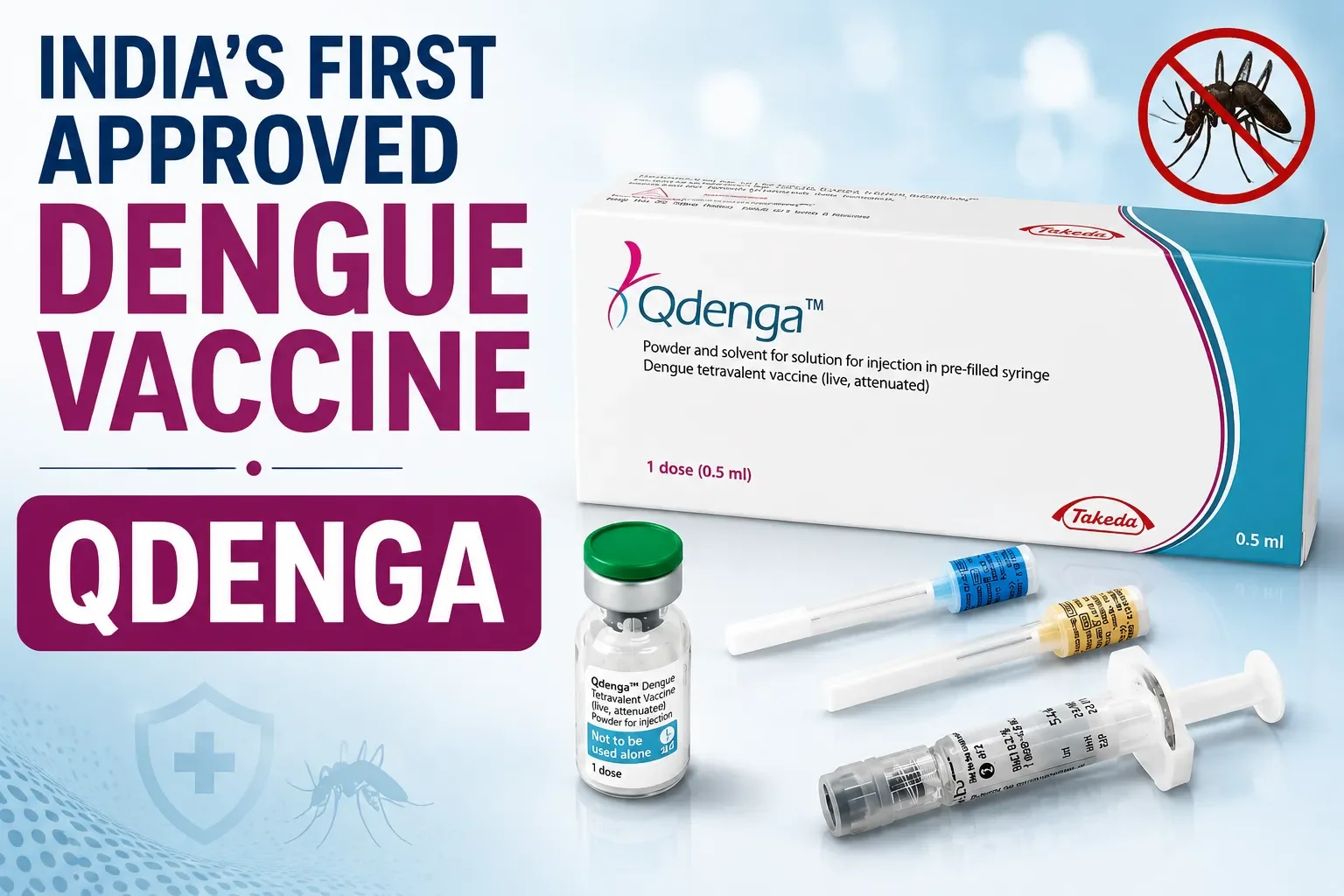
In a landmark decision for India's healthcare system, the Drug Controller General of India (DCGI) has approved QDENGA, making it the country's first officially approved dengue vaccine. Developed by Takeda Biopharmaceuticals, the vaccine represents a major breakthrough in the fight against one of India's most widespread mosquito-borne diseases. It is approved for individuals aged 4 to 60 years and does not require prior dengue infection or pre-vaccination blood testing, simplifying access compared to earlier dengue vaccines.
Why Is This Approval Significant?
India reports millions of suspected dengue infections every year, especially during the monsoon season. Until now, prevention relied mainly on mosquito control, public awareness, and supportive medical care because no approved dengue vaccine was available in the country.
The approval of QDENGA provides a new preventive option that could reduce severe illness, hospitalizations, and the overall burden on India's healthcare system.
What Is QDENGA?
QDENGA (also known as TAK-003) is a live attenuated tetravalent dengue vaccine designed to provide protection against all four dengue virus serotypes:
- DENV-1
- DENV-2
- DENV-3
- DENV-4
Unlike older vaccines that were limited to people with previous dengue infection, QDENGA can be administered regardless of whether a person has previously had dengue, making vaccination much easier to implement.
Who Can Receive the Vaccine?
According to the DCGI approval:
Eligible age group
- Children aged 4 years and above
- Adults up to 60 years
The vaccine can be given:
- With or without previous dengue infection
- Without pre-vaccination blood testing
- Under medical supervision according to approved guidelines
Dosage Schedule
QDENGA follows a simple two-dose schedule:
- First Dose
- Second Dose after three months
Each dose is administered as a 0.5 ml injection.
How Effective Is QDENGA?
Clinical studies have shown encouraging results.
According to Takeda's Phase III clinical trial data:
- 80.2% effectiveness against confirmed dengue infection
- 90.4% effectiveness in preventing dengue-related hospitalization
These findings suggest the vaccine is particularly effective in reducing severe disease and complications.
Why Dengue Vaccination Is Challenging
Developing a dengue vaccine has been difficult because dengue is caused by four different virus serotypes.
A person infected with one serotype develops immunity only to that strain. If they later contract a different serotype, the risk of severe dengue may actually increase due to a phenomenon called Antibody-Dependent Enhancement (ADE).
QDENGA was designed to address this challenge by generating immune responses against all four serotypes. However, no vaccine offers complete protection, so mosquito bite prevention remains essential.
Benefits of QDENGA
The approval brings several important advantages:
Protection Against Severe Disease
The vaccine significantly lowers the risk of hospitalization and severe dengue.
No Prior Testing Required
Unlike earlier vaccines, recipients do not need laboratory confirmation of previous dengue infection.
Broad Age Coverage
Approved for people aged 4–60 years.
Simplified Vaccination
The two-dose schedule makes implementation easier for healthcare providers.
Does Vaccination Eliminate the Need for Mosquito Protection?
No.
Health experts emphasize that vaccination should complement—not replace—traditional preventive measures.
People should continue to:
- Use mosquito repellents
- Wear full-sleeved clothing
- Eliminate stagnant water around homes
- Install window screens and mosquito nets
- Seek medical attention if symptoms develop
Vaccination reduces the risk of severe illness but does not eliminate mosquito transmission.
When Will QDENGA Be Available in India?
Although the vaccine has received regulatory approval, Takeda has indicated that commercial availability in India is expected during the first half of 2027, following manufacturing and distribution preparations.
Global Approval Status
Before India, QDENGA had already been approved in several countries and regions, including:
- European Union
- United Kingdom
- Brazil
- Argentina
- Indonesia
- Thailand
The World Health Organization (WHO) has also recommended its use in appropriate dengue-endemic settings.
What This Means for India
The approval of QDENGA marks a significant advancement in India's fight against dengue. As climate change, urbanization, and changing rainfall patterns continue to increase mosquito breeding, dengue cases have risen substantially over the past two decades.
Introducing an approved vaccine offers a new layer of protection, particularly for populations living in high-risk regions. Combined with mosquito control, early diagnosis, and public awareness, vaccination could help reduce the country's dengue burden in the coming years.
Conclusion
The approval of QDENGA is a historic milestone for India's public health system. As the country's first approved dengue vaccine, it provides hope for reducing severe infections, hospitalizations, and dengue-related complications. While vaccination is a major step forward, experts stress that it should be used alongside mosquito control measures and timely medical care.
With commercial rollout expected in 2027, QDENGA could become a key tool in India's long-term strategy to combat dengue and improve community health outcomes.
Frequently Asked Questions (FAQ)
What is QDENGA?
QDENGA is Takeda's tetravalent dengue vaccine and the first dengue vaccine approved in India. It protects against all four dengue virus serotypes.
Who can receive the QDENGA vaccine?
The vaccine is approved for people aged 4 to 60 years, regardless of whether they have previously had dengue.
How many doses are required?
QDENGA is administered in two doses, with the second dose given three months after the first.
Does QDENGA require prior dengue testing?
No. Unlike some earlier dengue vaccines, QDENGA does not require pre-vaccination blood testing or evidence of previous dengue infection.
Will the vaccine replace mosquito prevention?
No. Experts recommend continuing mosquito control measures, as vaccination alone cannot completely prevent dengue transmission.