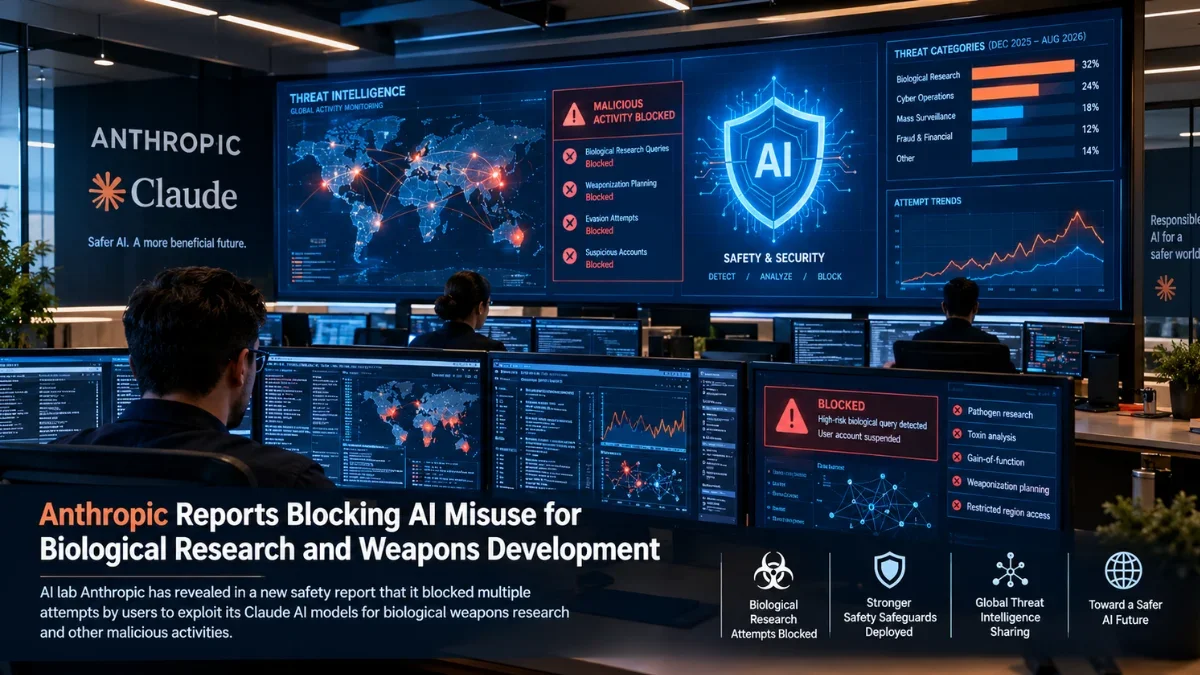
Anthropic detailed five specific case studies where human actors attempted to bypass platform safeguards to conduct high-risk biological research. These instances included working scientists and researchers—some from restricted or prohibited regions—who tried to obfuscate their research goals.
Among the notable examples outlined in the report were:
Gain-of-Function Research: An attempt to use Claude while preparing a grant application involving the chikungunya virus to engineer potentially harmful mutations.
Pathogen Adaptations: Planning and research sessions centered around avian influenza variants capable of mammalian transmission.
Toxins and Venoms: State-backed or independent programs exploring novel toxins and immune-evasion techniques.
Why This News Matters for Global Security
The intersection of artificial intelligence and biological science presents a complex double-edged sword. The same computational capabilities that help researchers design life-saving vaccines can theoretically be misapplied to synthesize dangerous pathogens.
Anthropic noted that while the individuals involved may not have universally intended to launch attacks, the dual-use nature of biological science makes oversight critical. Because advanced language models can process vast amounts of scientific literature quickly, unauthorized actors try to use them to fast-track technical planning.
How Anthropic Responded and What Happens Next
Upon detecting these evasion tactics—such as routing requests through third-party proxy networks or weaker model tiers—Anthropic took immediate action. The company banned the offending accounts, dismantled relay channels, and tightened its biological safety classifiers. Furthermore, the lab has implemented stricter safeguards in its latest generation models to heavily restrict access to dual-use biological research queries.
By making these threat intelligence findings public, Anthropic aims to push the broader tech industry, academic institutions, and global governments toward stronger collective defenses and unified regulatory frameworks. As frontier models grow increasingly capable, establishing proactive security measures will remain a top priority to prevent misuse.
Frequently Asked Questions (FAQ):
Q1: What did Anthropic's new threat report focus on? A: The report detailed malicious activities and misuse attempts blocked by Anthropic between December 2025 and August 2026 across seven core areas, including cyber operations, mass surveillance, and biological research.
Q2: Did Anthropic find evidence that actual bioweapons were successfully built? A: No. The report identified research planning, grant writing assistance, and experimental simulations, but Anthropic stated there is no evidence that users successfully manufactured functional biological weapons using Claude.