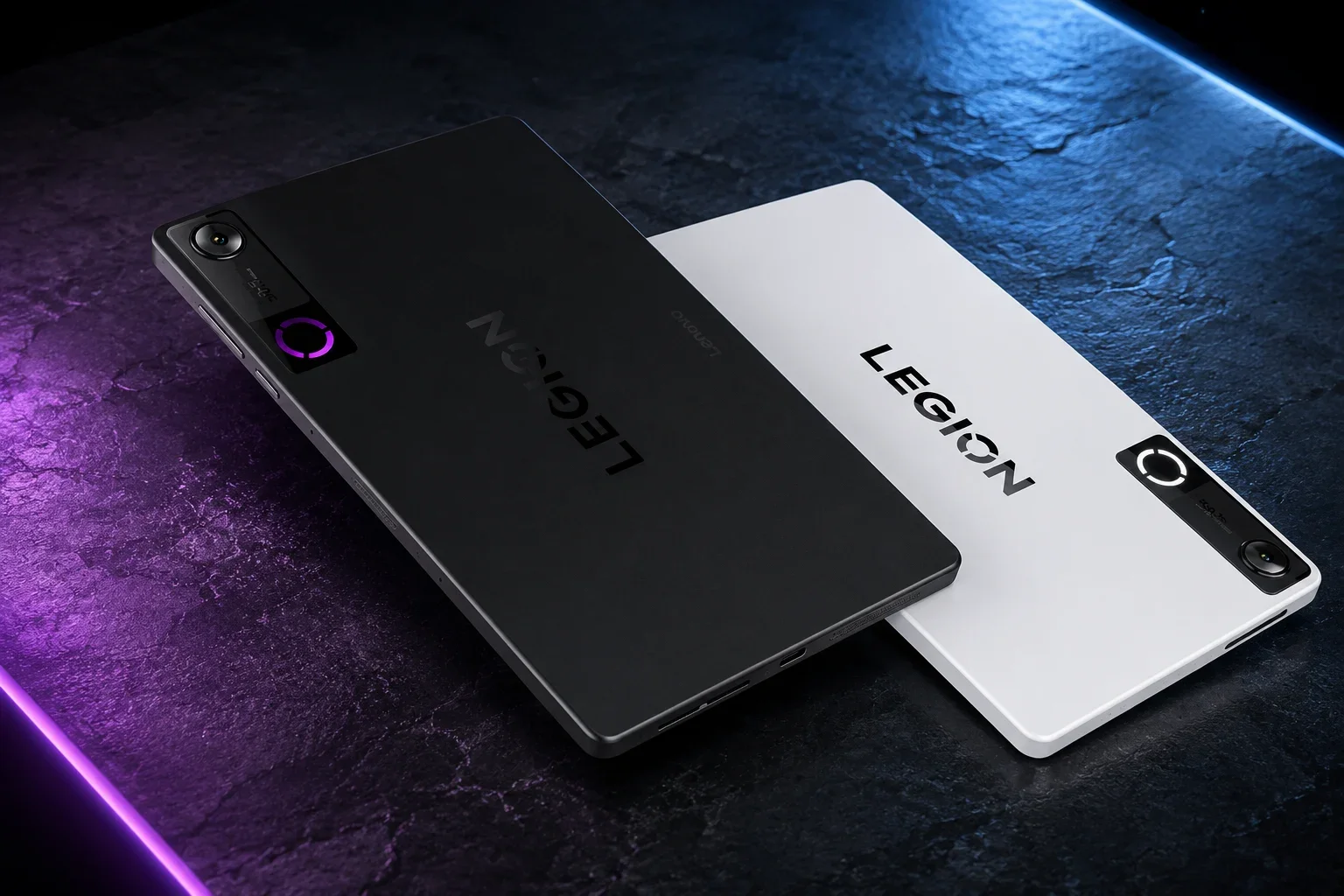
Compact gaming tablets have carved out a real niche over the past few years, and Lenovo's Legion Y700 series has been one of the category's most consistent performers. Now, the company is preparing its next entry — the Legion Y700 AI — and the early teasers are focused squarely on something gaming tablets don't usually prioritize: making the device thinner and lighter without gutting its performance credentials.
That's a notable shift. Gaming tablets typically lean into thicker chassis to accommodate bigger batteries and cooling hardware, often at the cost of portability. Lenovo's early reveals suggest the Legion Y700 AI is trying to have it both ways — a genuinely slim, lightweight body alongside flagship-tier internals. Whether that trade-off holds up once the full specification sheet lands remains to be seen, but the direction is clear enough to get gaming tablet fans paying attention.
Here's a breakdown of everything officially revealed so far, what's been leaked, and what's still speculation.
Lenovo Legion Y700 AI Design and Build
Lenovo's teaser campaign has focused heavily on the tablet's physical design. The company has confirmed a symmetrical bezel design measuring around 2.89mm on each side, which pushes the screen-to-body ratio higher than previous Legion Tab models and gives the device a more immersive, edge-to-edge look.
The teaser materials also point to a punch-hole front camera cutout, a change from the notch-style front camera used on the previous-generation Legion Tab. Some outlets have flagged this as a minor step back aesthetically, since punch-hole cutouts interrupt the screen slightly more than a notch tucked into the bezel — though it's a small trade-off in exchange for slimmer bezels overall.
Slimmer Body and Lighter Weight
This is the headline change Lenovo is promoting. According to official teasers:
- Weight: approximately 298 grams
- Thickness: approximately 6.5mm
Lenovo has positioned these figures as putting the tablet among the slimmest and lightest devices in its class, and at least one report notes it comes in lighter than the RedMagic Astra 2, a direct rival in the compact gaming tablet space.
For a gaming-focused tablet, that's a meaningful design statement. Slimmer, lighter bodies are usually associated with productivity tablets rather than gaming ones, where thicker chassis typically house larger batteries and cooling systems. If Lenovo has managed to hit these numbers while still supporting flagship-level performance, it would represent a real shift in how compact gaming tablets are built — though it also raises questions about battery capacity and thermal headroom, addressed further below.
Display Size, Resolution and Refresh Rate
Teasers point to an 8.4-inch OLED display — a change from the LCD panel used in the previous Legion Y700 Gen 5. Confirmed display details include:
- 4,000 nits peak brightness
- 165Hz refresh rate
- Symmetrical, narrow bezels around the panel
An OLED panel would be a notable upgrade over the outgoing model, offering deeper contrast and richer colors alongside the high refresh rate gamers expect from this lineup.
Expected Gaming Performance
Full benchmarks obviously aren't available yet, but the combination of an OLED 165Hz display, a high-end Snapdragon chipset, and vapor chamber cooling suggests Lenovo is targeting the same demanding mobile gaming audience it has courted with previous Legion Tab models. Sustained performance in longer gaming sessions will likely depend heavily on how the slimmer chassis handles heat — a point that's still unconfirmed and worth watching once independent reviews arrive.
Processor and AI-Related Features
Lenovo has teased that the Legion Y700 AI will run on an overclocked, "Leading Edition" variant of Qualcomm's Snapdragon 8 Elite Gen 5, reportedly capable of hitting a peak CPU clock speed of around 4.74GHz. This would place it among the fastest mobile chipsets currently used in a gaming tablet.
On the AI side, Lenovo has teased AI features aimed at productivity and creative tools, in keeping with the "AI" branding in the tablet's name. The company hasn't detailed exactly what these features do yet, so specifics here remain unconfirmed. For context, the previous Legion Y700 Gen 5 shipped with gaming-oriented AI tools like AI Voiceprint Hunter and AI Pixel Sniper, and it's reasonable to expect the Y700 AI to build on that foundation — though this is an inference based on the prior model, not an official confirmation for this specific device.
RAM and Storage Variants
Lenovo has not officially confirmed RAM and storage configurations for the Legion Y700 AI. Based on the pattern set by the outgoing Legion Y700 Gen 5 — which launched in 12GB/256GB configurations, with rumored variants reaching up to 24GB of RAM and 1TB of storage — it's reasonable to expect similarly tiered options. This is an expectation based on precedent, not a confirmed detail for the AI model specifically.
Battery Capacity and Charging Capabilities
This is one of the bigger open questions. The previous Legion Y700 Gen 5 packed a substantial 9,000mAh battery with 68W fast charging, but that model was noticeably thicker than the 6.5mm profile teased for the Y700 AI. Lenovo has not yet revealed battery specifications for the new model, and given the slimmer chassis, it's plausible the capacity will be adjusted — though whether that means a smaller cell, a different battery chemistry, or some other trade-off is currently unknown. Readers should treat battery details as unconfirmed until Lenovo releases official figures.
Cooling System and Thermal Management
Lenovo has confirmed the tablet will include vapor chamber cooling, consistent with the rest of the Legion Tab lineup. The previous Gen 5 model used a 17,353 sq mm liquid-cooled vapor chamber, one of the largest in its category. Whether the Y700 AI's slimmer body can accommodate a similarly large cooling structure hasn't been detailed, and this remains an important variable for sustained gaming performance.
Speakers and Audio Features
Lenovo has not shared specific details about the speaker configuration or audio features for the Legion Y700 AI. Previous Legion Tab models have typically included quad speaker setups tuned for gaming, so a similar arrangement is plausible, but this should be treated as an expectation rather than a confirmed spec until Lenovo provides details.
Connectivity Options
Confirmed connectivity details include:
- Native 5G support, specifically the N79 band, via a built-in SIM card slot
- Presumed Wi-Fi and Bluetooth support, consistent with prior Legion Tab models (not yet explicitly detailed)
Native 5G is a notable inclusion, since it lets the tablet handle cellular data independently rather than relying on a phone hotspot — useful for gaming or streaming on the move.
Software and Gaming-Focused Features
Full software details haven't been revealed, but Lenovo's teasers point to AI-driven productivity and creative tools layered on top of its usual Legion gaming software suite. Expect a customized Android skin with gaming-centric shortcuts, performance modes, and possibly the AI-branded tools referenced in Lenovo's marketing — though, again, specific feature names and functionality haven't been officially detailed for this model.
Expected Launch Date and Availability
Lenovo has confirmed the Legion Y700 AI will launch in the Chinese market in August 2026, though an exact date has not been announced. There is currently no confirmation of a global release. Lenovo's previous Legion Y700 models have had mixed international availability, with some reaching global markets through official channels or third-party retailers and others remaining China-exclusive for extended periods — so international buyers should treat a global launch as uncertain for now.
Expected Price and Positioning
Pricing has not been officially confirmed, but early expectations point to a starting price in the 5,000-yuan range (roughly $700 USD, though currency conversions fluctuate). That would put it firmly in premium territory compared to the outgoing Legion Y700 Gen 5, which started at CNY 3,999. This should be treated as an estimate rather than confirmed pricing until Lenovo makes an official announcement.
How It Could Compare With Competing Gaming Tablets
The compact gaming tablet segment has become increasingly competitive, with devices like the RedMagic Astra 2 targeting similar buyers. Based on what's been revealed so far:
- The Legion Y700 AI's 298g weight reportedly undercuts the RedMagic Astra 2, positioning it as one of the lighter options in the category.
- Its OLED display with 4,000-nit peak brightness would be a meaningful upgrade over LCD-based rivals, assuming the panel performs as advertised.
- Its overclocked Snapdragon 8 Elite Gen 5 chipset should keep it competitive on raw performance with other 2026 flagship gaming tablets.
That said, without confirmed battery and cooling details, it's too early to say definitively how it stacks up against rivals in sustained gaming performance or battery life — areas where thicker competitors may still have an advantage.
Who Should Consider Buying the Legion Y700 AI
Based on what's known so far, the Legion Y700 AI looks best suited to:
- Mobile gamers who prioritize portability and want a tablet that's genuinely comfortable to hold for long sessions
- Buyers interested in a high-refresh, high-brightness OLED display for gaming and media
- Users who want native 5G connectivity without relying on a phone hotspot
- Fans of the Legion Tab lineup looking for the latest flagship chipset in a lighter package
Buyers who prioritize maximum battery life or the largest possible cooling system for extended gaming sessions may want to wait for full specifications, since those details remain unconfirmed and could involve trade-offs tied to the slimmer design.
Specification Summary
| Feature | Status | Details |
|---|---|---|
| Weight | Confirmed | ~298g |
| Thickness | Confirmed | ~6.5mm |
| Bezels | Confirmed | ~2.89mm, symmetrical |
| Display | Confirmed | 8.4-inch OLED, 4,000 nits peak brightness, 165Hz refresh rate |
| Front camera | Confirmed | Punch-hole cutout |
| Processor | Confirmed (teased) | Snapdragon 8 Elite Gen 5 "Leading Edition," peak clock ~4.74GHz |
| 5G connectivity | Confirmed | N79 band, built-in SIM slot |
| Cooling | Confirmed | Vapor chamber (exact size not yet detailed) |
| AI features | Confirmed (unspecified) | Productivity and creative-focused AI tools teased |
| RAM/Storage | Expected | Likely tiered configurations, exact specs unconfirmed |
| Battery capacity | Unconfirmed | Likely smaller than Gen 5's 9,000mAh given slimmer body |
| Charging speed | Unconfirmed | Not yet detailed |
| Speakers/audio | Unconfirmed | Likely multi-speaker setup based on prior models |
| Launch market | Confirmed | China, August 2026 |
| Global availability | Unconfirmed | No international launch confirmed |
| Price | Expected (rumored) | Around 5,000 yuan (~$700 USD) |
Also Read: Top Mechanical Keyboards in 2026 for Gamers, Creators and Professionals
Does the Slimmer Design Make It a Stronger Choice?
Based on what Lenovo has revealed so far, the Legion Y700 AI's slimmer, lighter design is a genuinely appealing shift for a category that's typically defined by bulk. A 298-gram, 6.5mm-thick chassis paired with an OLED 165Hz display and a flagship Snapdragon chipset would make for one of the more portable high-performance gaming tablets on the market — if Lenovo can deliver on battery life and thermal management without the extra bulk that usually enables them.
That's the real open question. A slimmer body is only a genuine upgrade if it doesn't force meaningful compromises on battery capacity or sustained performance under load — and those details haven't been confirmed yet. Until Lenovo shares battery, charging, and full performance specifications, it's fair to view the Legion Y700 AI as a promising but incomplete picture: an exciting design direction that still needs the rest of its spec sheet to back it up.