Introduction
In today's fast-paced world, stress, anxiety, and constant distractions have become a part of daily life. Many people are searching for effective ways to improve their mental well-being and find inner peace. One practice that has gained significant attention in recent years is mindfulness meditation.
Mindfulness meditation is a simple yet powerful technique that helps individuals focus on the present moment without judgment. Whether you're a student, professional, entrepreneur, or retiree, incorporating mindfulness into your daily routine can bring numerous physical, emotional, and mental health benefits.
What Is Mindfulness Meditation?
Mindfulness meditation is the practice of paying attention to your thoughts, feelings, and surroundings in the present moment. Instead of worrying about the future or dwelling on the past, mindfulness encourages you to fully experience what is happening right now.
The practice often involves:
Focusing on your breath
Observing thoughts without judgment
Becoming aware of bodily sensations
Practicing gratitude and acceptance
Even a few minutes of mindfulness meditation each day can have a profound impact on your overall well-being.
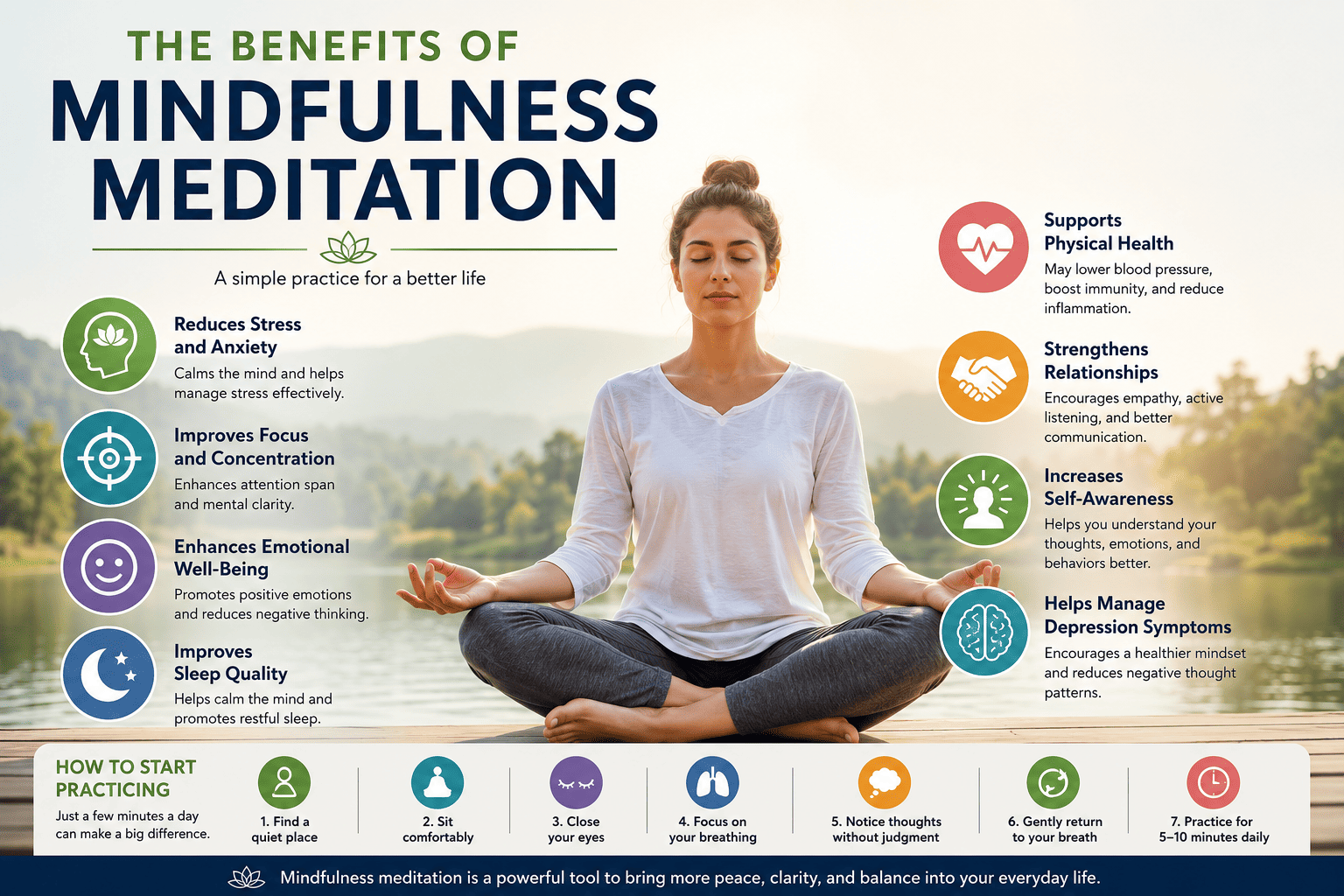
1. Reduces Stress and Anxiety
One of the most well-known benefits of mindfulness meditation is stress reduction. Daily responsibilities, work pressure, financial concerns, and personal challenges can trigger chronic stress.
Mindfulness helps calm the nervous system by teaching the mind to stay focused on the present rather than worrying about future uncertainties.
Benefits include:
Lower stress levels
Reduced anxiety symptoms
Improved emotional stability
Better stress management skills
People who practice mindfulness regularly often report feeling more relaxed and in control of their emotions.
2. Improves Mental Clarity and Focus
In a world filled with constant notifications and distractions, maintaining focus can be challenging.
Mindfulness meditation trains the brain to concentrate on one thing at a time. This increased awareness improves cognitive function and helps individuals stay productive throughout the day.
Key advantages:
Enhanced concentration
Improved memory retention
Better decision-making abilities
Increased productivity
Students and professionals alike can benefit from improved focus through regular meditation practice.
3. Enhances Emotional Well-Being
Mindfulness meditation encourages self-awareness and emotional acceptance. Instead of reacting impulsively to situations, practitioners learn to observe their emotions calmly.
This emotional awareness can lead to:
Greater happiness
Increased self-confidence
Better emotional regulation
Reduced negative thinking
Over time, mindfulness helps create a healthier relationship with emotions and promotes a more positive outlook on life.
4. Improves Sleep Quality
Millions of people struggle with insomnia and poor sleep due to stress, anxiety, and racing thoughts.
Mindfulness meditation helps quiet the mind before bedtime, making it easier to fall asleep and stay asleep.
Sleep-related benefits:
Faster sleep onset
Improved sleep quality
Reduced nighttime awakenings
Better morning energy levels
A simple 10-minute mindfulness session before bed can significantly improve sleep patterns.
5. Supports Physical Health
The connection between mental and physical health is stronger than many people realize. Chronic stress can negatively affect the body, contributing to various health issues.
Research suggests mindfulness meditation may help:
Lower blood pressure
Improve heart health
Strengthen the immune system
Reduce inflammation
Decrease chronic pain symptoms
By promoting relaxation and reducing stress hormones, mindfulness contributes to overall physical wellness.
6. Strengthens Relationships
Mindfulness encourages active listening, empathy, and emotional awareness. These qualities can improve communication and strengthen personal and professional relationships.
People who practice mindfulness often become:
Better listeners
More patient
Less reactive during conflicts
More understanding of others' perspectives
Improved relationships can lead to greater life satisfaction and emotional support.
7. Increases Self-Awareness
Mindfulness meditation allows individuals to observe their thoughts and behaviors more objectively.
This heightened self-awareness helps people:
Identify unhealthy habits
Understand emotional triggers
Make better life choices
Develop personal growth
By becoming more aware of ourselves, we can create positive changes that align with our values and goals.
8. Helps Manage Depression Symptoms
While mindfulness meditation is not a replacement for professional mental health treatment, it can be a valuable complementary practice.
Mindfulness helps individuals recognize negative thought patterns and develop healthier responses to them.
Many therapists incorporate mindfulness-based techniques into treatment plans because they can help reduce symptoms of depression and prevent emotional relapse.
9. Encourages Living in the Present Moment
Many people spend much of their time worrying about the future or regretting the past. Mindfulness meditation teaches us to fully engage with the present moment.
Living in the present can lead to:
Greater appreciation for life
Reduced worry and fear
Increased gratitude
Improved overall happiness
The simple act of being present can transform daily experiences and improve quality of life.
How to Start Practicing Mindfulness Meditation
Getting started is easier than you might think.
Simple Steps:
Find a quiet place.
Sit comfortably.
Close your eyes.
Focus on your breathing.
Notice thoughts without judgment.
Gently return your focus to your breath when your mind wanders.
Practice for 5–10 minutes daily.
Consistency is more important than duration. Even short sessions can produce meaningful benefits over time.
Conclusion
Mindfulness meditation is a powerful tool for improving mental, emotional, and physical well-being. From reducing stress and anxiety to enhancing focus, sleep, and relationships, the benefits are supported by both scientific research and personal experiences.
Incorporating mindfulness into your daily routine doesn't require special equipment or extensive training. Just a few minutes each day can help you cultivate greater peace, clarity, and resilience.
As life becomes increasingly busy and demanding, mindfulness meditation offers a simple path toward a healthier, happier, and more balanced life.