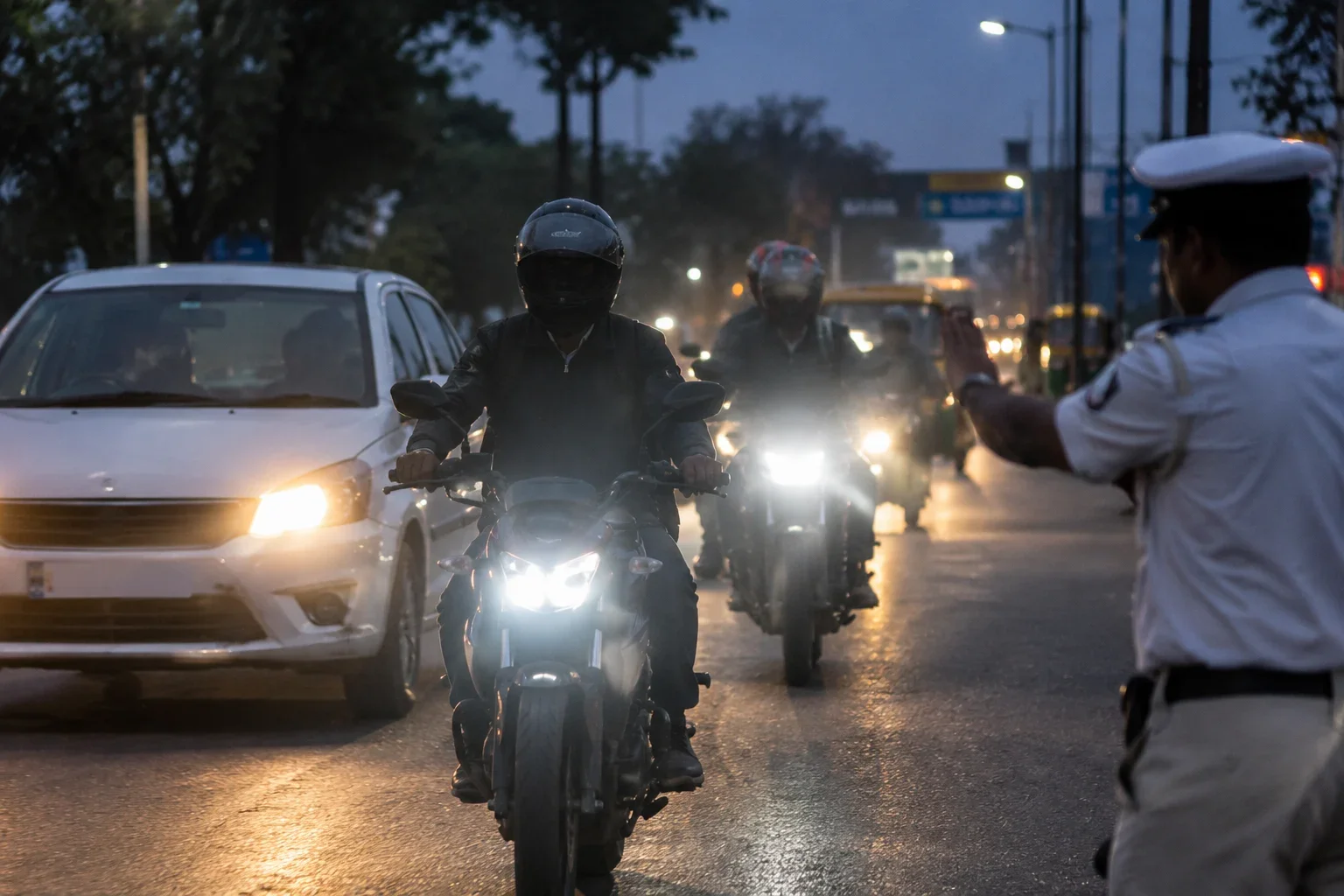
Driving or riding at night in India often feels like navigating a sea of blinding white lights. From piercing aftermarket LED bulbs to motorists permanently driving with high beams switched on inside well-lit cities, excessive headlight glare has evolved from a daily nuisance into a major road safety hazard.
To tackle nighttime visual fatigue and reduce glare-related accidents, the Ministry of Road Transport and Highways (MoRTH) has proposed draft amendments to the Central Motor Vehicles Rules (CMVR). These upcoming guidelines aim to tighten lighting standards across two-wheelers, passenger cars, and commercial vehicles. Because these are currently draft proposals, they represent planned regulatory directions rather than instantly enforceable laws, giving automakers and motorists time to prepare before the final rules roll out.
Why Are New Headlight Rules Being Proposed?
Excessive headlamp glare is one of the leading contributors to night-time driving hazards on Indian roads. When an oncoming vehicle uses unregulated high-intensity lights or points high beams directly into oncoming traffic, it triggers visual discomfort and temporary flash blindness.
- Loss of Night Vision: A sudden blast of high-beam light impairs peripheral vision and depth perception for several seconds, leaving little time to react to pedestrians, unlit dividers, or road obstacles.
- Failed Awareness Campaigns: Government and traffic police awareness drives urging motorists to switch to low beams within city limits have yielded limited results.
- Unregulated LED Upgrades: The surge in plug-and-play aftermarket LEDs with uncontrolled beam spreads and improper alignment has made nighttime commutes noticeably harsher for everyday commuters.
The proposed amendments seek to address these issues at the manufacturing level by recalibrating intensity, light temperature, and default beam modes.
Low-Beam-Only Automatic Headlights for Two-Wheelers
Under current regulations, two-wheelers are equipped with Automatic Headlamp On (AHO) systems that keep the light on whenever the engine runs. In many current models, if the switch was previously left on high beam, the headlamp remains permanently locked in high-beam mode upon starting.
- Current Operation: When the engine starts, the headlamp automatically lights up in whichever mode was last active—whether low beam or high beam.
- Proposed Operation: The new amendment mandates that the automatic system must activate exclusively in passing-beam (low-beam) mode when the vehicle starts.
- Manual Override Retained: Riders will still retain the ability to manually switch to high beam when riding conditions genuinely demand it, such as on unlit highways or rural roads.
- Applicability: This requirement will strictly apply to newly manufactured two-wheelers produced after the enforcement date. Existing bikes already on the road will not require mechanical retrofits.
Stricter Rules for High-Intensity Headlights
The draft norms plan to impose strict caps on maximum luminous intensity across all vehicle segments:
- Two-Wheelers: Maximum permissible luminous intensity is proposed to drop from 1,50,000 candela (cd) to 1,00,000 candela (cd).
- Four-Wheelers (Cars/SUVs): Maximum permissible intensity is proposed to reduce from 2,25,000 candela (cd) down to 1,50,000 candela (cd).
Color Temperature Cap
Many modern cool-white and bluish LED headlamps sit between 7,000K and 8,000K, which causes severe visual scatter and glare in rainy or foggy conditions. The draft rules propose capping the maximum permissible color temperature for headlamps and front fog lights at 6,500 Kelvin (K).
Uniform Mounting Heights
The draft also proposes matching the maximum mounting height of main-beam (high-beam) headlamps with the height prescribed for passing beams, keeping the light throw angled downward toward the road surface rather than directly into the eye-line of oncoming motorists.
Possible High-Beam Warning Systems
One of the most notable safety features under review is a speed-sensitive audio/visual alert system to discourage the misuse of high beams in urban environments:
- Urban Speeds (Below 60 km/h): If a driver manually switches on high beams while driving at lower city speeds, an alert will prompt them to switch back to low beam.
- Highway Speeds (Above 60 km/h): The alert will automatically suppress itself above 60 km/h, acknowledging that high beams are often necessary to spot long-distance obstacles on dark expressways.
Changes for Buses and Heavy Vehicles
Commercial carriers, trucks, and buses represent a significant hazard when broken down on unlit roads or navigating severe fog.
The draft norms propose making certified, genuine retro-reflective tapes strictly mandatory for heavy transport vehicles. Low-grade non-reflective stickers will be phased out in favor of high-grade reflective materials that highlight the complete physical outline (length, width, and height) of commercial vehicles to trailing traffic.
When Could the New Rules Take Effect?
According to industry reports, MoRTH aims to enforce these updated lighting standards under the Central Motor Vehicles Rules starting April 2027.
Because these regulations are currently in the draft stage, they will undergo a period of public consultation and industry review before being finalized and notified in the official Gazette. Technical specifications and compliance deadlines may see minor adjustments during this period.
What Bike Riders Need to Know
- New Purchases Will Be Low-Beam by Default: If you purchase a two-wheeler after the mandate takes effect, expect it to start automatically in low beam.
- Keep High Beams for Dark Highways Only: Practice switching off high beams inside cities or when trailing closely behind another vehicle.
- Avoid Uncertified Auxiliary Lights: Aftermarket high-wattage LED pods wired directly without cut-off lenses already attract traffic fines under the Motor Vehicles Act; scrutiny over dazzling lights will only increase.
- Check Alignment: Ensure your motorcycle's headlight reflector or projector is aimed at the road surface, not tilted upward.
What Car and Other Vehicle Owners Should Know
- Mind the Beam Angle: If you drive an SUV or high-riding vehicle, ensure your manual headlight leveling dial is adjusted properly when carrying rear passengers or luggage to avoid angling the light upward.
- Stick to Legal LED Replacements: When replacing factory halogen bulbs with LEDs, choose certified brands (maximum 6,500K) equipped with sharp beam cut-off lines rather than unfocused bulbs that scatter light.
- Prepare for Future Warning Prompts: Upcoming car models may prompt you with instrument cluster warnings or chimes if high beams are active in slow-moving city traffic.
Why These Changes Matter for Road Safety
Standardizing vehicular lighting creates a more predictable, comfortable, and safer driving environment:
- Protects Vulnerable Road Users: Pedestrians, cyclists, and two-wheeler riders suffer the most from oncoming glare, as they lack the protection of auto-dimming mirrors or cabin frames.
- Enhances Rainy and Foggy Visibility: Warmer and controlled color temperatures (under 6,500K) penetrate rain and mist more effectively than blinding cool-blue beams, which reflect light back into the driver's eyes.
- Reduces Eye Fatigue: Eliminating intense glare makes long-distance nighttime highway driving noticeably less straining on vision.
Frequently Asked Questions (FAQs)
What are the new proposed headlight rules in India?
The proposed changes under MoRTH's draft CMVR amendments include restricting automatic two-wheeler headlights to low-beam mode upon starting, lowering maximum high-beam intensity caps, restricting color temperatures to 6,500K, introducing high-beam alerts for city driving, and mandating genuine reflective tapes on heavy vehicles.
Will bike headlights be restricted to low-beam mode only?
New two-wheelers will start automatically in low-beam (passing-beam) mode to ensure riders do not unintentionally blind oncoming traffic. Riders will still have manual switches to engage high beam when driving on unlit roads.
Are high-intensity LED headlights going to be banned?
No, LED technology itself is not banned. However, the rules plan to limit maximum beam intensity (1,00,000 cd for two-wheelers; 1,50,000 cd for four-wheelers) and cap color temperatures at 6,500K to prevent blinding glare.
Will existing vehicles be affected by the new rules?
No. The manufacturing changes for AHO systems and factory lighting output will apply to new vehicles manufactured after the implementation date. However, all motorists—regardless of vehicle age—remain legally obligated not to use illegal, dazzling auxiliary lights under existing traffic regulations.
When will the proposed headlight rules come into effect?
The draft amendments propose a rollout target starting around April 2027, pending final government review, public suggestions, and official gazette notification.
Why is the government tightening vehicle lighting norms?
Excessive brightness, high-beam misuse in urban centers, and blinding LED lights cause glare and temporary blindness, contributing significantly to night-time accidents across the country.
Read More: How to Change Mobile Number in Aadhaar, PAN & Ration Card: Step-by-Step Guide
Conclusion
The proposed lighting regulations represent a welcome step toward making Indian roads safer after sunset. While automakers will adapt new models to meet these forthcoming standards, vehicle owners are advised to wait for the final gazette notifications before making any modifications to their current setups. In the meantime, practicing disciplined beam control—switching to low beam when following or approaching other road users—is something every driver and rider can begin today.