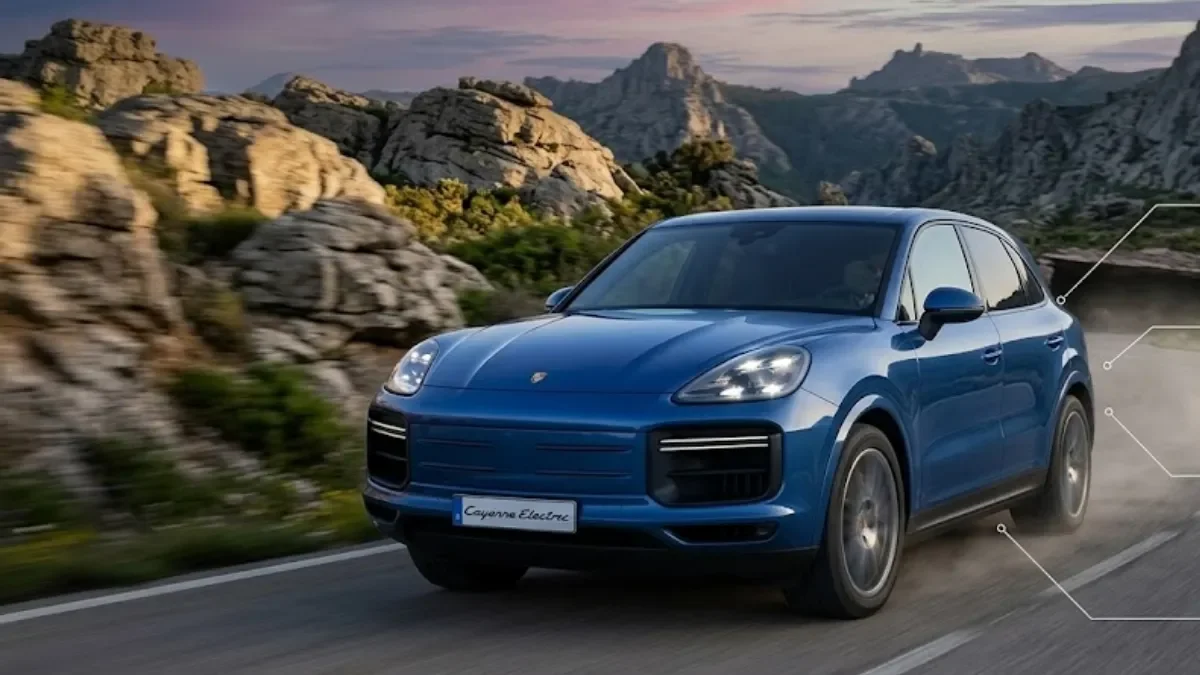
Porsche India is set to formally debut the Cayenne Electric on September 30, 2026, marking the brand's third fully electric model in the Indian market after the Taycan and Macan Electric. With prices already announced in late 2025 starting at ₹1.77 crore (ex-showroom) for the standard Cayenne Electric and ₹2.27 crore (ex-showroom) for the high-performance Cayenne Turbo Electric, the September 30 event represents the formal physical introduction and market launch rather than the first price announcement.
The Cayenne Electric brings Porsche's performance DNA to the luxury electric SUV segment, with a 113 kWh battery, 800V high-voltage architecture, dual-motor all-wheel drive, and a claimed WLTP range of up to 643 km for the standard variant. The headline-grabbing Cayenne Turbo Electric pushes performance to supercar levels with 1,156 PS (with Launch Control), accelerating from 0-100 km/h in just 2.5 seconds and reaching a top speed of 260 km/h.
Whether you're considering the Cayenne Electric as your first luxury electric SUV or comparing it with rivals like the BMW iX, Lotus Eletre, and Mercedes-Benz EQS SUV, here's everything you need to know about pricing, variants, battery, range, charging, performance, features, and how it stacks up against the competition.
Porsche Cayenne Electric India Debut: What We Know
The September 30 Event: What Exactly Is Happening?
It's important to clarify what the September 30, 2026 event actually represents, because there's been some confusion in coverage.
What's NOT happening on September 30:
This is NOT the first announcement of Indian prices (prices were already announced in late 2025)
This is NOT when bookings open (bookings already opened in late 2025)
This is NOT the global premiere (global reveal was in November 2025)
What IS happening on September 30:
Formal physical debut/market introduction of the Cayenne Electric in India
Likely media test drives and customer events
Beginning of customer deliveries (scheduled for second half of 2026)
Marketing push to introduce the model to Indian buyers
Why this distinction matters:
Prices are already known (not a surprise at the event)
Bookings are already open (you don't need to wait for September 30 to book)
Deliveries are already scheduled for H2 2026 (not starting immediately after the event)
The September 30 event is more about formally introducing the model to the Indian market, allowing media and customers to experience it physically, and beginning deliveries — not about announcing new prices or opening bookings.
Timeline Recap
Global Premiere: November 2025 (fourth-generation Cayenne revealed globally, electric only)
India Price Announcement: Late 2025 (approximately November-December 2025)
Bookings Open: Late 2025 (from price announcement)
India Debut Event: September 30, 2026
Customer Deliveries: Second half of 2026 (from September/October 2026 onwards)
Current Status
Bookings: Open (since late 2025)
Prices: Announced (₹1.77 crore for Cayenne Electric, ₹2.27 crore for Cayenne Turbo Electric, ex-showroom)
Deliveries: Scheduled for H2 2026
Event: September 30, 2026 (formal India debut)
Porsche Cayenne Electric Price in India
Ex-Showroom Pricing
| Variant | Price (Ex-Showroom, India) |
|---|---|
| Porsche Cayenne Electric | ₹1.77 crore (approximately) |
| Porsche Cayenne Turbo Electric | ₹2.27 crore (approximately) |
Important Notes:
1. Ex-Showroom Price:
The prices quoted above are ex-showroom, which means they don't include:
RTO registration (varies by state, typically 10-15% of ex-showroom price for luxury vehicles)
Insurance (comprehensive insurance for a vehicle of this value can be ₹15-25 lakh or more annually)
Handling charges (if any, varies by dealer)
Optional accessories and individualisation (Porsche's individualisation programme can add significantly to the final price)
Estimated On-Road Price:
Cayenne Electric: Approximately ₹2.00-2.10 crore (on-road, depending on state)
Cayenne Turbo Electric: Approximately ₹2.55-2.65 crore (on-road, depending on state)
Note: These are rough estimates. Actual on-road prices will vary by state due to different RTO taxes, insurance costs, and dealer charges.
2. Individualisation:
Porsche is known for its extensive individualisation programme, which allows buyers to customise their vehicles with a wide range of options, colours, interior trims, wheels, and features. A fully-optioned Cayenne Electric can cost significantly more than the starting price — easily adding ₹20-40 lakh or more depending on options selected.
3. Price Variation:
Some sources quote ₹1.76 crore for the Cayenne Electric and ₹2.28 crore for the Turbo Electric, while others quote ₹1.77 crore and ₹2.27 crore. This slight variation likely reflects minor updates or rounding differences. The prices above (₹1.77 crore and ₹2.27 crore) are the most commonly cited figures in recent coverage.
How Does the Price Compare to Competitors?
| Model | Starting Price (Ex-Showroom, India) | Price Difference vs. Cayenne Electric |
|---|---|---|
| Porsche Cayenne Electric | ₹1.77 crore | - |
| BMW iX (xDrive50) | ~₹1.21-1.40 crore | ~₹37-56 lakh cheaper |
| Mercedes-Benz EQS SUV | ~₹1.39-1.55 crore | ~₹22-38 lakh cheaper |
| Audi Q8 e-tron | ~₹1.14-1.25 crore | ~₹52-63 lakh cheaper |
| Lotus Eletre | ~₹2.55 crore | ~₹78 lakh more expensive |
Price Positioning:
The Cayenne Electric is positioned above the BMW iX, Mercedes EQS SUV, and Audi Q8 e-tron in terms of price
It's positioned below the Lotus Eletre (which starts at ~₹2.55 crore)
The Cayenne Turbo Electric (₹2.27 crore) is still below the Lotus Eletre (₹2.55 crore), making it a relatively strong value proposition in the ultra-high-performance luxury electric SUV segment
Value Proposition:
If you prioritise Porsche performance and handling, the Cayenne Electric offers strong value compared to the Lotus Eletre (similar performance, lower price)
If you prioritise lower price, the BMW iX, Mercedes EQS SUV, and Audi Q8 e-tron offer similar size/class at lower prices (but less performance)
If you prioritise maximum performance, the Lotus Eletre offers even higher performance (but at a higher price)
Cayenne Electric vs Cayenne Turbo Electric
Porsche is offering two variants of the Cayenne Electric in India: the standard Cayenne Electric and the high-performance Cayenne Turbo Electric. Here's how they compare:
Performance Comparison
| Specification | Cayenne Electric | Cayenne Turbo Electric |
|---|---|---|
| Standard Power | 300 kW (408 PS) / 835 Nm | 630 kW (857 PS) / 1,500 Nm |
| Launch Control Power | 325 kW (442 PS) | 850 kW (1,156 PS) / 1,500 Nm |
| 0-100 km/h | 4.8 seconds | 2.5 seconds |
| Top Speed | 230 km/h | 260 km/h |
| WLTP Range | 576-643 km | 623-624 km |
| Price (Ex-Showroom) | ₹1.77 crore | ₹2.27 crore |
| Price Difference | - | +₹50 lakh |
Key Differences
1. Power and Performance:
Cayenne Electric: 408 PS standard, 442 PS with Launch Control — still very quick (0-100 km/h in 4.8 seconds), but not in the same league as the Turbo Electric
Cayenne Turbo Electric: 857 PS standard, 1,156 PS with Launch Control — supercar-level performance (0-100 km/h in 2.5 seconds), among the quickest production SUVs in the world
2. Top Speed:
Cayenne Electric: 230 km/h — more than adequate for Indian roads and most highway driving
Cayenne Turbo Electric: 260 km/h — higher top speed, though rarely usable in India
3. Range:
Cayenne Electric: 576-643 km (WLTP) — slightly lower range in some configurations, but up to 643 km in optimal configuration
Cayenne Turbo Electric: 623-624 km (WLTP) — slightly lower than the maximum range of the standard variant, but still very respectable given the much higher performance
Note: The Turbo Electric has slightly lower range than the maximum range of the standard variant, which is expected given the much higher power output. However, the difference is relatively small (approximately 20 km), suggesting Porsche has optimised the Turbo Electric's efficiency well.
4. Price:
Price Difference: ₹50 lakh (ex-showroom)
Value Question: Is the Turbo Electric worth the extra ₹50 lakh?
If you prioritise maximum performance and want one of the quickest SUVs in the world, yes — the 2.5-second 0-100 km/h time is in a different league
If you prioritise value and don't need supercar-level performance, the standard Cayenne Electric offers 90% of the practicality and daily usability at a significantly lower price
Which Variant Should You Buy?
Cayenne Electric (₹1.77 crore) is best for:
Buyers who want Porsche performance and handling but don't need supercar-level acceleration
Those who prioritise value and want to save ₹50 lakh
Daily drivers who will appreciate the slightly better maximum range (643 km vs. 624 km)
Buyers who will use the Cayenne Electric primarily for city and highway driving (230 km/h top speed is more than adequate)
Cayenne Turbo Electric (₹2.27 crore) is best for:
Performance enthusiasts who want one of the quickest SUVs in the world
Those who prioritise maximum performance over value
Buyers who will appreciate the 2.5-second 0-100 km/h time and 260 km/h top speed (even if rarely usable in India)
Those who want the flagship Cayenne Electric experience
Our Recommendation: For most Indian buyers, the standard Cayenne Electric (₹1.77 crore) offers the better value proposition. The 4.8-second 0-100 km/h time is still very quick (quicker than most hot hatches and sports cars), the 230 km/h top speed is more than adequate for Indian roads, and the ₹50 lakh savings can be put towards options, charging infrastructure, or simply kept in the bank.
The Cayenne Turbo Electric makes sense only if you're a performance enthusiast who specifically wants the 2.5-second 0-100 km/h time and 1,156 PS — and you're willing to pay ₹50 lakh extra for it.
Battery, Range and Charging
Battery Specifications
Battery Capacity: 113 kWh (gross capacity)
Battery Chemistry: Nickel-manganese-cobalt (NMC) lithium-ion
Architecture: 800V high-voltage system
Motor Configuration: Dual permanent-magnet synchronous motors (one per axle)
Drive: All-wheel drive (electronically controlled)
What 800V Architecture Means:
The 800V architecture is a key technological advantage of the Cayenne Electric. Compared to traditional 400V systems:
Faster charging: Higher voltage allows for higher charging power (up to 390-400 kW DC)
Reduced heat: Higher voltage means lower current for the same power, reducing heat generation
Lighter wiring: Lower current allows for thinner, lighter wiring harnesses
Better efficiency: Overall system efficiency is improved
Range (WLTP)
Cayenne Electric:
WLTP Range: 576-643 km (depending on configuration, wheel size, etc.)
City Cycle (WLTP): Up to 806 km (WLTP city testing, standard variant)
Cayenne Turbo Electric:
WLTP Range: 623-624 km (WLTP)
Important: WLTP vs. Real-World Range
The WLTP (Worldwide Harmonised Light Vehicles Test Procedure) range is a standardized test figure obtained under controlled laboratory conditions. Real-world range can vary significantly based on:
Factors that reduce real-world range:
High-speed driving: Driving at 100-120 km/h on highways consumes more energy than WLTP testing
Cold weather: Battery efficiency decreases in cold temperatures (less relevant for most of India, but relevant for northern India in winter)
Aggressive driving: Hard acceleration and braking consume more energy
Climate control: Using air conditioning heavily reduces range (very relevant for India)
Payload: Carrying heavy loads or multiple passengers reduces range
Wheel size: Larger wheels (21-22 inch) reduce range compared to smaller wheels (19-20 inch)
Terrain: Hilly terrain consumes more energy than flat roads
Realistic Real-World Expectations:
For Indian conditions, a reasonable expectation is 70-85% of WLTP range in typical mixed driving:
Cayenne Electric (643 km WLTP): Approximately 450-545 km real-world range
Cayenne Turbo Electric (624 km WLTP): Approximately 435-530 km real-world range
Highway Driving:
At sustained highway speeds (100-120 km/h), expect approximately 60-70% of WLTP range:
Cayenne Electric: Approximately 385-450 km highway range
Cayenne Turbo Electric: Approximately 375-435 km highway range
City Driving:
In city driving with frequent stops and regenerative braking, you might achieve 80-95% of WLTP range or even better:
Cayenne Electric: Approximately 515-610 km city range (up to 806 km in WLTP city cycle)
Cayenne Turbo Electric: Approximately 500-590 km city range
Charging
DC Fast Charging:
Maximum Charging Power: Up to 390-400 kW (under optimal conditions)
10-80% Charge Time: Approximately 16 minutes (under optimal conditions at a 390-400 kW charger)
Charging Curve: Like most EVs, the Cayenne Electric charges fastest at low state of charge (SoC) and slows down as the battery approaches full to protect battery health
AC Charging:
Standard Onboard Charger: 11 kW AC
Optional Onboard Charger: 22 kW AC (available in certain markets, unclear if available in India)
Home Charging: At 11 kW, a full charge from empty would take approximately 10-11 hours (113 kWh ÷ 11 kW = ~10.3 hours)
Wireless Charging:
Wireless Charging Power: 11 kW (world's first production EV with wireless charging)
Availability in India: Unclear — Porsche has announced 11 kW wireless charging capability internationally, but it's not confirmed whether this will be available or supported in India
Infrastructure Requirement: Wireless charging requires compatible wireless charging equipment (not widely available in India currently)
Regenerative Braking:
Maximum Regenerative Braking Power: Up to 600 kW
What This Means: When you lift off the accelerator or brake, the motors act as generators, converting kinetic energy back into electrical energy and storing it in the battery. This can significantly extend range in city driving with frequent stops.
Charging Infrastructure in India
Porsche Charging Support:
Porsche India has not publicly disclosed detailed charging infrastructure support for the Cayenne Electric at the time of writing. However, based on Porsche's approach with the Taycan and Macan Electric, we can expect:
Porsche Destination Charging: Access to Porsche's network of destination chargers at hotels, resorts, and other locations (if available in India)
Porsche Turbo Charging: Access to Porsche's high-power charging network (if available in India)
Third-Party Charging: Compatibility with third-party DC fast chargers (CCS2 standard, which is the standard in India)
Third-Party Charging in India:
India's public DC fast charging infrastructure is growing, with networks like:
Tata Power EZ Charge
Ather Grid
Statiq
ChargePoint
Other emerging networks
Most of these networks currently offer chargers in the 50-150 kW range, with some 150-300 kW chargers emerging. The Cayenne Electric's 390-400 kW maximum charging capability is future-proofed for when 300-400 kW chargers become more widely available in India.
Home Charging:
For most Cayenne Electric owners, home charging will be the primary charging method. This requires:
A dedicated 11 kW AC charging point (or 22 kW if optional charger is selected and available in India)
Proper electrical infrastructure (three-phase power supply recommended for 11-22 kW charging)
Installation by a qualified electrician
Performance: Power, 0-100 km/h and Top Speed
Cayenne Electric Performance
Standard Power: 300 kW (408 PS) / 835 Nm
Launch Control Power: 325 kW (442 PS)
0-100 km/h: 4.8 seconds
Top Speed: 230 km/h
What This Means:
4.8-second 0-100 km/h: This is very quick — quicker than most hot hatches (like the Volkswagen Golf GTI, which does 0-100 km/h in approximately 6-7 seconds) and many sports cars
230 km/h top speed: More than adequate for Indian roads and most highway driving. This is electronically limited, not because the motors can't go faster, but to preserve battery life and safety
442 PS with Launch Control: Launch Control is a feature that optimises acceleration from a standstill by managing power delivery, traction, and shift points (in this case, single-speed transmission). It gives you the maximum acceleration the vehicle can achieve
Cayenne Turbo Electric Performance
Standard Power: 630 kW (857 PS) / 1,500 Nm
Launch Control Power: 850 kW (1,156 PS) / 1,500 Nm
0-100 km/h: 2.5 seconds
Top Speed: 260 km/h
What This Means:
2.5-second 0-100 km/h: This is supercar-level performance — in the same league as the Porsche 911 Turbo S, Lamborghini Huracán, and other high-performance sports cars. For context, the Porsche 911 Turbo S (992) does 0-100 km/h in approximately 2.7 seconds
1,156 PS: This is an enormous amount of power — more than most supercars. For comparison, the Lamborghini Aventador SVJ has 770 PS, the Ferrari SF90 Stradale has 1,000 PS
260 km/h top speed: Higher than the standard variant, though rarely usable in India. This is also electronically limited
Why Can an Electric SUV This Large Accelerate So Quickly?
The Cayenne Turbo Electric's 2.5-second 0-100 km/h time is remarkable for a vehicle that weighs approximately 2,658 kg (5,860 lbs) and is sized as a mid-size luxury SUV. Here's why it can accelerate so quickly:
1. Instant Torque:
Electric motors deliver maximum torque from zero rpm, unlike internal combustion engines (ICE) which need to rev up to reach peak torque. This means the Cayenne Turbo Electric can apply its 1,500 Nm of torque immediately from a standstill.
2. Dual-Motor AWD:
With one motor on each axle, the Cayenne Turbo Electric has all-wheel drive with precise electronic control of power distribution between front and rear axles. This maximises traction during acceleration.
3. High Power-to-Weight Ratio:
Despite its weight, the Cayenne Turbo Electric has an excellent power-to-weight ratio:
Power: 850 kW (1,156 PS)
Weight: 2,658 kg
Power-to-weight: Approximately 320 W/kg (or 3.1 kg/PS)
For comparison, the Porsche 911 Turbo S (992) has a power-to-weight ratio of approximately 3.3 kg/PS — so the Cayenne Turbo Electric is actually slightly better in this metric, despite being an SUV.
4. Launch Control:
Porsche's Launch Control system optimises acceleration by:
Managing power delivery to prevent wheel spin
Optimising traction control settings
Ensuring both motors deliver power in the most efficient way
This allows the Cayenne Turbo Electric to achieve its maximum acceleration consistently
5. Low Centre of Gravity:
The battery pack is mounted low in the vehicle's floor, giving the Cayenne Electric a low centre of gravity despite its SUV height. This improves stability and traction during acceleration.
Real-World Performance in India
0-100 km/h:
The 4.8-second (standard) and 2.5-second (Turbo) 0-100 km/h times are achievable under optimal conditions (good traction, flat road, Launch Control activated)
In real-world Indian conditions (traffic, road quality, etc.), you'll rarely have the opportunity to use maximum acceleration
However, the instant torque of electric motors means even normal acceleration feels very quick and responsive
Top Speed:
230 km/h (standard) and 260 km/h (Turbo) are electronically limited top speeds
These speeds are rarely, if ever, usable on Indian roads (most highways have speed limits of 80-120 km/h)
The high top speed is more about engineering capability and brand positioning than practical usability in India
Daily Driving:
In daily driving, both variants will feel very quick and responsive
The standard Cayenne Electric's 4.8-second 0-100 km/h is more than adequate for overtaking, merging, and normal driving
The Turbo Electric's 2.5-second 0-100 km/h is overkill for daily driving, but it's there if you want it (on a closed track, for example)
Exterior Design
Overall Design Language
The fourth-generation Cayenne Electric retains the overall Cayenne design language that Porsche has evolved over four generations, but with several key changes specific to the electric powertrain:
Key Design Elements:
Cayenne Silhouette: The overall shape and proportions are recognisably Cayenne — a mid-size luxury SUV with a sloping roofline (especially in Coupé variants, though India may only get the standard SUV body style)
Porsche Design Cues: Porsche's signature design elements, such as the sloping roofline, muscular haunches, and distinctive rear light bar, are present
Electric-Specific Changes: Several design changes are specific to the electric powertrain
Closed/Blanked Front Grille
Unlike conventional ICE Cayennes, which have a large front grille for engine cooling, the Cayenne Electric has a closed or blanked front grille. This is because:
1. No Engine Cooling Required:
Electric motors and batteries don't require the same level of cooling as an internal combustion engine. The Cayenne Electric still needs some cooling (for the battery, motors, and electronics), but it's managed through smaller, more aerodynamic openings.
2. Aerodynamic Efficiency:
A closed front grille improves aerodynamic efficiency by reducing drag. This helps improve range — every bit of aerodynamic improvement matters for EV range.
3. Distinctive EV Look:
The closed grille gives the Cayenne Electric a distinctive look that differentiates it from ICE Cayennes. It's a visual cue that this is an electric vehicle.
Active Aerodynamic Elements
The Cayenne Electric features active aerodynamic elements that adjust based on driving conditions to optimise aerodynamics and cooling:
Examples:
Active Grille Shutters: Open when cooling is needed, close when not needed to improve aerodynamics
Active Rear Spoiler: Deploys at higher speeds to improve stability and aerodynamics
Active Air Vents: Open and close to manage airflow for cooling and aerodynamics
These elements work together to optimise the balance between aerodynamic efficiency (for range) and cooling (for performance and battery health).
LED Lighting
Front Lighting:
LED Headlights: Standard LED headlights with Porsche's signature four-point LED daytime running lights
Matrix LED or HD Matrix LED: Likely available as an option (depending on India specification), which allows for adaptive lighting that adjusts the beam pattern based on driving conditions and oncoming traffic
Rear Lighting:
LED Taillights: Full LED taillights
Rear Light Bar: Porsche's signature rear light bar that spans the width of the vehicle, a distinctive Cayenne design element
3D LED Design: The taillights likely feature 3D LED design for a distinctive look
Illuminated Porsche Lettering
The Cayenne Electric features illuminated Porsche lettering on the rear, which lights up when the vehicle is unlocked or in use. This is a premium design touch that adds to the vehicle's nighttime presence.
Wheel Sizes
Wheel Options:
Standard Wheels: Likely 19 or 20-inch wheels as standard (depending on India specification)
Optional Wheels: 21 and 22-inch wheels available as options
Impact on Range:
Larger wheels (21-22 inch) look more aggressive but reduce range compared to smaller wheels (19-20 inch) due to:
Increased weight
Increased rolling resistance
Less aerodynamic efficiency
If you prioritise maximum range, choose smaller wheels. If you prioritise looks and handling, choose larger wheels.
Dimensions
Overall Dimensions:
Length: 4,985 mm (approximately 4.99 metres)
Width: 1,980 mm (approximately 2.0 metres, excluding mirrors)
Height: 1,674 mm (approximately 1.67 metres)
Wheelbase: 3,023 mm (approximately 3.02 metres)
What This Means:
The Cayenne Electric is a mid-size luxury SUV — similar in size to the BMW X5, Mercedes-Benz GLE, and Audi Q7
The 3,023 mm wheelbase is quite long, which translates to good interior space and ride comfort
The 1,674 mm height is typical for a mid-size SUV — high enough for good visibility and ground clearance, but not so high that it feels like a large SUV
Comparison to ICE Cayenne:
Compared to the previous-generation ICE Cayenne:
Length: Increased by 55 mm (longer)
Width: Narrowed by 3 mm (slightly narrower)
Height: Lowered by 5 mm (slightly lower)
Wheelbase: Increased by 128 mm (significantly longer, which improves interior space)
The longer wheelbase is particularly notable — it's a result of the electric platform, which allows for more flexible packaging of the battery and motors.
Interior and Technology
Driver Display
14.25-Inch Curved OLED Instrument Cluster:
Size: 14.25 inches
Type: Curved OLED (Organic Light-Emitting Diode) display
Benefits: OLED displays offer better contrast, deeper blacks, and more vibrant colours than traditional LCD displays. The curved design improves visibility and reduces glare.
Information Displayed: Speed, range, battery level, navigation, driver assistance systems, media, vehicle settings, etc.
Central Infotainment Screen
Large Touchscreen:
Size: Not specifically disclosed in Indian coverage, but international coverage suggests a large central touchscreen (likely 12-13 inches)
Type: High-resolution touchscreen with Porsche's latest infotainment system (Porsche Communication Management, PCM)
Features: Navigation, media, climate control, vehicle settings, smartphone integration (Apple CarPlay, Android Auto), connected services, etc.
Passenger Display
14.9-Inch Optional Passenger Screen:
Size: 14.9 inches
Location: On the passenger side of the dashboard
Purpose: Allows the front passenger to control navigation, media, and climate settings without distracting the driver
Availability: Optional (likely an extra-cost option in India)
AR Head-Up Display
87-Inch Display Area, AR-Capable, Colour HUD:
Display Area: 87 inches (this is the projected display area as seen by the driver, not a physical screen size)
Type: Augmented Reality (AR) Head-Up Display (HUD)
Features:
Projects key information (speed, navigation directions, driver assistance alerts) onto the windshield
AR capability means navigation arrows and other information can be overlaid on the real-world view (e.g., navigation arrows appear to point at the actual road you need to turn onto)
Colour display for better visibility and information differentiation
Benefits: Keeps the driver's eyes on the road while accessing key information, improving safety
Cabin Technology
Additional Technology Features:
Smartphone Integration: Apple CarPlay and Android Auto (wireless or wired, depending on specification)
Connected Services: Porsche Connect services (navigation, remote services, vehicle monitoring, etc.)
Sound System: High-quality sound system (likely Bose or Burmester, depending on specification)
Climate Control: Multi-zone automatic climate control (likely 3 or 4 zones)
Ambient Lighting: Customisable ambient lighting
Wireless Phone Charging: Wireless charging pad for smartphones (likely standard)
Boot Capacity
Standard Boot Capacity: 781 litres
Maximum Boot Capacity: 1,588 litres (with rear seats folded)
Frunk (Front Trunk): 90 litres
What This Means:
781 litres (standard): This is a very good boot capacity for a mid-size luxury SUV — comparable to or better than ICE rivals like the BMW X5, Mercedes GLE, and Audi Q7
1,588 litres (maximum): With the rear seats folded, you get a large, flat loading area suitable for large items, luggage, or even camping gear
90 litres (frunk): The front trunk (frunk) is a bonus storage area that's unique to EVs (since there's no engine in the front). It's useful for storing charging cables, small items, or groceries
Practicality:
The Cayenne Electric is a practical family SUV with good boot space for luggage, groceries, sports equipment, etc.
The frunk adds extra storage that ICE SUVs don't have
Rear seats likely fold in a 40:20:40 split (typical for this class), allowing flexible loading of long items while still carrying rear passengers
Rear-Seat Practicality
Rear Seats:
Electrically Adjustable: Rear seats are electrically adjustable (likely for recline and possibly fore-aft adjustment)
Space: The 3,023 mm wheelbase translates to good rear-seat legroom and headroom
Comfort: Rear seats are likely well-cushioned and comfortable for long journeys
Amenities: Rear passengers likely get amenities such as air vents, USB charging ports, and possibly rear-seat entertainment (depending on specification)
Practicality for Families:
The Cayenne Electric is a practical family SUV with good rear-seat space for adults or children
The high seating position (typical for SUVs) makes it easy for children and elderly passengers to get in and out
The large boot and frunk make it suitable for family trips, sports, and other activities
Suspension, Handling and Braking
Adaptive Air Suspension
Standard Suspension: Electronic/Adaptive Air Suspension
What This Means:
Air Suspension: Uses air springs instead of traditional steel springs. This allows for:
Adjustable ride height (raise for off-road, lower for highway driving)
Adjustable damping (soft for comfort, firm for sporty driving)
Load levelling (maintains ride height regardless of payload)
Adaptive/Electronic Control: The suspension is electronically controlled and adjusts in real-time based on driving conditions, road surface, and driver input
Benefits:
Comfortable ride on rough roads (important for Indian conditions)
Sporty handling when desired
Adjustable ride height for different driving scenarios (off-road, highway, etc.)
Rear-Axle Steering
Optional: Rear-axle steering (availability in India unclear)
What This Means:
Rear-Axle Steering: The rear wheels can turn slightly (typically up to 5 degrees) in the same or opposite direction as the front wheels, depending on speed
Low Speed: At low speeds (e.g., parking, city driving), the rear wheels turn in the opposite direction to the front wheels, reducing the turning circle and making the vehicle more manoeuvrable
High Speed: At high speeds (e.g., highway lane changes), the rear wheels turn in the same direction as the front wheels, improving stability and making the vehicle feel more agile
Benefits:
Improved manoeuvrability in city driving and parking
Improved stability and agility at high speeds
Makes a large SUV feel smaller and more nimble
Availability in India: Unclear — rear-axle steering is available internationally, but it's not confirmed whether it will be offered in India.
Porsche Active Ride
Availability: Unclear for India
What It Is:
Porsche Active Ride is an advanced suspension system that uses active hydraulic elements to control body movement, providing:
Exceptional ride comfort
Sporty handling
Reduced body roll in corners
Improved stability
Availability in India: Not confirmed — Porsche Active Ride is available internationally on the Cayenne Electric, but it's unclear whether it will be offered in India.
Braking System
Brakes:
Front Brakes: Large ventilated discs (likely 10-piston fixed aluminium monobloc calipers on Turbo Electric, depending on specification)
Rear Brakes: Large ventilated discs (likely single-piston floating aluminium calipers, depending on specification)
Optional Carbon-Ceramic Brakes: Available internationally (Porsche Ceramic Composite Brake, PCCB), which offer:
Better heat resistance (important for repeated hard braking)
Reduced weight (compared to steel brakes)
Longer life
Better performance in wet conditions
Availability in India: Unclear — carbon-ceramic brakes are available internationally, but it's not confirmed whether they will be offered in India
Regenerative Braking:
Maximum Regenerative Braking Power: Up to 600 kW
What This Means: When you lift off the accelerator or brake, the electric motors act as generators, converting kinetic energy back into electrical energy and storing it in the battery
Benefits:
Extends range (especially in city driving with frequent stops)
Reduces wear on brake pads (regenerative braking does most of the braking in normal driving)
Provides "one-pedal driving" capability (in some EVs, you can drive using only the accelerator pedal, with regenerative braking slowing the vehicle when you lift off)
Why These Technologies Matter on a Large Luxury Electric SUV
1. Ride Comfort:
A large luxury SUV like the Cayenne Electric needs to provide a comfortable ride, especially on Indian roads which can be rough and uneven. Adaptive air suspension is essential for this.
2. Handling:
Despite its size and weight (2,658 kg), the Cayenne Electric is expected to handle well — that's part of the Porsche brand promise. Rear-axle steering and Porsche Active Ride (if available) help make a large SUV feel more agile and sporty.
3. Braking:
A heavy, fast SUV needs powerful, reliable brakes. The large ventilated discs (and optional carbon-ceramic brakes) provide the stopping power needed for a vehicle that can accelerate to 100 km/h in 2.5-4.8 seconds and weigh 2.6 tonnes.
4. Regenerative Braking:
Regenerative braking is essential for EV efficiency — it recovers energy that would otherwise be lost as heat during braking and stores it in the battery. This extends range, especially in city driving.
Boot Space and Practicality
Boot Capacity
Standard Boot Capacity: 781 litres
Maximum Boot Capacity: 1,588 litres (rear seats folded)
Frunk (Front Trunk): 90 litres
What Can You Fit in the Boot?
781 Litres (Standard):
This is a very good boot capacity for a mid-size luxury SUV. For comparison:
BMW X5: 650 litres
Mercedes-Benz GLE: 630 litres
Audi Q7: 770 litres
Volvo XC90: 640 litres
The Cayenne Electric's 781 litres is larger than most rivals, making it a practical choice for families and those who need to carry luggage, sports equipment, or other large items.
Practical Examples:
Golf Bags: Approximately 4-5 golf bags (with room for other items)
Suitcases: Approximately 4-5 large suitcases (28-30 inch)
Stroller + Groceries: A full-size stroller plus multiple bags of groceries
Sports Equipment: Bicycles (with wheels removed or on a bike rack), skis, surfboards, etc. (depending on configuration)
1,588 Litres (Maximum, Rear Seats Folded):
With the rear seats folded, you get a large, flat loading area suitable for:
Large Furniture: Flat-pack furniture, large boxes, etc.
Camping Gear: Tents, sleeping bags, camping stoves, etc.
Multiple Suitcases: 8-10 large suitcases
Large Appliances: Washing machines, refrigerators (depending on dimensions)
90 Litres (Frunk):
The frunk (front trunk) is a bonus storage area that's unique to EVs (since there's no engine in the front). It's useful for:
Charging Cables: Store charging cables separately from the boot
Groceries: Quick grocery runs without opening the main boot
Small Items: Bags, helmets, sports equipment, etc.
Wet/Dirty Items: Items you don't want in the main boot (wet sports gear, muddy shoes, etc.)
Towing Capacity
Towing Capacity: Up to 3,500 kg (with optional Off-Road Package)
What This Means:
The Cayenne Electric can tow up to 3,500 kg (3.5 tonnes), which is a substantial amount
This is suitable for towing:
Large Caravans: Most caravans are under 3,500 kg
Boats: Medium-sized boats
Horse Trailers: Single-horse trailers
Other Trailers: Utility trailers, equipment trailers, etc.
Off-Road Package:
The 3,500 kg towing capacity requires the optional Off-Road Package, which likely includes:
Enhanced cooling for the battery and motors (important for towing)
Towing hitch and electrical connections
Towing mode in the vehicle's drive mode selector
Note: Towing significantly reduces range — expect 40-50% of normal range when towing a heavy load.
Rear-Seat Practicality
Rear-Seat Space:
Legroom: Good legroom for adults (the 3,023 mm wheelbase translates to generous rear-seat space)
Headroom: Good headroom (typical SUV height)
Comfort: Rear seats are likely well-cushioned and comfortable for long journeys
Amenities: Rear passengers likely get air vents, USB charging ports, and possibly rear-seat entertainment (depending on specification)
Family Practicality:
The Cayenne Electric is a practical family SUV with good rear-seat space for adults or children
The high seating position (typical for SUVs) makes it easy for children and elderly passengers to get in and out
ISOFIX child seat anchors are likely standard (required for child seat compatibility)
Porsche Cayenne Electric vs Its Rivals
Key Competitors in India
The Porsche Cayenne Electric competes in the luxury electric SUV segment in India. Here are the key rivals:
BMW iX (India)
Price: ~₹1.21-1.40 crore (ex-showroom, depending on variant)
Battery: 111.5 kWh (xDrive50)
Power: 523 PS (xDrive50)
0-100 km/h: 4.6 seconds (xDrive50)
Range: ~600-660 km (WLTP, depending on variant)
Charging: Up to 195 kW DC
Boot Space: 500 litres (standard), 1,750 litres (maximum)
Positioning: Slightly lower price point than Cayenne Electric, similar size class
Comparison:
Price: BMW iX is ~₹37-56 lakh cheaper than Cayenne Electric
Performance: Cayenne Electric (4.8 sec) is slightly slower than BMW iX xDrive50 (4.6 sec), but Cayenne Turbo Electric (2.5 sec) is much quicker
Range: Similar range (Cayenne Electric 576-643 km, BMW iX 600-660 km)
Battery: Similar battery capacity (Cayenne 113 kWh, BMW iX 111.5 kWh)
Charging: Cayenne Electric has faster maximum charging (390-400 kW vs. 195 kW)
Practicality: BMW iX has slightly smaller boot (500 litres vs. 781 litres)
Brand: Porsche vs. BMW — both are premium German brands, but Porsche has a stronger performance image
Who Should Choose Which:
Choose BMW iX if: You want to save ~₹37-56 lakh, prioritise comfort and technology over performance, and don't need the Porsche brand
Choose Cayenne Electric if: You prioritise Porsche performance and handling, want faster charging, and are willing to pay ~₹37-56 lakh more
Lotus Eletre (India)
Price: ~₹2.55 crore (ex-showroom, base variant)
Battery: 112 kWh (base), larger for higher variants
Power: 600+ PS (base), up to 900+ PS (top variant)
0-100 km/h: ~4.5 seconds (base), ~3 seconds (top variant)
Range: ~600 km (WLTP, base)
Charging: Up to 350 kW DC
Boot Space: 688 litres (standard), 1,532 litres (maximum)
Positioning: Higher price than Cayenne Turbo Electric, more performance-focused
Comparison:
Price: Lotus Eletre is ~₹78 lakh more expensive than Cayenne Turbo Electric
Performance: Cayenne Turbo Electric (2.5 sec, 1,156 PS) is quicker than Lotus Eletre base (~4.5 sec, 600+ PS) and competitive with Eletre top variant (~3 sec, 900+ PS)
Range: Similar range (Cayenne Turbo Electric 623-624 km, Lotus Eletre ~600 km)
Battery: Similar battery capacity (Cayenne 113 kWh, Lotus Eletre 112 kWh base)
Charging: Cayenne Electric has faster maximum charging (390-400 kW vs. 350 kW)
Practicality: Cayenne Electric has larger boot (781 litres vs. 688 litres)
Brand: Porsche vs. Lotus — Porsche is a more established luxury brand, Lotus is a performance-focused brand (now owned by Geely)
Who Should Choose Which:
Choose Lotus Eletre if: You want the absolute maximum performance (top variant), prioritise Lotus's performance heritage, and are willing to pay ~₹78 lakh more
Choose Cayenne Turbo Electric if: You want similar performance (2.5 sec vs. ~3 sec) at a lower price (~₹78 lakh less), prioritise Porsche brand and practicality
Mercedes-Benz EQS SUV (India)
Price: ~₹1.39-1.55 crore (ex-showroom, depending on variant)
Battery: 108.4 kWh
Power: 360-544 PS (depending on variant)
0-100 km/h: 4.9-6.2 seconds (depending on variant)
Range: ~580-660 km (WLTP, depending on variant)
Charging: Up to 200 kW DC
Boot Space: 645 litres (standard), 1,770 litres (maximum)
Positioning: Slightly lower price than Cayenne Electric, more luxury-focused
Comparison:
Price: Mercedes EQS SUV is ~₹22-38 lakh cheaper than Cayenne Electric
Performance: Cayenne Electric (4.8 sec) is quicker than EQS SUV (4.9-6.2 sec), and Cayenne Turbo Electric (2.5 sec) is much quicker
Range: Similar range (Cayenne Electric 576-643 km, EQS SUV 580-660 km)
Battery: Cayenne has slightly larger battery (113 kWh vs. 108.4 kWh)
Charging: Cayenne Electric has faster maximum charging (390-400 kW vs. 200 kW)
Practicality: EQS SUV has slightly smaller boot (645 litres vs. 781 litres)
Brand: Porsche vs. Mercedes — both are premium German brands, but Mercedes is more luxury-focused, Porsche is more performance-focused
Who Should Choose Which:
Choose Mercedes EQS SUV if: You prioritise luxury and comfort over performance, want to save ~₹22-38 lakh, and prefer Mercedes brand
Choose Cayenne Electric if: You prioritise Porsche performance and handling, want faster charging, and are willing to pay ~₹22-38 lakh more
Audi Q8 e-tron (India)
Price: ~₹1.14-1.25 crore (ex-showroom, if still current)
Battery: 106 kWh (Q8 e-tron 55)
Power: 408 PS
0-100 km/h: 5.6 seconds
Range: ~580 km (WLTP)
Charging: Up to 170 kW DC
Boot Space: 565 litres (standard), 1,635 litres (maximum)
Positioning: Lower price point, similar size class
Comparison:
Price: Audi Q8 e-tron is ~₹52-63 lakh cheaper than Cayenne Electric
Performance: Cayenne Electric (4.8 sec) is quicker than Q8 e-tron (5.6 sec), and Cayenne Turbo Electric (2.5 sec) is much quicker
Range: Cayenne Electric has slightly better range (576-643 km vs. 580 km)
Battery: Cayenne has larger battery (113 kWh vs. 106 kWh)
Charging: Cayenne Electric has faster maximum charging (390-400 kW vs. 170 kW)
Practicality: Cayenne Electric has larger boot (781 litres vs. 565 litres)
Brand: Porsche vs. Audi — both are premium German brands, but Porsche has a stronger performance image
Who Should Choose Which:
Choose Audi Q8 e-tron if: You want to save ~₹52-63 lakh, prioritise value over performance, and prefer Audi brand
Choose Cayenne Electric if: You prioritise Porsche performance and handling, want better range and faster charging, and are willing to pay ~₹52-63 lakh more
Comparison Table
| Model | Price (Ex-Showroom) | Battery | Power | 0-100 km/h | Range (WLTP) | Charging (Max DC) | Boot Space |
|---|---|---|---|---|---|---|---|
| Porsche Cayenne Electric | ₹1.77 crore | 113 kWh | 442 PS | 4.8 sec | 576-643 km | 390-400 kW | 781 litres |
| Porsche Cayenne Turbo Electric | ₹2.27 crore | 113 kWh | 1,156 PS | 2.5 sec | 623-624 km | 390-400 kW | 781 litres |
| BMW iX (xDrive50) | ~₹1.21-1.40 crore | 111.5 kWh | 523 PS | 4.6 sec | 600-660 km | 195 kW | 500 litres |
| Lotus Eletre (base) | ~₹2.55 crore | 112 kWh | 600+ PS | ~4.5 sec | ~600 km | 350 kW | 688 litres |
| Mercedes EQS SUV | ~₹1.39-1.55 crore | 108.4 kWh | 360-544 PS | 4.9-6.2 sec | 580-660 km | 200 kW | 645 litres |
| Audi Q8 e-tron | ~₹1.14-1.25 crore | 106 kWh | 408 PS | 5.6 sec | ~580 km | 170 kW | 565 litres |
Summary: Which Rival Should You Consider?
Best Value: Audi Q8 e-tron (~₹1.14-1.25 crore) — if you want a luxury electric SUV at the lowest price
Best All-Rounder: BMW iX (~₹1.21-1.40 crore) — if you want a balance of price, performance, and technology
Best Luxury: Mercedes EQS SUV (~₹1.39-1.55 crore) — if you prioritise luxury and comfort over performance
Best Performance: Porsche Cayenne Turbo Electric (₹2.27 crore) — if you want supercar-level performance in an SUV
Best Performance (Alternative): Lotus Eletre (~₹2.55 crore) — if you want maximum performance and are willing to pay more
Our Recommendation:
If you prioritise value, the Audi Q8 e-tron or BMW iX offer similar size/class at lower prices
If you prioritise Porsche performance and handling, the Cayenne Electric (₹1.77 crore) offers strong value compared to the Lotus Eletre (₹2.55 crore)
If you prioritise maximum performance, the Cayenne Turbo Electric (₹2.27 crore) offers supercar-level performance at a lower price than the Lotus Eletre (₹2.55 crore)
When Will Deliveries Start in India?
Delivery Timeline
Expected Deliveries: Second half of 2026 (from September/October 2026 onwards)
What This Means:
The September 30, 2026 India debut event is likely timed to coincide with the beginning of customer deliveries
If you've already booked a Cayenne Electric, you can expect delivery from September/October 2026 onwards
Delivery timelines may vary based on:
Variant (Cayenne Electric vs. Cayenne Turbo Electric)
Colour and specification (some colours/options may have longer wait times)
Location (deliveries may start in major cities first, then expand to other cities)
Booking Status
Bookings: Already open (since late 2025)
How to Book:
Contact your nearest Porsche India dealership
Place a booking amount (typically a refundable token amount, e.g., ₹5-10 lakh — confirm with dealership)
Configure your vehicle (colour, wheels, interior, options, etc.)
Wait for delivery (expected H2 2026)
Delivery Process:
Booking: Place booking at dealership
Configuration: Configure your vehicle with Porsche's individualisation programme
Production: Vehicle is produced at Porsche's factory (likely Leipzig, Germany, where the Cayenne is produced)
Shipping: Vehicle is shipped to India (by sea, typically takes 4-8 weeks)
Customs Clearance: Vehicle clears Indian customs
Delivery: Vehicle is delivered to you at the dealership or your location
Estimated Wait Time:
From booking to delivery: Approximately 6-12 months (depending on configuration, production slot, shipping, etc.)
Since bookings opened in late 2025 and deliveries are expected in H2 2026, this aligns with a 6-12 month wait time
Warranty and Service
Warranty:
Porsche India has not publicly disclosed the specific warranty terms for the Cayenne Electric at the time of writing. However, based on Porsche's international warranty and the Taycan/Macan Electric warranty in India, we can expect:
Vehicle Warranty: Likely 3 years/unlimited km (typical for Porsche in India)
Battery Warranty: Likely 8 years/1,60,000 km (typical for Porsche EVs internationally)
Corrosion Warranty: Likely 12 years (typical for Porsche)
Roadside Assistance: Likely included for the warranty period
Note: Confirm exact warranty terms with Porsche India or your dealership, as they may vary.
Service Network:
Porsche India has service centres in major cities (Delhi, Mumbai, Bengaluru, Chennai, Hyderabad, etc.)
EV-specific training and equipment are likely in place (based on Taycan and Macan Electric experience)
Service intervals for EVs are typically longer than ICE vehicles (less maintenance required)
Charging Support:
Porsche India has not publicly disclosed detailed charging infrastructure support for the Cayenne Electric. However, based on Porsche's approach with the Taycan and Macan Electric, we can expect:
Home Charging: Porsche can assist with home charger installation (through partners)
Public Charging: Access to Porsche's charging network (if available in India) and third-party charging networks
Roadside Assistance: EV-specific roadside assistance (e.g., flatbed towing to nearest charger if you run out of charge)
Is the Cayenne Electric Worth Considering?
Who Should Consider the Porsche Cayenne Electric?
The Cayenne Electric is worth considering if:
1. You Want Porsche Performance:
You prioritise Porsche's performance DNA — handling, acceleration, and driving dynamics
You want an electric SUV that feels like a Porsche, not just a generic luxury EV
You appreciate the 4.8-second (standard) or 2.5-second (Turbo) 0-100 km/h acceleration
2. You Need Practicality:
You need a practical family SUV with good boot space (781 litres) and rear-seat room
You want the practicality of an SUV (high seating position, good visibility, ground clearance) with the benefits of an EV (instant torque, low running costs, zero emissions)
You want to tow (up to 3,500 kg with Off-Road Package)
3. You Value Technology:
You want the latest EV technology (800V architecture, 390-400 kW charging, 113 kWh battery)
You appreciate advanced features (adaptive air suspension, AR HUD, large screens, etc.)
You want a vehicle that's future-proofed for the next 5-10 years
4. You Can Afford It:
You have the budget for a ₹1.77-2.27 crore (ex-showroom) vehicle
You understand the total cost of ownership (insurance, maintenance, charging, etc.)
You value the Porsche brand and are willing to pay a premium for it
Who Should Look Elsewhere?
Consider alternatives if:
1. You Prioritise Value:
The Cayenne Electric is expensive (₹1.77-2.27 crore ex-showroom)
If you want similar size/class at a lower price, consider the BMW iX (~₹1.21-1.40 crore), Mercedes EQS SUV (~₹1.39-1.55 crore), or Audi Q8 e-tron (~₹1.14-1.25 crore)
2. You Need Maximum Range:
The Cayenne Electric's 576-643 km (WLTP) range is good, but not class-leading
If you need maximum range, consider vehicles with larger batteries or better efficiency (though most rivals are in the 580-660 km range)
3. You Want Maximum Performance:
The Cayenne Turbo Electric's 2.5-second 0-100 km/h is supercar-level, but the Lotus Eletre (top variant) offers similar or slightly better performance
If you want the absolute maximum performance and are willing to pay more, consider the Lotus Eletre (~₹2.55 crore)
4. You're Concerned About Charging Infrastructure:
The Cayenne Electric's 390-400 kW charging capability is future-proofed, but India's public charging infrastructure is still developing
If you don't have reliable home charging and rely on public charging, consider whether the current charging infrastructure in your area is adequate
5. You Prefer a Different Brand:
If you prefer BMW, Mercedes, Audi, or Lotus over Porsche, consider the respective rivals
Brand preference is subjective — choose the brand you connect with
Total Cost of Ownership Considerations
Purchase Price:
Cayenne Electric: ₹1.77 crore (ex-showroom), ~₹2.00-2.10 crore (on-road)
Cayenne Turbo Electric: ₹2.27 crore (ex-showroom), ~₹2.55-2.65 crore (on-road)
Running Costs:
Electricity: Approximately ₹1.5-2.5 per km (depending on electricity cost, charging method, driving style)
Petrol Equivalent: A comparable petrol SUV (e.g., BMW X5 xDrive40i) would cost approximately ₹8-12 per km in fuel
Savings: Approximately ₹6-10 per km savings with EV vs. petrol
Annual Running Cost (15,000 km/year):
Electricity: Approximately ₹22,500-37,500 per year
Petrol Equivalent: Approximately ₹1,20,000-1,80,000 per year
Savings: Approximately ₹97,500-1,42,500 per year
Maintenance:
EVs typically have lower maintenance costs than ICE vehicles (no engine oil, filters, spark plugs, etc.)
Estimated annual maintenance: ₹20,000-40,000 per year (varies by usage and service costs)
Insurance:
Comprehensive insurance for a ₹2 crore vehicle can be ₹15-25 lakh or more annually
This is a significant ongoing cost to consider
Depreciation:
Luxury EVs depreciate, but Porsche typically holds value better than many rivals
Estimated 3-year depreciation: 30-40% (varies by market, demand, etc.)
After 3 years, a ₹2 crore Cayenne Electric might be worth approximately ₹1.2-1.4 crore
Total Cost of Ownership (5 years, 75,000 km):
Purchase Price: ₹2.00-2.65 crore (on-road, depending on variant)
Electricity: ₹1,12,500-1,87,500 (75,000 km × ₹1.5-2.5/km)
Maintenance: ₹1,00,000-2,00,000 (5 years × ₹20,000-40,000/year)
Insurance: ₹75,00,000-1,25,00,000 (5 years × ₹15-25 lakh/year)
Depreciation: ₹60,00,000-1,06,00,000 (30-40% of purchase price)
Total: Approximately ₹3.47-5.15 crore over 5 years
Note: These are rough estimates. Actual costs will vary based on usage, electricity costs, insurance premiums, depreciation, etc.
Final Verdict
Is the Porsche Cayenne Electric worth considering?
Yes, if:
You prioritise Porsche performance and handling
You need a practical family SUV with good boot space and rear-seat room
You want the latest EV technology (800V architecture, fast charging, large battery)
You can afford the ₹1.77-2.27 crore (ex-showroom) price tag
You value the Porsche brand and are willing to pay a premium for it
No, if:
You prioritise value over performance (consider BMW iX, Mercedes EQS SUV, Audi Q8 e-tron)
You need maximum range (consider vehicles with larger batteries or better efficiency)
You want maximum performance and are willing to pay more (consider Lotus Eletre)
You're concerned about charging infrastructure in your area
You prefer a different brand
Our Recommendation:
The Porsche Cayenne Electric is a strong contender in the luxury electric SUV segment, offering a unique combination of Porsche performance, practicality, and advanced EV technology. If you can afford it and prioritise performance and the Porsche brand, it's worth serious consideration.
For most buyers, the standard Cayenne Electric (₹1.77 crore) offers the better value proposition — the 4.8-second 0-100 km/h time is very quick, the 643 km range is adequate, and the ₹50 lakh savings compared to the Turbo Electric can be put towards options, charging infrastructure, or simply kept in the bank.
The Cayenne Turbo Electric (₹2.27 crore) makes sense only if you're a performance enthusiast who specifically wants the 2.5-second 0-100 km/h time and 1,156 PS — and you're willing to pay ₹50 lakh extra for it.
Frequently Asked Questions
When will Porsche Cayenne Electric debut in India?
Porsche Cayenne Electric will make its India debut on September 30, 2026. This is the formal physical introduction and market launch — prices were already announced in late 2025, and bookings are already open.
What is the Porsche Cayenne Electric price in India?
The Porsche Cayenne Electric starts at approximately ₹1.77 crore (ex-showroom, India). The Cayenne Turbo Electric starts at approximately ₹2.27 crore (ex-showroom, India).
What is the Cayenne Turbo Electric price?
The Porsche Cayenne Turbo Electric starts at approximately ₹2.27 crore (ex-showroom, India).
How much range does the Cayenne Electric offer?
The Porsche Cayenne Electric offers a WLTP range of 576-643 km (depending on configuration). The Cayenne Turbo Electric offers a WLTP range of 623-624 km. Real-world range will vary based on driving conditions, speed, temperature, and other factors — expect approximately 70-85% of WLTP range in typical mixed driving.
What battery does it use?
The Porsche Cayenne Electric uses a 113 kWh (gross capacity) nickel-manganese-cobalt (NMC) lithium-ion battery with 800V high-voltage architecture.
How powerful is the Cayenne Electric?
The standard Porsche Cayenne Electric produces 300 kW (408 PS) / 835 Nm standard, and 325 kW (442 PS) with Launch Control. The Cayenne Turbo Electric produces 630 kW (857 PS) / 1,500 Nm standard, and 850 kW (1,156 PS) / 1,500 Nm with Launch Control.
How fast does the Turbo Electric accelerate?
The Porsche Cayenne Turbo Electric accelerates from 0-100 km/h in 2.5 seconds (with Launch Control). This is supercar-level performance — in the same league as the Porsche 911 Turbo S and other high-performance sports cars.
How long does the Cayenne Electric take to charge?
With DC fast charging at up to 390-400 kW, the Porsche Cayenne Electric can charge from 10-80% in approximately 16 minutes (under optimal conditions). With 11 kW AC home charging, a full charge from empty takes approximately 10-11 hours.
Does it have an 800V architecture?
Yes, the Porsche Cayenne Electric uses an 800V high-voltage electrical architecture. This enables faster DC charging (up to 390-400 kW) and improved overall system efficiency compared to traditional 400V systems.
Is wireless charging available?
The Porsche Cayenne Electric supports 11 kW wireless charging (world's first production EV with this feature). However, it's not confirmed whether wireless charging will be available or supported in India. Wireless charging requires compatible wireless charging equipment, which is not widely available in India currently.
How much boot space does it have?
The Porsche Cayenne Electric has 781 litres of boot space (standard), 1,588 litres with rear seats folded, and an additional 90 litres in the frunk (front trunk).
What are the main features?
Main features include: 113 kWh battery, 800V architecture, dual-motor AWD, adaptive air suspension, 14.25-inch curved OLED driver display, large central infotainment touchscreen, optional 14.9-inch passenger display, AR head-up display, 390-400 kW DC fast charging, 11 kW wireless charging (internationally), regenerative braking up to 600 kW, and extensive individualisation options.
What is the difference between Cayenne Electric and Turbo Electric?
The main differences are:
Power: Cayenne Electric has 408 PS (442 PS with Launch Control), Turbo Electric has 857 PS (1,156 PS with Launch Control)
Performance: Cayenne Electric does 0-100 km/h in 4.8 seconds, Turbo Electric in 2.5 seconds
Top Speed: Cayenne Electric has 230 km/h, Turbo Electric has 260 km/h
Range: Cayenne Electric has 576-643 km (WLTP), Turbo Electric has 623-624 km (WLTP)
Price: Cayenne Electric starts at ₹1.77 crore, Turbo Electric at ₹2.27 crore (ex-showroom, India)
When will deliveries begin in India?
Deliveries are expected to begin in the second half of 2026 (from September/October 2026 onwards), coinciding with the September 30 India debut event.
Which cars compete with the Cayenne Electric?
Key competitors in India include: BMW iX (~₹1.21-1.40 crore), Lotus Eletre (~₹2.55 crore), Mercedes-Benz EQS SUV (~₹1.39-1.55 crore), and Audi Q8 e-tron (~₹1.14-1.25 crore).
Is the Porsche Cayenne Electric already available for booking in India?
Yes, bookings for the Porsche Cayenne Electric opened in late 2025 (when prices were announced). You can book through your nearest Porsche India dealership.
What is the top speed of Cayenne Electric?
The standard Porsche Cayenne Electric has a top speed of 230 km/h (electronically limited). The Cayenne Turbo Electric has a top speed of 260 km/h (electronically limited).
Does Cayenne Electric have all-wheel drive?
Yes, both the Cayenne Electric and Cayenne Turbo Electric have dual-motor all-wheel drive (one motor per axle, electronically controlled).
How much does the Cayenne Electric weigh?
The Porsche Cayenne Electric has a curb weight of approximately 2,658 kg (5,860 lbs).
Can Cayenne Electric tow?
Yes, the Porsche Cayenne Electric can tow up to 3,500 kg (3.5 tonnes) with the optional Off-Road Package.
What charging infrastructure does Porsche offer in India?
Porsche India has not publicly disclosed detailed charging infrastructure support for the Cayenne Electric at the time of writing. However, based on Porsche's approach with the Taycan and Macan Electric, we can expect home charging assistance, access to Porsche's charging network (if available in India), and compatibility with third-party DC fast chargers.
What warranty does Porsche offer on Cayenne Electric in India?
Porsche India has not publicly disclosed the specific warranty terms for the Cayenne Electric at the time of writing. However, based on Porsche's international warranty and the Taycan/Macan Electric warranty in India, we can expect approximately 3 years/unlimited km for the vehicle and 8 years/1,60,000 km for the battery. Confirm exact warranty terms with Porsche India or your dealership.
Will wireless charging work in India?
The Porsche Cayenne Electric supports 11 kW wireless charging internationally, but it's not confirmed whether this will be available or supported in India. Wireless charging requires compatible wireless charging equipment, which is not widely available in India currently.
What is the real-world range of Cayenne Electric?
The WLTP range is 576-643 km (Cayenne Electric) and 623-624 km (Cayenne Turbo Electric). Real-world range will vary based on driving conditions — expect approximately 70-85% of WLTP range in typical mixed driving (approximately 450-545 km for Cayenne Electric, 435-530 km for Turbo Electric).
Is Cayenne Electric worth buying in India?
The Porsche Cayenne Electric is worth considering if you prioritise Porsche performance and handling, need a practical family SUV, want the latest EV technology, and can afford the ₹1.77-2.27 crore (ex-showroom) price tag. If you prioritise value over performance, consider alternatives like the BMW iX, Mercedes EQS SUV, or Audi Q8 e-tron.