Key Takeaways -:
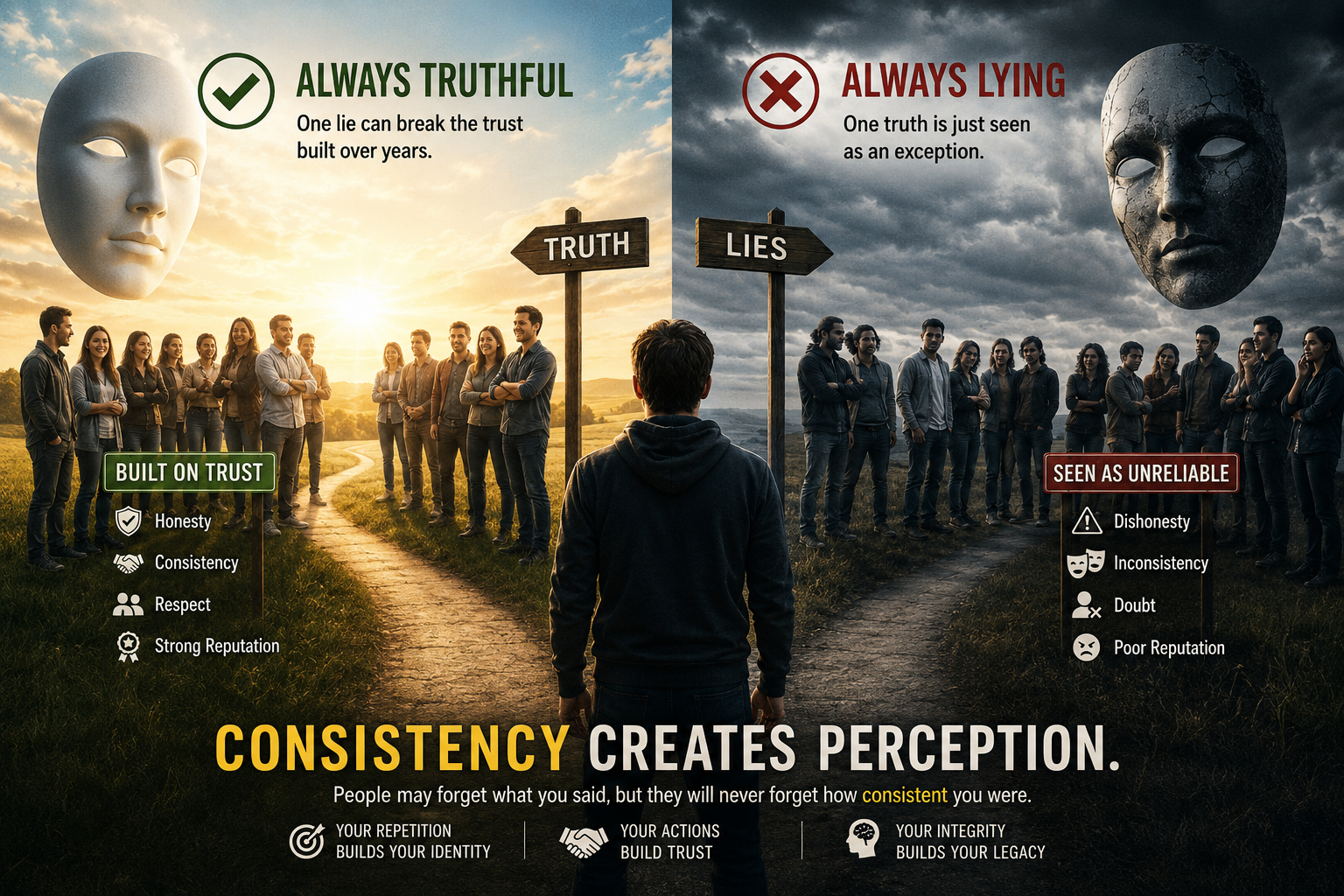
- People judge patterns more than individual actions.
- Trust is built through consistency and damaged by contradiction.
- One lie from an honest person violates expectations and creates disappointment.
- One truth from a habitual liar rarely changes public perception.
- Human psychology values consistency when evaluating character and credibility.
Why Does One Lie From an Honest Person Hurt More Than Many Lies From a Liar?
One lie from an honest person hurts more because it breaks established trust and violates expectations. In contrast, a habitual liar has already created an expectation of dishonesty, so an occasional truthful statement does little to change how people perceive them.
This psychological phenomenon is rooted in trust, consistency, and cognitive bias.
Understanding Human Psychology and Perception
Human psychology is not always based on logic. People often believe they judge others based solely on facts, but research in behavioral psychology suggests that people primarily judge others based on patterns and expectations.
Consider two individuals:
Person A
- Always tells the truth.
- Has earned trust over many years.
- Is respected for honesty and integrity.
Person B
- Frequently lies.
- Has a reputation for dishonesty.
- Is rarely trusted by others.
Now imagine:
- Person A tells one lie.
- Person B tells one truth.
Surprisingly, many people will react more strongly to Person A's lie than Person B's truth.
Why?
Because expectations have been violated.
What Is Expectation Violation Theory?
Expectation Violation Theory is a psychological concept that explains how people react when someone's behavior differs from what they expect.
When people trust someone, they develop a mental model of that person's character.
When the trusted person lies:
- Expectations collapse.
- Trust is questioned.
- Doubt begins to grow.
- Emotional disappointment occurs.
The reaction is often stronger than the actual lie itself.
The real damage comes from the gap between expectation and reality.
Why Do Honest People Face Harsher Judgment?
Trust Creates Higher Standards
The more trustworthy a person appears, the higher the standards people set for them.
People expect honesty from honest individuals.
When those expectations are broken, the emotional impact becomes significant.
A single dishonest act can cause people to question years of trustworthy behavior.
This is why public figures, leaders, teachers, and respected professionals often face severe criticism when caught in a lie.
Trust Is Hard to Build and Easy to Lose
Trust operates differently from many other human emotions.
Building trust requires:
- Time
- Consistency
- Reliability
- Positive experiences
Losing trust often requires only one contradictory action.
People naturally focus on information that challenges their existing beliefs because negative events create stronger emotional reactions than positive ones.
Why Doesn't One Truth Change a Liar's Reputation?
When someone is known for dishonesty, people already expect deception.
A truthful statement from that person usually gets interpreted as:
"Maybe they're telling the truth this time, but they're still the same person."
The truth does not significantly change public perception because it does not outweigh years of inconsistent behavior.
In psychology, reputation is built through repetition.
One action rarely changes an established pattern.
The Psychology of Consistency
Consistency is one of the strongest factors influencing how people judge character.
People remember patterns more than individual events.
Someone who repeatedly demonstrates:
- Honesty
- Integrity
- Reliability
- Accountability
is generally viewed as trustworthy.
Someone who repeatedly demonstrates:
- Dishonesty
- Manipulation
- Broken promises
- Inconsistency
is generally viewed as unreliable.
Over time, these patterns become identity.
This is why consistency often matters more than isolated moments.
Real-Life Examples of This Psychological Principle
Friendships
A loyal friend who disappoints you once may hurt you more than someone who has repeatedly disappointed you.
The pain comes from violated trust rather than the action itself.
Relationships
A partner who has always been faithful but lies once may create more emotional damage than someone already known for dishonesty.
Trust amplifies emotional impact.
Business and Branding
Consumers often forgive mistakes from companies with strong reputations.
However, when a trusted brand violates customer trust, public backlash can be intense because expectations were higher.
Leadership and Politics
Leaders who build their image around honesty often face severe criticism after a single false statement.
Their reputation creates expectations that magnify mistakes.
What Does This Teach Us About Human Behavior?
Human behavior is heavily influenced by perception.
People do not evaluate every action equally.
Instead, they compare actions against established expectations.
The greater the expectation, the greater the emotional reaction when that expectation is broken.
This explains why:
- One lie can outweigh years of honesty.
- One truth cannot erase years of dishonesty.
- Consistency shapes reputation more than isolated events.
Frequently Asked Questions (FAQ)
Why does one lie destroy trust so quickly?
Trust is built through repeated positive experiences. When a trusted person lies, the action contradicts established expectations, causing people to question the reliability of everything they previously believed.
What psychological theory explains this behavior?
Expectation Violation Theory and Confirmation Bias help explain why people react strongly when trusted individuals act inconsistently.
Can trust be rebuilt after a lie?
Yes. Trust can be rebuilt through accountability, transparency, and consistent honest behavior over time. However, rebuilding trust usually takes much longer than losing it.
Why doesn't one truthful act change a liar's reputation?
People judge long-term behavioral patterns. A single truthful act is often viewed as an exception rather than evidence of meaningful change.
Is consistency more important than honesty?
Honesty is important, but human psychology often evaluates people based on consistency. Consistent behavior helps others predict future actions and build trust.
Final Thoughts
One of the most powerful lessons in human psychology is that people remember patterns more than moments.
A truthful person who lies once may face harsh judgment because trust creates expectations.
A dishonest person who tells the truth may receive little recognition because one action rarely changes an established reputation.
In the end, people are remembered not only for what they say, but for how consistently they live by their words.
Trust is built through repetition.
Reputation is built through consistency.
And perception is often shaped by expectations.