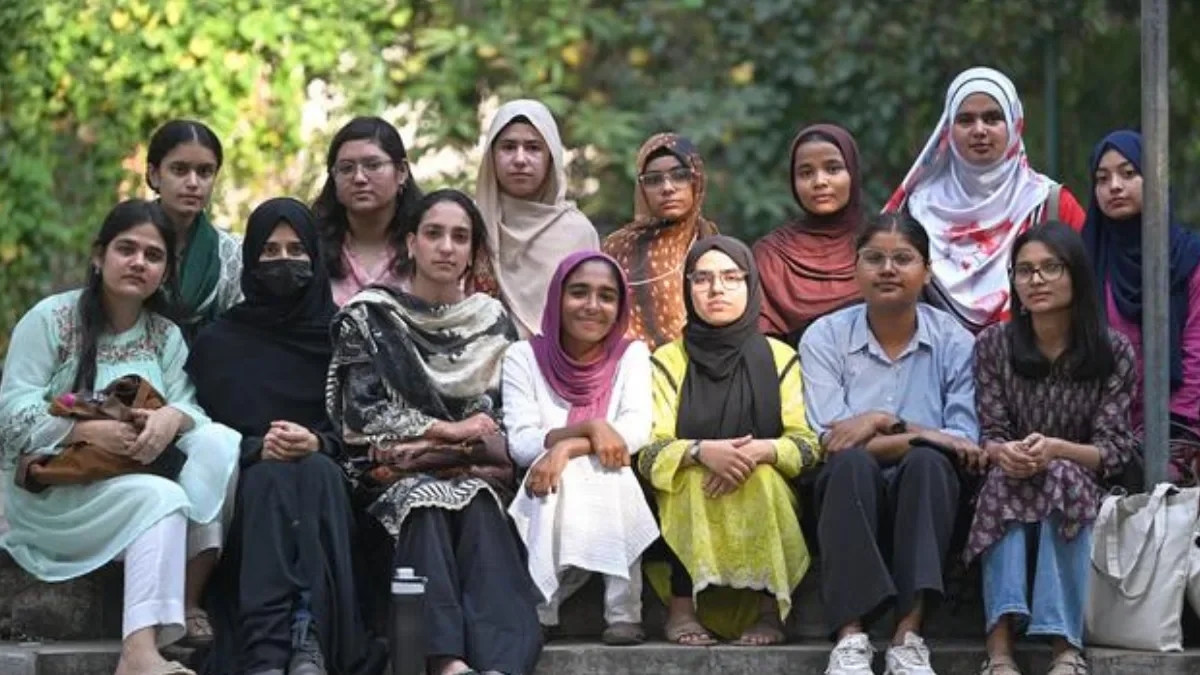
Thousands of female students at AMU’s Women’s College are currently barred from casting votes in the main AMUSU elections due to separate-union frameworks. Disenfranchised scholars argue that having only a localized college union leaves them without central political representation on key university governing bodies. Their struggle highlights ongoing systemic gender barriers within campus electoral politics.
What is the core electoral controversy at AMU?
At the center of the debate is the systematic exclusion of roughly 4,000 undergraduate female students residing at AMU’s Women’s College from casting ballots in the university-wide Aligarh Muslim University Students’ Union (AMUSU) elections. While male undergraduate students and postgraduates across all disciplines hold full voting rights for the central student body, female undergraduates are restricted to electing their local Women’s College Students’ Union (WCSU). This separation creates an unequal political framework where women are encouraged to participate in student life on campus but remain barred from participating at the central electoral ballot box.
Why does the administration enforce separate unions?
Historically, university authorities have justified keeping the Women’s College union distinct by citing physical separation, logistical constraints, and distinct residential rules. Officials maintain that the localized union structure provides female undergraduates with a targeted platform to address internal college concerns. However, critics and student activists counter that these justifications reinforce paternalistic controls and gender segregation, restricting women’s influence strictly to localized matters while denying them access to wider campus governance decisions that directly affect their academic experience.
How does exclusion impact women’s representation on campus?
The institutional divide carries serious political consequences for gender representation at the university level. Central AMUSU office bearers hold designated seats on the AMU Court—the highest supreme governing body of the institution—giving them direct influence over policy decisions, administrative allocations, and student welfare agendas. In contrast, leaders of the localized Women's College Students' Union have no equivalent representation in central administrative bodies. As a result, women's specific concerns regarding campus mobility, infrastructure, safety, and academic resources are consistently marginalized or entirely omitted from top-level policymaking.
What are female students demanding from the administration?
Organized groups of female students have increasingly pushed back against this segregation by submitting formal memorandums to university leadership. Their primary demand is dual voting rights: maintaining their local college representation while gaining full voting and contesting rights in the central AMUSU elections. Students point out that recent academic changes, such as four-year undergraduate degree programs where senior students reside outside the basic college hostel system, make complete central integration essential. They argue that true campus democracy cannot exist as long as a massive portion of the female student body remains disenfranchised from the university's main political platform.