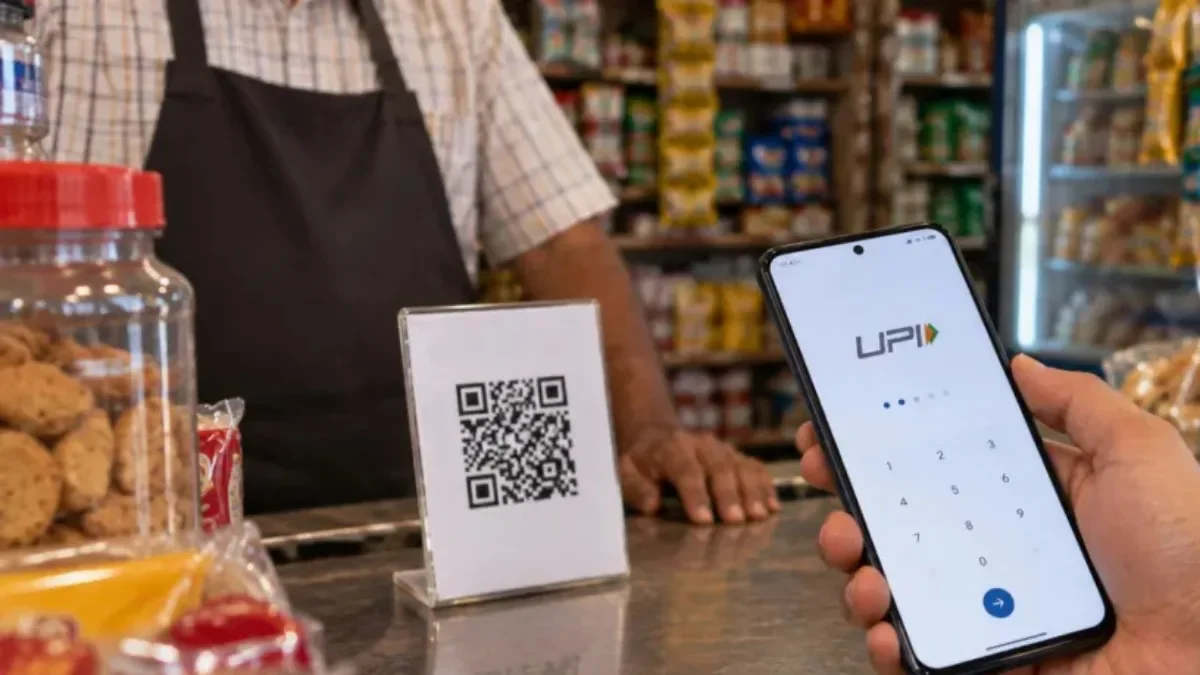
The Indian government is setting up a robust daily tracking mechanism to oversee digital payment compliance. This initiative comes directly in response to the newly announced Merchant Discount Rate (MDR) framework introduced by the National Payments Corporation of India (NPCI). Under the updated guidelines, which take effect on October 15, certain peer-to-merchant (P2M) transactions exceeding Rs 2,000 will incur a uniform 0.4% MDR charge.
To protect ordinary citizens from unexpected retail expenses, top finance officials have confirmed that regulatory bodies will monitor transaction trends closely. The core objective of this daily oversight is to ensure that shopkeepers and business establishments do not illegally transfer transaction processing costs onto everyday buyers.
What Sparked the New UPI Fee Framework?
For years, digital transactions processed via the Unified Payments Interface (UPI) remained entirely free for consumers and heavily subsidized by the state. However, maintaining the massive technological infrastructure required to process billions of monthly transactions involves substantial operational costs for banks and payment service providers.
Senior government officials emphasized that while subsidies can successfully launch a digital movement, they cannot guarantee long-term technological innovation or network resilience. By introducing a modest 0.4% MDR on merchant transactions above Rs 2,000, the system aims to generate sustainable financial support for the banking ecosystem. Officials firmly dismissed speculations that the levy was introduced under external pressure from foreign entities or trade bodies, maintaining that the decision was arrived at independently to strengthen domestic financial networks.
Who is Affected and Who is Protected?
The new policy incorporates clear safeguards to shield small businesses and everyday shoppers:
Small Vendors Protected: Micro-merchants and street vendors collecting up to Rs 1 lakh per month via QR codes under specific person-to-person-merchant categories face zero MDR charges.
Low-Value Transactions Exempt: All peer-to-merchant transactions of Rs 2,000 or less remain completely free of any merchant levy.
Personal Transfers Untouched: Peer-to-peer (P2P) transfers between friends and family members continue to be entirely free, regardless of the amount sent.
What Happens Next for Consumers and Merchants?
The Ministry of Finance has explicitly warned that third-party UPI application providers are prohibited from imposing hidden platform fees on users. Furthermore, commercial banks have been officially advised to crack down on any merchants attempting to levy extra surcharges at billing counters.
With the implementation date approaching, the government's daily tracking initiative will serve as an essential shield for consumers. If widespread compliance issues arise, regulatory authorities are expected to step in firmly to preserve the affordability and transparency that made UPI a cornerstone of India's digital economy.
also read : India State Elections 2027: Schedule, Key States & Political Dynamics