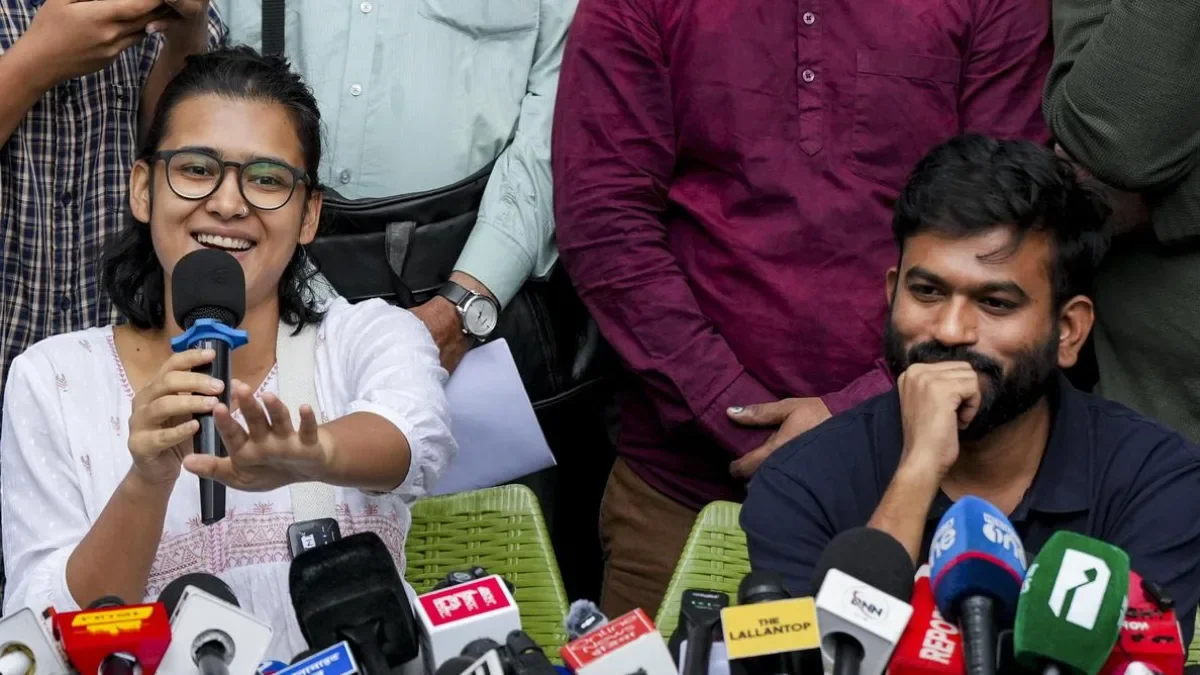
Heavy security forces deployed across New Delhi's Connaught Place on Friday to maintain order ahead of the Cockroach Janta Party’s (CJP) proposed "Lehra Do Tiranga" demonstration. This major police mobilization coincided with the Supreme Court declining to urgently hear petitions challenging the administrative closure of Central Park, leaving media watchdogs to raise alarms over the ongoing detentions of journalists covering the unrest across multiple Indian cities.
What Is the CJP Tiranga March Controversy?
The tension centers on a call made by CJP founder Abhijeet Dipke, urging citizens to assemble at Central Park in Connaught Place carrying the national flag to protest recent government actions. In response, the New Delhi Municipal Council (NDMC) issued a public notice shutting Central Park to the general public for two consecutive days, citing administrative reasons.
Despite the Delhi High Court refusing to completely block the protest, law enforcement authorities made it clear that public gatherings would not be permitted at the venue. Security officials announced that only a nominal group would be allowed to carry the tricolour under strict police monitoring, prompting heavy barricading and over 32,000 security and Central Armed Police Forces (CAPF) personnel on alert around CP's commercial hub.
Why Did the Supreme Court Refuse Urgent Hearing?
When petitioners approached the Supreme Court seeking immediate relief against the sudden shutdown of Central Park ahead of the weekend, a bench comprising Chief Justice of India Surya Kant and Justice Joymalya Bagchi declined to pass urgent interim directions.
The top court pointed out the practical and economic fallout on local businesses and traders during the high-traffic festive season. Expressing hope that "better sense will prevail" among the organizers and authorities, the bench declined to overrule local administrative measures taken to preserve public order.
How Are Police Action and Press Freedom Impacted?
As security forces sealed off access points leading to Connaught Place, the Committee to Protect Journalists (CPJ) expressed severe concerns over police conduct towards the press. According to CPJ statements, police in Delhi, Ahmedabad, Pune, and Mumbai have detained dozens of journalists from various independent and mainstream media houses while they were covering the ongoing political demonstrations.
These detentions persisted despite explicit assurances given by Solicitor-General Tushar Mehta before the Supreme Court that working journalists and legal practitioners would not be hindered or restricted in carrying out their professional duties. CPJ highlighted incidents where reporters were taken to distant locations, had their media credentials ignored, or were forced to clear recorded footage.
Where Is the Movement Headed Next?
The atmosphere around Central Park remains taut as CJP leadership reiterated their resolve to proceed peacefully toward the designated site. With the Supreme Court declining to step in immediately, the burden shifts entirely to local law enforcement to balance public movement, press movement, and city security.