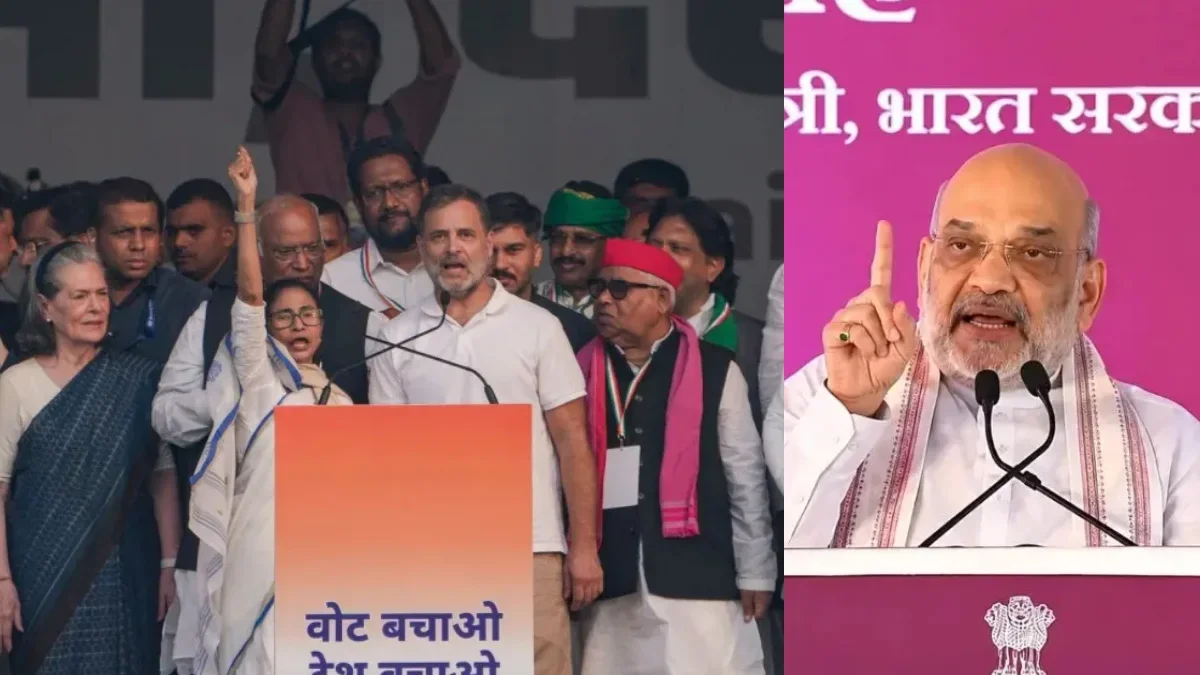
The Congress-led INDIA bloc organised a mock Parliament at Congress president Mallikarjun Kharge's residence in New Delhi on October 31, 2026, to conduct a symbolic impeachment of Chief Election Commissioner (CEC) Gyanesh Kumar. The opposition parties accused him of facilitating alleged electoral irregularities and large-scale voter deletions through the Special Intensive Revision (SIR) exercise, demanding his immediate removal from office.
The unusual political event has raised questions about the opposition's strategy, the use of parliamentary-style proceedings outside Parliament and the growing confrontation between the Congress and the Election Commission of India. While the INDIA bloc presented the event as a public demonstration of democratic accountability, its critics may view it as political theatre rather than a meaningful constitutional proceeding.
What Happened During the Mock Parliament?
On Saturday, October 31, several opposition parties belonging to the INDIA bloc gathered at Mallikarjun Kharge's residence in New Delhi. Instead of organising a conventional press conference or public protest, the leaders recreated the atmosphere of a parliamentary session to conduct what they called a public impeachment of Gyanesh Kumar.
Former Lok Sabha Speaker Meira Kumar presided over the symbolic proceedings, while Mallikarjun Kharge moved the resolution seeking the Chief Election Commissioner's removal.
The gathering followed a parliamentary-style format, including speeches, the presentation of allegations and a resolution that was eventually passed unanimously through a show of hands.
According to reports, representatives of 21 opposition parties participated in the programme. The event was organised as part of the INDIA bloc's wider campaign against alleged voter-list irregularities and its demand for accountability from the Election Commission.
However, an important distinction must be understood: this was a political demonstration, not an official sitting of either House of Parliament. Its resolution does not legally remove Gyanesh Kumar from his constitutional position.
Why Is Congress Targeting Gyanesh Kumar?
The confrontation between the Congress and Gyanesh Kumar is primarily connected to the Special Intensive Revision of electoral rolls, commonly known as SIR.
The Election Commission introduced this exercise to verify voter registrations, identify duplicate entries and remove names of people who are deceased, have shifted permanently or are otherwise ineligible to remain on electoral rolls.
However, opposition parties have questioned the process, alleging that genuine voters have also been removed from electoral lists. Congress leaders have particularly raised concerns about the scale of deletions, transparency and the possibility of eligible citizens losing their voting rights.
The INDIA bloc has accused the Chief Election Commissioner of favouring the ruling BJP and the central government. These are political allegations, not established judicial findings.
According to reports, the opposition's resolution identified six broad areas of concern, including alleged manipulation of electoral rolls, changes to voter registration procedures, centralisation of election-related systems and the exclusion of other Election Commissioners from important decisions.
What Were the Six Allegations Against the CEC?
During the symbolic impeachment proceedings, the opposition presented six principal allegations against Gyanesh Kumar.
1. Electoral manipulation: The opposition alleged that voter-list changes were being used to influence electoral outcomes in favour of the ruling party.
2. Large-scale voter deletions: Congress and its allies raised concerns about the removal of approximately 13.2 crore voter entries during the revision exercise.
3. Changes to voter registration rules: The bloc questioned changes involving Form 6 and the procedures for registering new voters, alleging insufficient parliamentary oversight.
4. Centralisation of election systems: Opposition leaders raised concerns about the use of digital platforms, including ERONET and ECINET, and alleged that decision-making powers were becoming increasingly centralised.
5. Questions over institutional independence: The opposition alleged that the other two Election Commissioners were not adequately involved in important decisions. Reports have also highlighted objections recorded by the commissioners.
6. Alleged constitutional violations: The resolution accused the CEC of failing to maintain the impartiality expected from an independent constitutional institution.
These allegations formed the basis of the opposition's symbolic resolution. However, they should be understood as claims made by political parties rather than proven charges against the Chief Election Commissioner.
Is a Mock Impeachment the Same as Removing the Chief Election Commissioner?
This is one of the most important questions surrounding the entire controversy.
The answer is no. A mock Parliament organised by a political party or opposition alliance has no constitutional authority to remove a Chief Election Commissioner.
The removal of a CEC is governed by constitutional provisions and a formal parliamentary procedure. Political parties cannot remove the officeholder simply by organising a meeting, conducting a symbolic vote or passing a resolution outside Parliament.
Earlier in April 2026, the Lok Sabha Speaker and Rajya Sabha Chairman rejected opposition notices seeking Gyanesh Kumar's removal. That decision had already created considerable disagreement between the opposition and the ruling establishment.
The October 31 event was therefore an attempt to take the political campaign beyond the formal parliamentary process and present the opposition's accusations directly to the public.
The distinction matters because democratic institutions must operate according to established constitutional procedures, even when political disagreements become intense.
Congress's Political Strategy: Accountability or Political Theatre?
The Congress-led opposition has increasingly made electoral transparency a central part of its political campaign. By organising a mock Parliament, the party attempted to create a public platform where its concerns could receive attention.
There are two ways to interpret this strategy.
From the opposition's perspective, traditional parliamentary mechanisms have not delivered the accountability it wants. Therefore, a symbolic public proceeding provides an opportunity to communicate its allegations, unite opposition parties and attract public attention.
From the critics' perspective, recreating Parliament outside the actual institution risks turning a serious constitutional issue into a political performance. Passing a symbolic resolution may generate headlines, but it does not establish the truth of the allegations or change the legal status of the CEC.
The larger question is whether such demonstrations encourage meaningful democratic discussion or simply intensify political confrontation.
Parliament is not merely a building or a seating arrangement. It represents constitutional authority, legislative responsibility and the collective voice of elected representatives. Recreating its proceedings for political messaging cannot replace the responsibilities of the actual institution.
How Has the BJP and Election Commission Responded?
The controversy has also generated a strong political response from the ruling establishment.
The BJP has rejected the opposition's allegations and criticised its campaign against the Election Commission. Government representatives have argued that electoral-roll revision is a legitimate administrative exercise intended to improve the accuracy of voter records.
The Election Commission has maintained that the revision process is designed to identify duplicate and ineligible registrations. It has also said that voters whose names are incorrectly removed can take steps to seek re-enrolment.
This disagreement highlights the central challenge: the opposition wants greater transparency and accountability, while the Election Commission maintains that the exercise is an administrative process intended to protect the accuracy of electoral rolls.
Ultimately, the credibility of the electoral process depends on verifiable records, transparent procedures and the ability of affected citizens to challenge incorrect decisions.
What Happened on November 1?
The political confrontation continued on November 1, when the INDIA bloc organised a major protest march and rally at Ramlila Maidan in New Delhi.
Congress leader Rahul Gandhi and other opposition leaders participated in the demonstration, demanding Gyanesh Kumar's resignation and raising concerns about alleged voter-rights violations.
Thousands of people gathered at the rally. Rahul Gandhi accused the Election Commission of undermining citizens' voting rights, while opposition leaders called for greater accountability in the electoral process.
The BJP, meanwhile, criticised the protest and rejected the allegations of electoral manipulation.
The November 1 demonstration showed that the Congress-led campaign was not limited to the symbolic impeachment event. The opposition was attempting to turn the controversy into a broader public movement around electoral transparency and democratic accountability.
Why Does This Controversy Matter for Indian Democracy?
The controversy surrounding Gyanesh Kumar goes beyond an individual political disagreement. It raises important questions about the independence of constitutional institutions and public confidence in elections.
In a democracy, the Election Commission has a responsibility to conduct elections fairly and impartially. Political parties, regardless of whether they belong to the ruling establishment or opposition, must have confidence that electoral rules are applied equally.
At the same time, opposition parties have the right to question government institutions, demand explanations and organise peaceful demonstrations when they believe democratic processes are being compromised.
However, allegations must be supported by evidence, and institutional disputes must ultimately be resolved through legitimate constitutional and legal mechanisms.
The Congress-led INDIA bloc's mock Parliament may have attracted considerable political attention, but the real test will be whether its allegations lead to transparent investigations, meaningful institutional accountability or further political confrontation.
For ordinary citizens, the most important issue is not which political party wins the argument. It is whether every eligible Indian citizen can exercise their right to vote without discrimination, confusion or administrative obstacles.