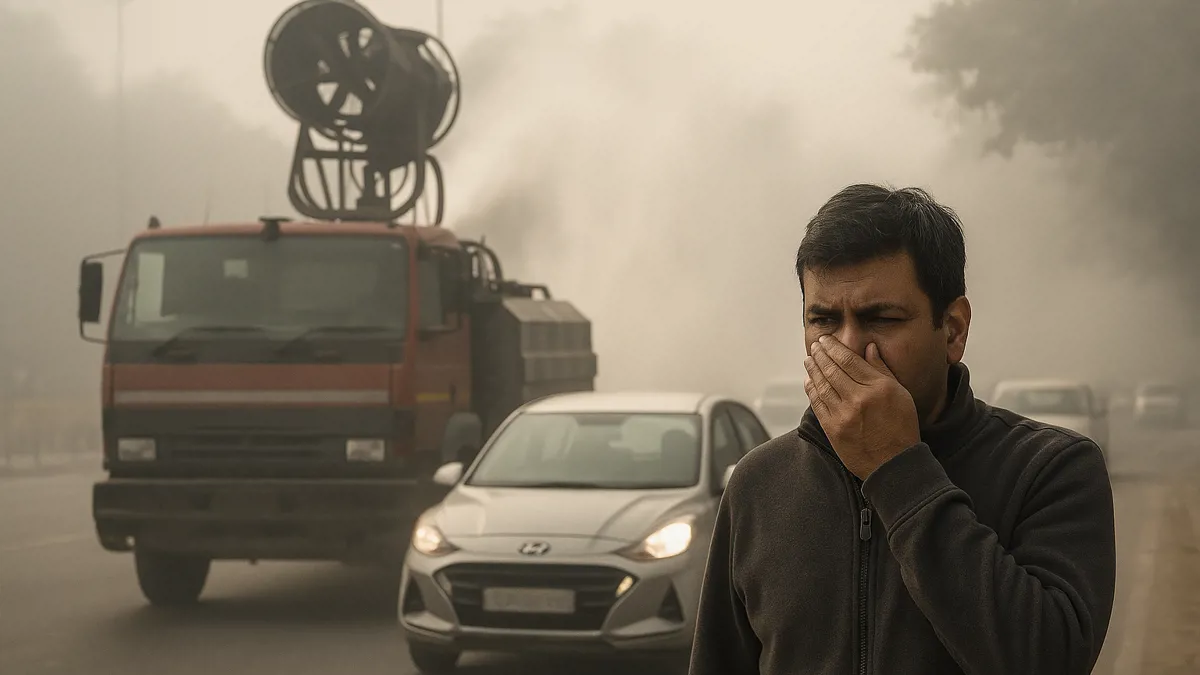
Delhi’s air quality has registered as 'moderate' on Monday, although several locations within the national capital reported pollution levels classified as 'poor', as indicated by the Central Pollution Control Board (CPCB).
According to data from the CPCB, the average Air Quality Index (AQI) for Delhi was recorded at 187 on Sunday, marking the worst air quality of the season. Multiple monitoring stations have shown elevated pollution levels, with significant figures including Mandir Marg at 146, Punjabi Bagh reaching 212, and Mundka, which reported an AQI of 257, the highest among the monitored areas.
The CPCB's updates illuminate that despite an overall moderate categorization for AQI, a troubling trend is emerging, particularly as Delhi enters a period notorious for marked increases in pollution levels. The city is experiencing one of its most contaminated beginnings to October in recent years, with the situation exacerbating over the days leading to Monday.
Other notable AQI readings included CRRI Mathura Road at 225, Wazirpur with 221, and Vivek Vihar at 230. Meanwhile, the Delhi Cantonment area reported the lowest AQI at 87, considered satisfactory according to the CPCB's classification system, which ranks AQI from good (0-50) to severe (401-500).
The recent surge in pollution follows a temporary respite caused by rainfall and brisk winds, which had previously helped to disperse contaminants. However, decreasing wind speeds, the lack of recent rainfall, along with localized emissions, have contributed to this new decline in air quality. PM10 particles, largely produced by road dust, construction activities, and biomass burning, have emerged as key pollutants during this period of deterioration.
Among the 43 operational monitoring stations in the Delhi area, 14 reported AQI levels categorized as poor later in the afternoon. The highest recorded values included both CRRI Mathura Road and Narela at 257, and Jahangirpuri at 237.
CPCB statistics suggest that the average AQI during the initial four days of October has spiked to 174.5 this year, a stark contrast to previous years: 119.75 in 2025, 167.25 in 2024, 155 in 2023, 161.25 in 2022, 107.25 in 2021, and finally 176.25 in 2020. Such data reflects a concerning trend in air quality deterioration as Delhi approaches its winter months.
The pattern of air quality degradation in Delhi-NCR typically begins around mid-September, driven primarily by stubble burning, followed by emissions from transportation, industries, and power plants. The increase in pollution is particularly pronounced during the festive season, with firecracker use around Diwali often exacerbating the situation despite imposition of regulatory measures.
Source
Edited with AI assistance.
Featured image: AI-generated representative image.