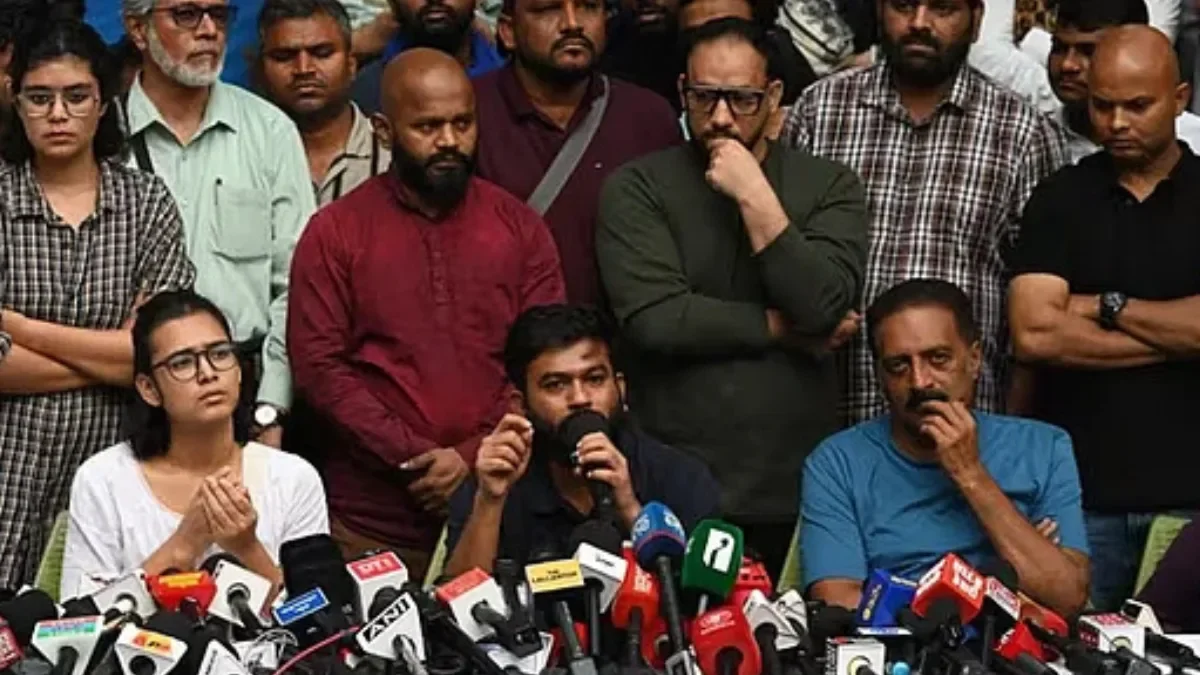
The Delhi High Court declined to halt the CJP's October 16 demonstration at Central Park, Connaught Place, despite business owners expressing severe economic concerns during the peak Dussehra shopping season. Opting not to issue direct injunctions, the bench accepted assurances from the Delhi Police that traffic, security, and public order would be comprehensively regulated.
What Did the Delhi High Court Order Regarding the CJP Protest?
The Delhi High Court addressed a urgent petition seeking an immediate judicial injunction against the Cockroach Janta Party (CJP) and its founder, Abhijeet Dipke, who called for a public gathering titled 'Lehra Do Tiranga' at Central Park in Connaught Place on October 16. Rather than placing an explicit blanket ban on the political assembly, the bench declined to grant specific restraining orders.
Instead, the court recorded official submissions from the Additional Solicitor General (ASG) representing the Delhi Police, who confirmed that authorities had already initiated regulatory proceedings. The court emphasized that with law enforcement taking operational responsibility to prevent lawlessness and ensure public safety, no additional judicial intervention was required at that juncture. When the petitioner's counsel pushed for a strict judicial directive banning the event, the bench firmly advised against insistence, noting that its formal order recording the police's regulatory commitment had already been passed.
Who Filed the Petition and Why Was It Brought to Court?
The public interest litigation was moved by Anil Kumar Gupta, a licensed street vendor operating in Palika Bazar since 1995, representing the collective interests of local traders, daily wage earners, and small vendors in Central Delhi. The petitioner argued that allowing a massive unannounced gathering in the heart of Delhi's primary commercial district would cause severe economic hardship to local businesses.
Represented by senior legal counsel, the petitioner pointed out that the scheduled demonstration coincided with the high-revenue Dussehra festive weekend. The legal team stressed that previous unsanctioned demonstrations in Central Delhi resulted in widespread road blockades, police barricading, and sudden market closures, driving shoppers away and devastating the livelihoods of micro-entrepreneurs and daily laborers who rely on foot traffic.
Where Was the Protest Planned and What Were the Site Concerns?
The agitation call specifically targeted Central Park, situated directly above the underground Palika Bazar in Connaught Place. The petitioner highlighted that Central Park is not designated as an official protest location under the Delhi Police regulatory guidelines issued on October 11, 2026, which de-notified Jantar Mantar and restricted authorized gatherings to specified locations such as Ramlila Ground, Burari Ground, and CBD Ground in East Delhi.
To support the argument against holding non-designated assemblies in commercial zones, the petitioner cited key Supreme Court precedents—including Mazdoor Kisan Shakti Sangathan v. Union of India (2018) and Amit Sahni v. Commissioner of Police (2020). These rulings established that while the constitutional right to peaceful protest is fundamental, it must be exercised at designated venues to avoid indefinitely blocking public transit corridors and infringing upon the rights of citizens to carry on trade and commerce.
How Will Delhi Police and Local Authorities Manage the Gathering?
In response to the apprehensions raised by traders, the Delhi Police assured the High Court that robust measures would be executed on the ground to control crowd movement and prevent vehicular paralysis. Law enforcement authorities clarified that strict access restrictions would be enforced at Central Park.
Alongside law enforcement measures, the New Delhi Municipal Council (NDMC) announced precautionary operational adjustments, including shutting down access to Central Park during the protest timeframe to protect public infrastructure and maintain safety. Police representatives reiterated to the court that while citizens' rights are recognized, law enforcement retains the authority to disperse unauthorized crowds, prevent obstruction of pedestrian pathways, and preserve access to commercial establishments throughout the Connaught Place perimeter.