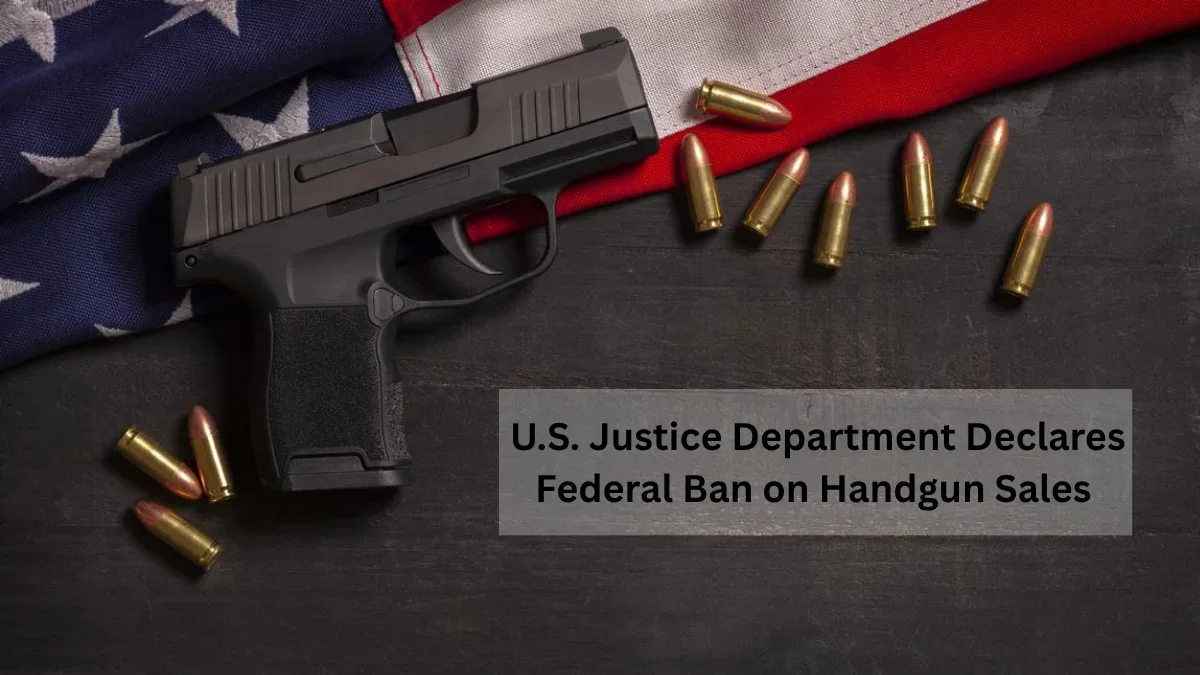
The U.S. Justice Department has issued a major legal opinion stating that federal prohibitions preventing licensed firearms dealers from selling handguns to adults between the ages of 18 and 20 are unconstitutional. Released by the department’s Office of Legal Counsel (OLC), the 49-page opinion asserts that these restrictions violate the Second Amendment by infringing on the rights of law-abiding young adults. While the underlying statutes remain on the books, this directive means the executive branch will no longer criminally prosecute licensed dealers solely for selling handguns to this age group.
Background and Core Arguments
Under long-standing federal legislation, federally licensed firearms dealers are barred from selling handguns to individuals younger than 21, though 18- to 20-year-olds have still been permitted to purchase long guns or acquire handguns through private sales.
In the new OLC opinion, Assistant Attorney General T. Elliot Gaiser argued that young adults aged 18 to 20 are full members of the political community whose constitutional rights are protected. The department emphasized that society recognizes 18-year-olds as adults in numerous other contexts—such as voting, serving on juries, fulfilling military drafts, and facing adult criminal penalties, including capital punishment. Furthermore, the OLC concluded that historical limitations on weapon sales to minors during the 19th century applied to individuals who were legally minors at the time, making them inapplicable to modern 18-year-old adults.
Impact and Public Reaction
This policy shift addresses a complex legal landscape that has divided federal appellate courts across the country. While lower courts have issued competing rulings on firearm age limits, the U.S. Supreme Court previously declined to resolve challenges directly targeting the federal law.
Gun rights organizations have praised the development as a significant restoration of civil liberties for young adults. Conversely, gun control advocates have strongly criticized the move. Representatives from safety groups argue that abandoning restrictions on an age group statistically linked to higher risks of handgun violence compromises public safety and weakens enforcement accountability for illegal sellers.
What Happens Next?
With the Justice Department directing that these specific provisions will not be enforced through criminal penalties, federally licensed dealers face less legal risk when completing transactions with eligible 18- to 20-year-old buyers. However, because the underlying statute has not been formally repealed by Congress, ongoing legal debates, future court battles, and potential state-level regulations will continue to shape how firearms access is managed for young adults nationwide.