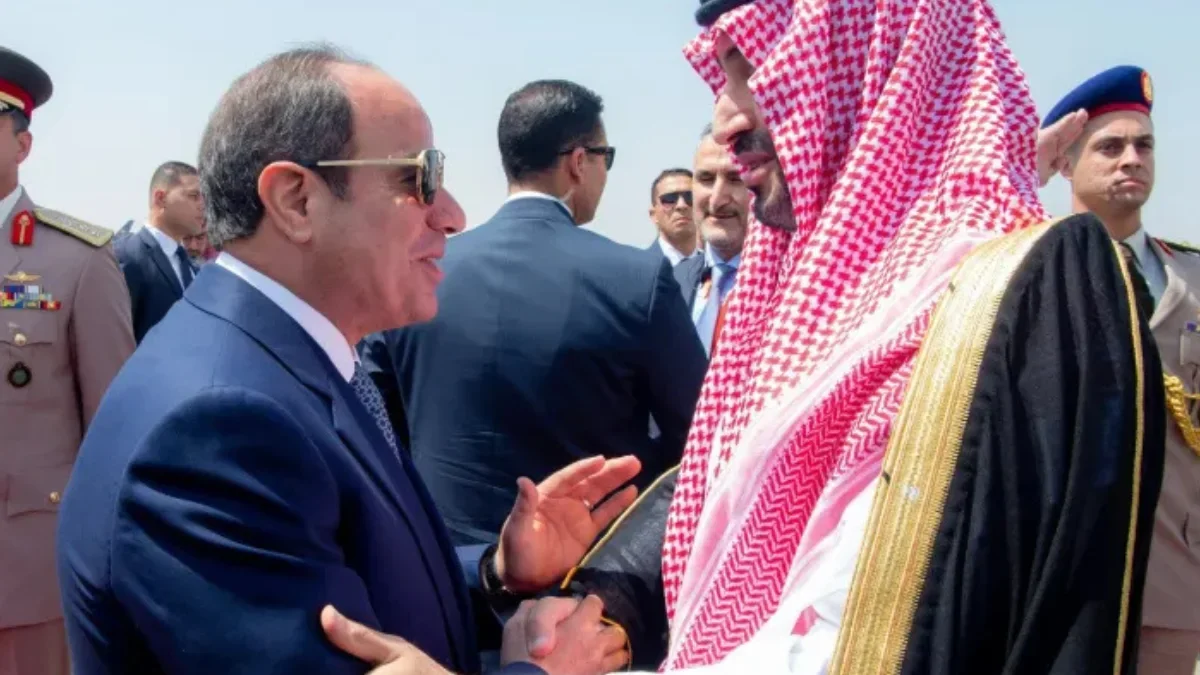
The geopolitical landscape of the Middle East faces a critical juncture as maritime trade routes encounter unprecedented challenges. Recently, Saudi Crown Prince Mohammed bin Salman traveled to Cairo to hold high-level talks with Egyptian President Abdel Fattah el-Sisi. At the center of their discussions was the mounting security crisis in the Red Sea and the vital Bab el-Mandeb Strait, where escalating attacks by Yemen's Houthi rebels have disrupted global supply chains and spiked energy costs. As both nations seek to protect vital economic lifelines, questions remain over the exact boundaries of Egypt's military and diplomatic assistance.
Background: Why the Red Sea Matters
The Red Sea is one of the world's busiest and most critical maritime trade corridors, handling roughly 12% of global commerce. It connects the Mediterranean Sea and the Suez Canal to the Indian Ocean, serving as an indispensable artery for international shipping, container freight, and oil and gas transit.
For Saudi Arabia, the Red Sea serves as an essential alternative route for oil exports, especially when Persian Gulf routes face threats or restrictions. For Egypt, the security of these waters directly dictates the health of the Suez Canal, which remains a primary contributor to the nation's foreign-currency earnings. Prolonged instability and security threats directly translate to millions of dollars in lost state revenue for Cairo as shipping companies divert vessels away from the region.
What Happened and Why It Matters
The urgency of the recent Cairo summit intensified following a wave of strategic disruptions. Houthi forces advanced in western Yemen, seizing key positions near the Bab el-Mandeb Strait. Simultaneously, infrastructure attacks—including strikes on Saudi Arabia's critical East-West Pipeline—tightened the pressure on regional energy transport.
During their meeting, President el-Sisi and Crown Prince Mohammed bin Salman reaffirmed their shared commitment to safeguarding freedom of navigation in regional waterways. While Saudi Arabia leads broader defense initiatives like the recently formed Multinational Maritime Defence Alliance, it looks to Egypt for crucial political backing and diplomatic influence across the Arab world.
What Are the Limits of Egypt's Involvement?
A central question for regional observers is whether Cairo will commit troops to active combat operations in Yemen. Defense analysts widely note that direct military deployment is unlikely. Egypt traditionally favors diplomatic mediation and strategic restraint, aiming to avoid entanglement in costly foreign conflicts.
Instead, Egypt's contribution centers on diplomatic solidarity, intelligence coordination, and reinforcing multilateral maritime frameworks designed to keep international trade routes open. Cairo's backing lends vital legitimacy to Saudi-led regional stabilization efforts without escalating into direct ground warfare.
What Could Happen Next?
The coming weeks will test the resilience of the newly formed maritime security frameworks and bilateral coordination between Cairo and Riyadh. If diplomatic efforts fail to deter further attacks, international pressure may mount for a more robust collective naval posture. For ordinary citizens and global markets, the primary focus remains on whether these diplomatic alignments can successfully lower shipping insurance costs, stabilize oil prices, and restore safe, predictable commercial transit through the Suez Canal and Red Sea corridors.
also read : Canada Welcomes EU Associate Member Proposal Amid US Trade Tensions