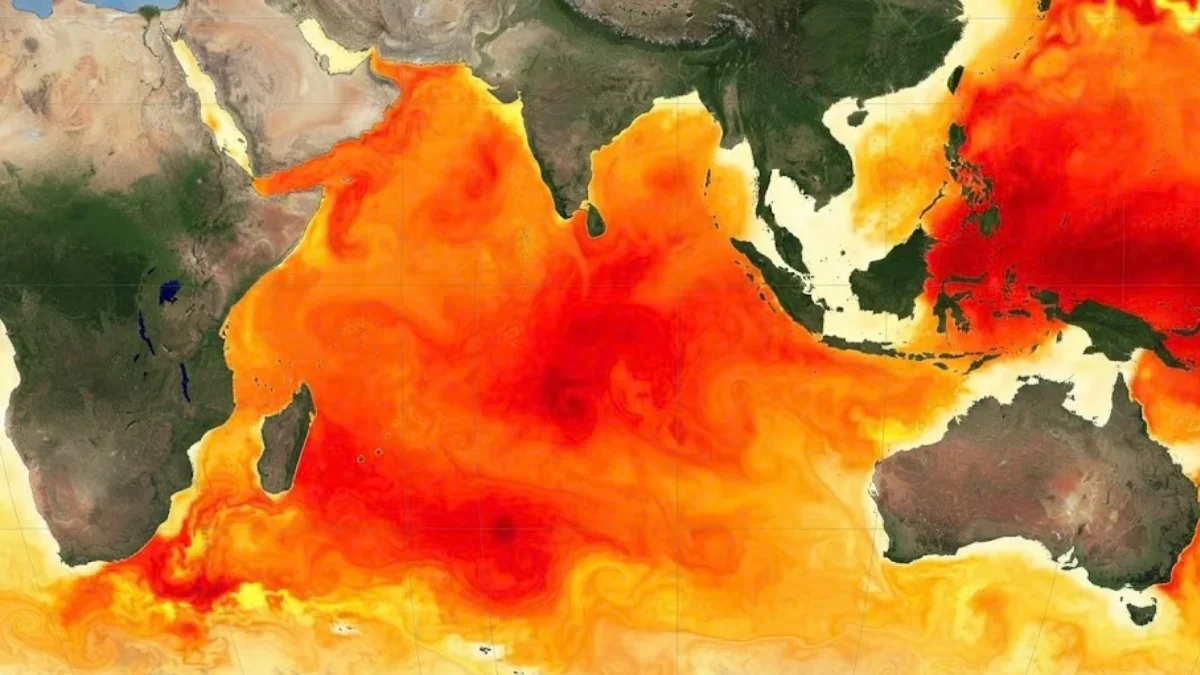
The tropical Pacific is experiencing a powerful surge in sea-surface temperatures, driven by sustained weakening of trade winds and expansive subsurface heat reserves. As the defining engine of the El Niño-Southern Oscillation (ENSO), this massive pool of warm water is releasing unprecedented amounts of energy into the atmosphere. Meteorologists note that these high thermal anomalies are tracking near historic peaks, significantly altering planetary weather systems, wind circulation patterns, and marine ecosystems.
How Are Temperature Shifts Impacting the Indian Ocean?
While the Pacific serves as the primary catalyst, the Indian Ocean is concurrently experiencing above-average warmth relative to recent days. Factors such as positive Indian Ocean Dipole (IOD) phases and widespread baseline global warming are contributing to elevated sea-surface temperatures across regional waters. This localized heating alters moisture transport, atmospheric pressure gradients, and regional monsoon dynamics, presenting complex feedback loops that affect neighboring landmasses and agricultural sectors.
What Lies Ahead for Global Climate Patterns?
International meteorological organizations project that these intensified oceanic conditions will persist through upcoming seasonal cycles, influencing rainfall distribution, storm intensity, and temperature averages globally. Understanding the interaction between a scorching Pacific basin and a warming Indian Ocean remains vital for early-warning systems, agricultural planning, and resource management as communities prepare for potential climate extremes.
source link = El Nino and Warming Indian Ocean