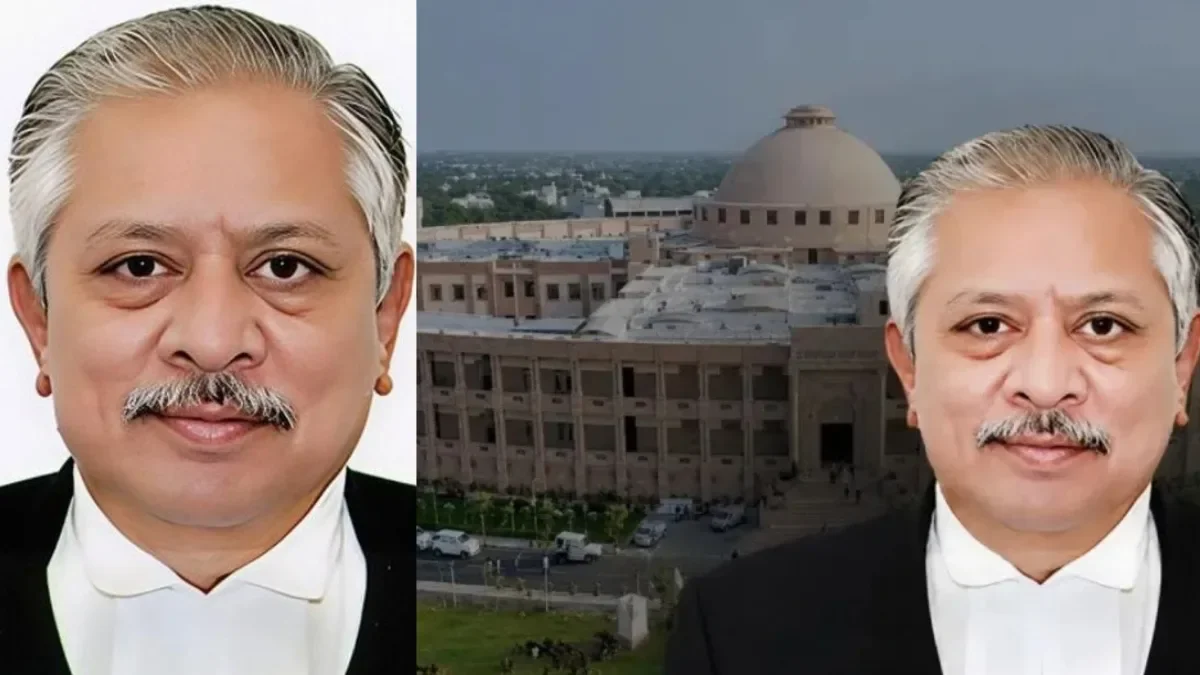
The legal fraternity was recently rocked when Supreme Court judge Justice Sandeep Mehta addressed a series of confidential letters to the Chief Justice of India (CJI). In these communications, Justice Mehta leveled serious accusations against Justice Sanjeev Prakash Sharma, who served as the acting Chief Justice of the Rajasthan High Court. The allegations primarily centered around administrative malpractices, selective roster allocations, interference in judicial inquiries, and the misuse of official powers. These claims quickly spilled into public discourse, triggering intense debates regarding judicial accountability, institutional governance, and internal checks within the higher judiciary.
Why Did the Former Acting Chief Justice Break His Silence?
Following weeks of mounting public scrutiny, protests, and his subsequent departure from judicial duties, Justice Sharma decided to address the controversy head-on. In an extensive public interview, he vehemently rejected every allegation brought forward by his peer. Stressing that judges must operate within institutional boundaries and maintain the dignity of their office, Justice Sharma asserted that a Supreme Court judge stationed away from the state has no business interfering in the administrative management of a separate high court. He noted that washing judicial linen in public threatens the foundational trust that citizens place in the justice delivery system.
How Did He Address the Allegations of Power Misuse and Favoritism?
Addressing specific claims regarding roster manipulation and the selective transfer of judicial officers, Justice Sharma defended his administrative record. He explained that restructuring rosters and managing judicial transfers are standard administrative responsibilities vested in the office of the Chief Justice to ensure smooth case flow and handle operational demands. He dismissed claims of favoring influential litigants as entirely fictitious, pointing out that during his tenure, hundreds of routine transfers occurred transparently through the registry. He further emphasized that if he were inclined toward nepotism, his own family members—whose personal legal matters remain pending before courts—would have received preferential treatment long ago.
Who Benefits from Internal Judicial Clashes?
Delving into the potential motives behind the unexpected conflict, Justice Sharma hinted at underlying professional friction stemming from their shared years in the legal profession. Recalling their parallel elevations as senior advocates years prior, he remarked that personal grievances or simple professional jealousy might have influenced the harsh tone of the allegations. Ultimately, the public defense by the former acting Chief Justice highlights the deep-seated vulnerabilities of internal institutional self-governance and underscores the urgent need for robust, dignified mechanisms to resolve disputes within India's judicial hierarchy.