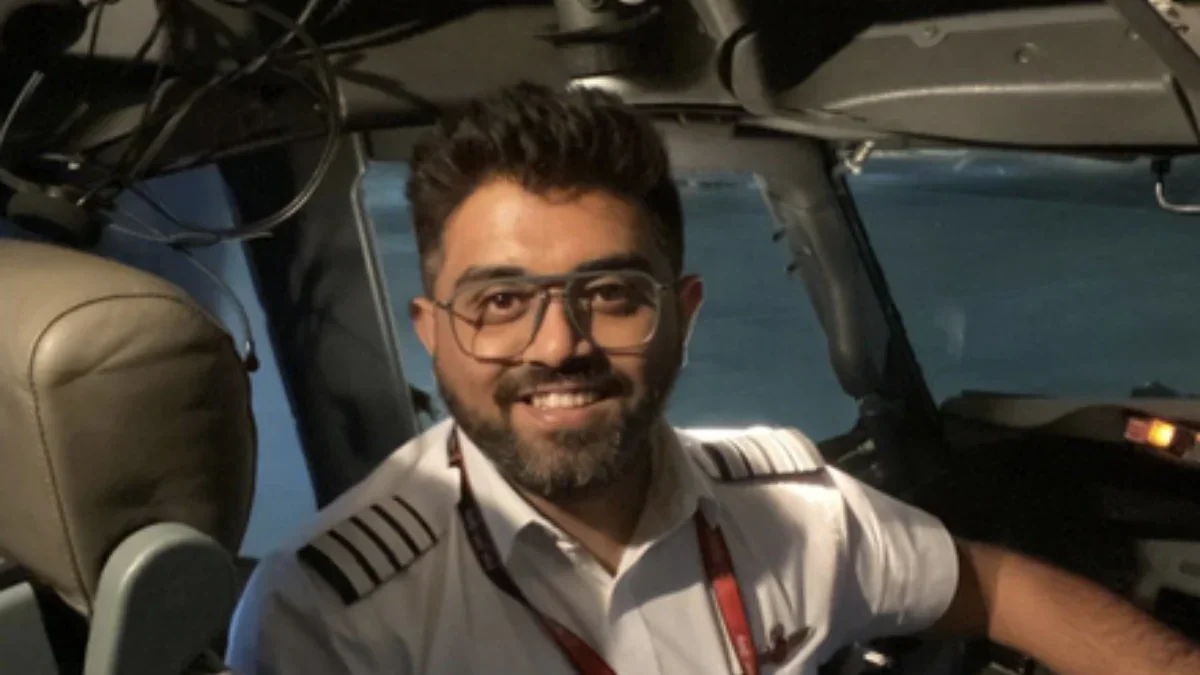
The modern aviation industry relies heavily on protocols, advanced technology, and seamless teamwork. However, when an unexpected crisis strikes thousands of feet in the air, human instinct, grit, and split-second decision-making become the ultimate line of defense. Recently, Indian pilot Captain Smit Machchhar captured global attention after showing extraordinary composure during a high-stakes emergency aboard a commercial flight. His actions averted a potential catastrophe, sparking widespread discussions on safety, crew vetting, and what true leadership looks like when noise gives way to absolute courage.
What Happened on Flight FZ1073?
The incident unfolded on September 30, aboard Flydubai Flight FZ1073 traveling from Dubai to Tel Aviv with 174 people on board. Mid-flight, a critical security emergency erupted inside the cockpit when the co-pilot, later identified by investigators as Hamam al-Hammami, launched an attack on Captain Machchhar. Amidst a violent struggle and grievous injuries, the aircraft experienced a sudden, dangerous descent.
Despite severe physical pain and blood loss, Captain Machchhar mustered his remaining energy to unlock the cockpit door. This crucial action enabled passengers and crew members to intervene, overpower the attacker, and stabilize the aircraft before it met a tragic fate. The plane was successfully diverted, and emergency landings were executed safely.
Why It Matters: Courage Versus Chaos
In a world saturated with digital noise, sensationalism, and endless internet commentary, genuine acts of heroism often get diluted. Commentary surrounding the event has drawn a sharp line between empty noise and quiet, calculated courage. Captain Machchhar, a veteran with nearly 9,750 flying hours who previously served with SpiceJet, demonstrated that a pilot's primary duty is absolute protection of human life.
Global leaders, including Indian Prime Minister Narendra Modi and Israeli Prime Minister Benjamin Netanyahu, praised his remarkable grit. PM Modi noted that his quick thinking saved passengers from a massive tragedy, while Netanyahu hailed him as a true hero. Beyond the political acknowledgment, the incident has forced international aviation regulators to re-evaluate security protocols, background checks, and psychological screening for flight deck crew members.
Impact on Global Aviation and Security
For ordinary travelers, incidents of cockpit breaches or internal security threats trigger deep anxiety regarding air travel safety. Questions have rightfully been raised regarding how background flags or radical ideological views are monitored across cross-border airline hires. Aviation authorities across the Middle East, Asia, and the West are now reviewing multi-jurisdictional vetting processes to ensure that cockpit security remains foolproof.
What Comes Next?
As investigations led by regional and international agencies continue, Captain Machchhar is recovering from his injuries. Meanwhile, airlines are tightening cockpit access control mechanisms and enhancing crew resource management training. For the global community, the legacy of this event remains clear: when crisis strikes, systems matter, but the individual character of those at the controls makes all the difference.