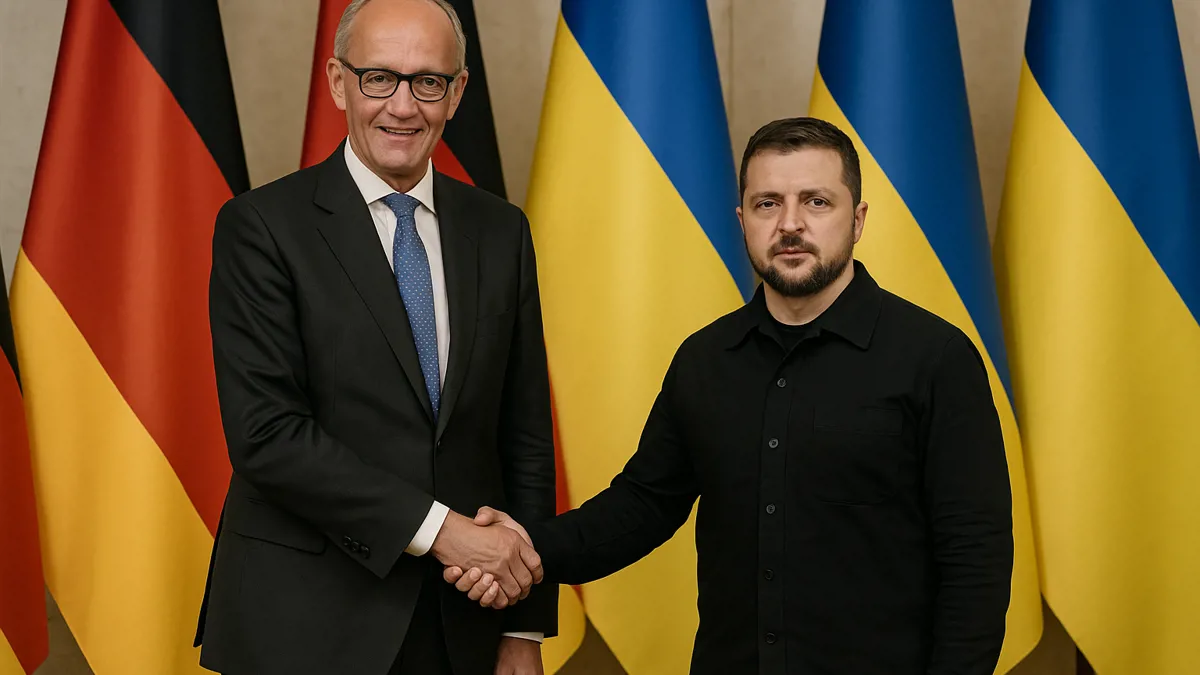
On October 4, 2026, German Chancellor Friedrich Merz visited Kyiv, Ukraine, where he announced a significant support package alongside Ukrainian President Volodymyr Zelenskyy. The package is valued at more than €1.3 billion, as reported by Ukraine’s presidential office. This includes approximately €1 billion designated for military assistance and around €350 million aimed at bolstering the energy sector ahead of the impending winter season. This announcement comes at a time of increased Russian drone attacks on the Ukrainian capital, adding urgency to the visit [1].
During the announcement, Zelenskyy highlighted that the aid encompasses immediate-use weapons, essential winter energy support, and funding aimed at producing new interceptors to counteract jet-powered drones known as “shaheds.” The details from the German government’s transcript also reiterated that the funding would enhance production not only for defense against drones but also for combat drones, satellite technology, and energy infrastructure repairs [1].
The high-profile visit was strategically planned to underscore Germany's commitment to Ukraine amidst rising threats from Russia. Alarmingly, air-raid sirens were reportedly active during Merz’s visit, and explosions could be heard in Kyiv, further emphasizing the dangerous context of the discussions. Zelenskyy remarked that the visit symbolized Germany's unwavering support for Ukraine, commending what he termed the country’s “courage” during such tumultuous times. Merz affirmed that Germany stands ready to support Ukraine until the conflict concludes [2].
Beyond the immediate financial aid, the talks between the two leaders resulted in multiple agreements spanning a range of cooperative efforts, particularly in defense matters. Ukrainian and German reports confirmed the signing of several partnerships, focusing on enhancing drone countermeasures and deeper ties within the defense industry. Additionally, reports suggested that deals involving German companies reached approximately €6.6 billion, though these agreements exist independently from the government aid package [1].
In summary, the visit by Chancellor Merz to Kyiv has culminated in a robust new German support package for Ukraine, which includes significant military and energy assistance and sets the stage for increased collaboration in the defense sector. This is emblematic of Germany’s solidarity with Ukraine as it continues to face serious challenges from ongoing Russian aggression [1].
Sources
- [1] €1.3 Billion to Strengthen Ukraine’s Defense and Energy Sector: Results of the Meeting Between Volodymyr Zelenskyy and Friedrich Merz — Official website of the President of Ukraine
- [2] Pressekonferenz Kanzler Merz in Kyjiw | Bundesregierung
Researched and edited with AI assistance.
Featured image: AI-generated representative image.