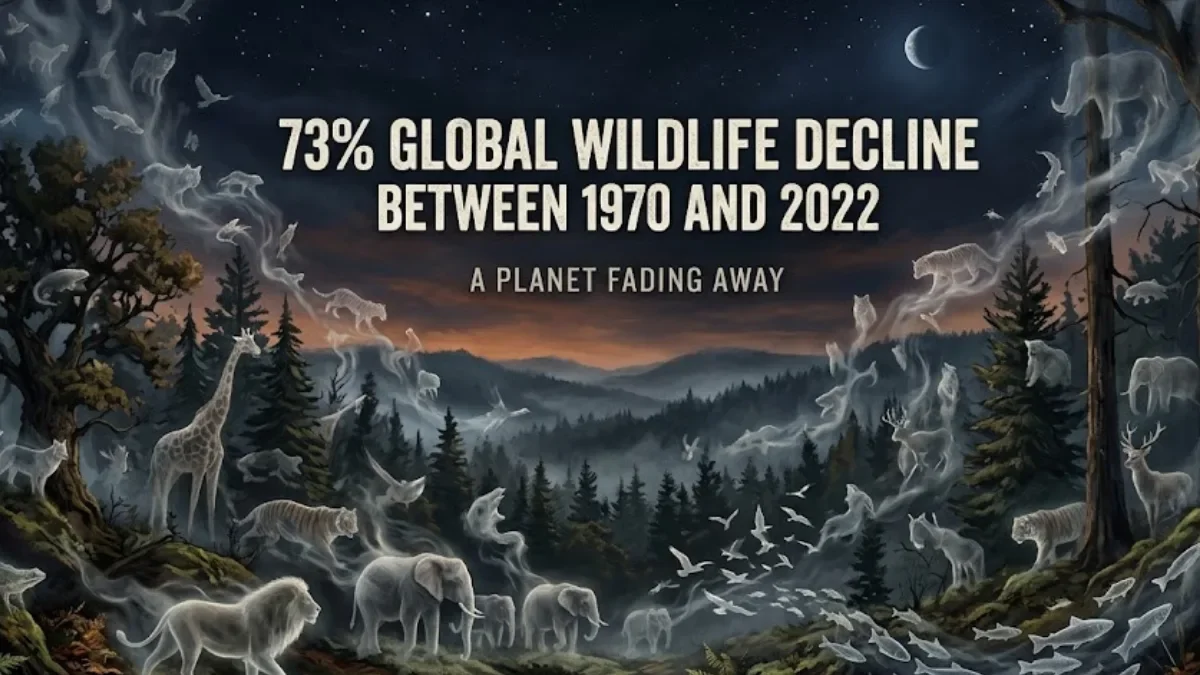
Monitored global wildlife populations have suffered an average decline of 73% between 1970 and 2022. Driven primarily by environmental pollution, direct exploitation, and habitat destruction, this catastrophic drop threatens to unravel stable ecological networks across the planet.
1970 Baseline ───[ 100% ]
│
│ -73% Average Decline (1970–2022)
▼
2022 Level ───[ 27% Remaining ]
What Has Caused the Steep Decline in Global Wildlife?
The loss of global wildlife populations over the last five decades is driven by several human-led pressures. The primary driver remains widespread habitat destruction and degradation, frequently caused by agricultural expansion, urban development, and deforestation.
In addition to habitat loss, direct overexploitation—including unsustainable hunting, overfishing, and poaching—has depleted populations faster than natural breeding rates can restore them. Chemical, agricultural, and industrial pollution further contaminates soil and water systems, harming species health and reproduction. Accelerating climate change and invasive non-native species continuously strain ecosystems already near their tipping points.
Which Ecosystems and Regions Are Most Affected?
While global wildlife losses are widespread, freshwater environments and specific geographical zones have suffered the steepest declines. Freshwater ecosystems, including rivers, lakes, and wetlands, have seen some of the most dramatic species drops due to water pollution, dam construction, and over-extraction.
Region / System | Impact / Primary Factors |
Freshwater Habitats | Damming, river fragmentation, industrial runoff, water diversion. |
Latin America & the Caribbean | Rapid land conversion, agricultural clearing, localized species stress. |
Africa | Overexploitation, land modification, wildlife poaching pressures. |
Asia-Pacific | High human population density, rapid industrialization, habitat fragmentation. |
How Does Wildlife Loss Disrupt Ecological Balance?
Ecosystems function through complex interactions between animal species, plant life, and their environments. Every species plays a specific role, such as pollination, seed dispersal, nutrient cycling, or predator-prey regulation.
When animal populations collapse by 73%, these natural food webs break down:
Pollination Failure: The loss of insects, birds, and bats impairs natural plant reproduction, reducing wild floral diversity and plant regeneration.
Trophic Cascades: Removing key predators leads to overpopulation of herbivorous species, which causes overgrazing, vegetation removal, and severe soil erosion.
Soil and Nutrient Degradation: Animals move nutrients across wide landscapes; their absence lowers soil fertility and degrades land quality over time.
Why Does Biodiversity Decline Threaten Human Food Security?
The loss of wild species directly impacts human food systems and economic stability:
Agricultural Dependence on Natural Pollinators: A significant portion of food crops depends heavily on wild animal pollinators. As pollinator numbers drop, crop yields shrink, placing global nutrition and farming livelihoods at risk.
Depletion of Marine and Aquatic Food Sources: Marine and freshwater fisheries provide essential protein to billions of people worldwide. Overfishing and aquatic pollution severely diminish fish populations, undermining coastal economies and global seafood supplies.
Loss of Natural Agricultural Protectors: Natural predators such as birds, amphibians, and beneficial insects keep agricultural pest populations in check. Without them, farms become increasingly vulnerable to crop failure and disease outbreaks.
How Can Humanity Reverse Biodiversity Loss?
Reversing biodiversity loss requires coordinated global policy and immediate localized action:
Habitat Restoration: Protecting primary forests, restoring damaged wetlands, and establishing interconnected migration corridors.
Sustainable Resource Management: Enforcing strict quotas against overfishing, combating illegal wildlife trafficking, and reforming agricultural land management.
Pollution Control: Reducing plastic usage, minimizing agricultural runoff, and managing industrial waste before it reaches natural ecosystems.
Climate Action: Curbing carbon emissions to limit temperature increases that disrupt wildlife habitats and life cycles.