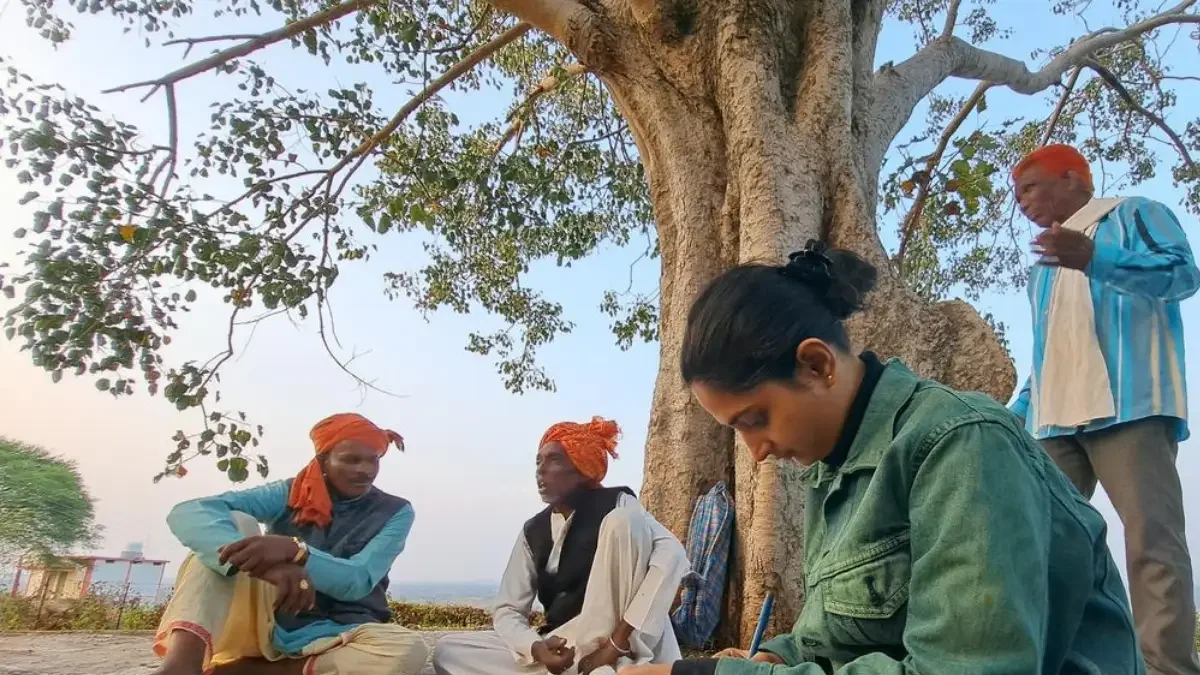
The "Myth, Memory and Form" exhibition currently hosted at the DakshinaChitra Heritage Museum serves as an immersive exploration of tribal roots, storytelling lineages, and visual culture. At its core, the showcase examines how ancient oral traditions held by indigenous groups undergo significant shifts when translated into contemporary visual masterpieces. By bridging spoken folklore with tangible canvas work, the exhibition opens up a vital dialogue regarding what is preserved and what alters in translation.
What is the Pardhaan Continuum?
Stretched across the gallery space, "The Pardhaan Continuum" forms a monumental 7.5-metre accordion-style book that charts the historical and spiritual lineage of the Pardhaan Gonds. Serving historically as hereditary bards, genealogists, and community priests, the Pardhaans have safeguarded the sacred stories of deities like Bada Dev for generations. This massive illustrated manuscript acts as a foundational anchor, offering deep context for modern urban interpretations of Gond art. Because these narratives are fluid and vary with each re-telling, the manuscript captures an evolving heritage rather than a static history.
Who are the Master Minds Behind the Curated Vision?
Curated and designed by Apoorva Mishra and Achyut Siddu through their Madhya Pradesh-based design research practice Loksutr, the exhibition represents years of intensive field collaboration. Working closely with National Award-winning Gond artists like Kailash Pradhaan and Ajay Marko, alongside Odisha Pattachitra practitioner Prahallad Moharana, the curators translated complex, fluid oral histories into permanent visual compositions. Rather than treating tribal communities merely as archival subjects, this methodology places the artists at the center of the creative and collaborative process.
Where Do Myth and Visual Form Intersect?
The gallery walls display around 40 distinctive paintings, including a sweeping 10 ft. by 20 ft. canvas illustrating the origin story of the Narmada River. While classical texts like the Skanda Purana attribute the river's birth to Lord Shiva’s meditation sweat, local Pardhaan Gond versions—such as the Amar Katha narrated by Gangaram Uikey—recount tales of divine oversight, bamboo forests, and animated parrot eggs. Another segment of the exhibition explores classical texts like the Vishnudharmottara Purana, using the traditional Pattachitra style to examine painting itself as an ultimate sacred skill.
Why Does Transforming Oral Knowledge Matter Today?
Translating spoken memories into visual artifacts introduces a profound paradox. On one hand, visual preservation protects fragile tribal histories from fading into obscurity in a rapidly modernizing digital world. On the other hand, freezing fluid oral narratives into physical frames risks detaching them from their interactive, community-led performance contexts. Ultimately, "Myth, Memory and Form" challenges viewers to look past the surface aesthetic of tribal art and appreciate the intricate community philosophies, memories, and ancestral knowledge systems embedded underneath.