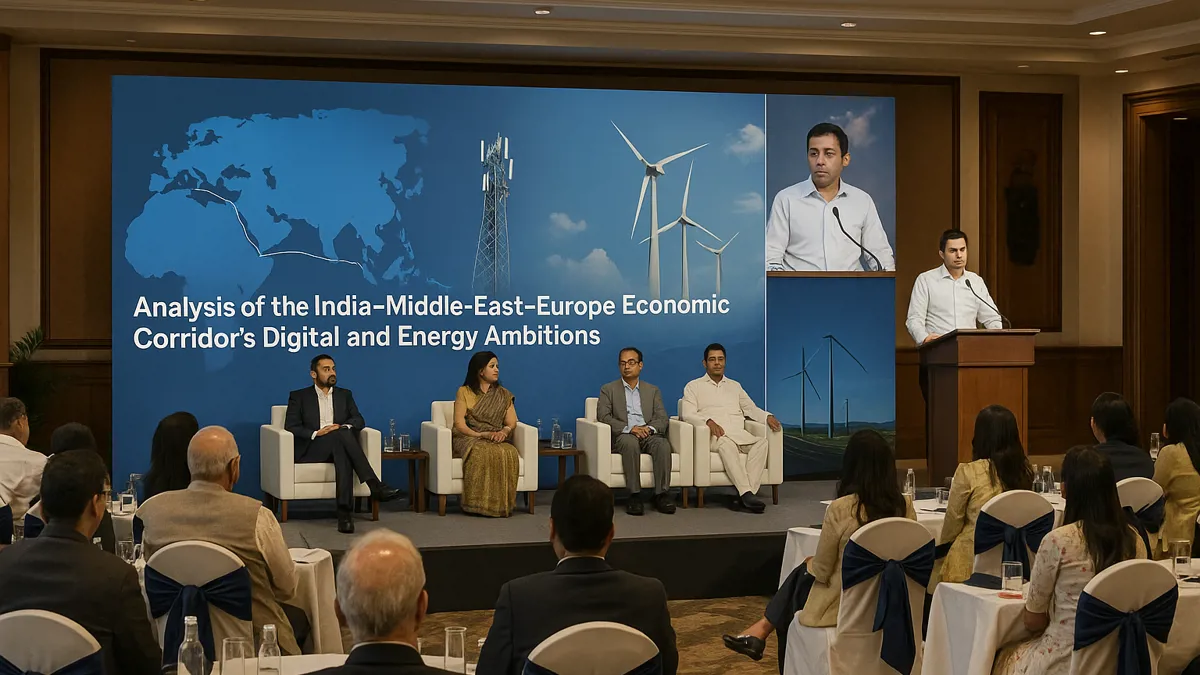
The India–Middle East–Europe Economic Corridor (IMEC), a logistics and connectivity project inaugurated during the G20 summit in New Delhi on September 9, 2023, integrates transport with advanced digital and energy frameworks. According to the memorandum detailing the initiative, IMEC will not only entail a railway link but will also feature electricity networks, digital connectivity cables, and a pipeline for exporting clean hydrogen [1].
An opinion piece from Gulf News published on October 3, 2026, reaffirms this expansive vision. It highlights plans surrounding electricity and digital cables, as well as a hydrogen export pipe, emphasizing that the IMEC framework is multilayered [2]. This assertion further aligns with documents produced by the EU Global Gateway, which incorporate the proposed Blue Raman subsea cable into the broader IMEC digital strategy, demonstrating the interconnected nature of these projects.
In terms of infrastructure, the Atlantic Council categorizes IMEC into three pillars: transportation, energy, and digital infrastructure. It underscores that the digital aspect focuses heavily on new fiber-optic cables and cross-border connectivity. However, the analysis notes that the feasibility of the gas pipeline and green-hydrogen initiatives remains uncertain, which is critical for understanding the project’s potential impact and current status [3].
On the digital front, the European Commission's Global Gateway initiative further outlines its commitment to a submarine cable system stretching 11,700 kilometers from Europe to India, integrating the Blue Raman cable project directly with the digital corridor. This specificity reinforces the notion that digital infrastructure is indeed a key component—not just an adjunct—of the broader IMEC proposal [4].
With regard to energy, consensus among both official and analytical sources indicates that while IMEC plans for electricity connections and clean hydrogen transport, it’s essential to note that the feasibility of these plans is still in the air. The Atlantic Council states that electricity grids and fiber-optic cables stand as the primary areas of future integration, while hydrogen initiatives are mired in uncertainty. The International Energy Agency (IEA) echoes these sentiments in its 2026 review, indicating that hydrogen infrastructure globally is still maturing, with many projects contingent upon supportive policies and secure off-take agreements [5].
In conclusion, the established documentation supports the argument that the IMEC initiative represents a comprehensive corridor aiming to integrate rail, ports, digital capabilities, electricity interconnections, and clean-hydrogen transportation. While the strategic framework of the corridor is clear and detailed, the actualization of its energy and hydrogen components poses questions regarding their construction timeline and financial viability [1].
Sources
- [1] Memorandum of Understanding on the Principles of an India - Middle East - Europe Economic Corridor | The American Presidency Project
- [2] India–Middle East–Europe Economic Corridor: Trade, Digital Cables and Clean Energy Beyond Rail
- [3] The India-Middle East-Europe Economic Corridor: Connectivity in an era of geopolitical uncertainty - Atlantic Council
- [4] EU-Africa-India digital corridor
- [5] The India-Middle East-Europe Economic Corridor: Connectivity in an era of geopolitical uncertainty
Researched and edited with AI assistance.
Featured image: AI-generated representative image.