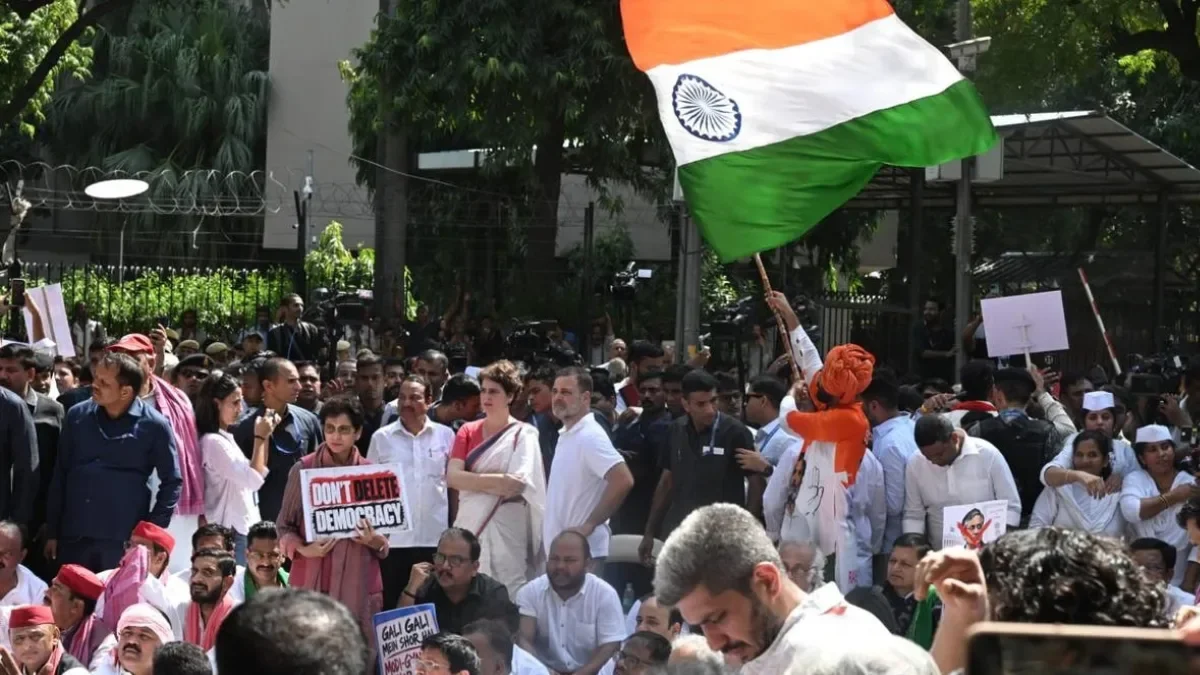
The political landscape in New Delhi witnessed dramatic scenes as top leaders and lawmakers from the opposition INDIA bloc attempted to carry out a planned protest march from the Parliament House complex toward Nirvachan Sadan, the Election Commission of India (ECI) headquarters. The mobilization was organized to register strong dissent against the functioning of the top electoral body and specifically to press for the removal of Chief Election Commissioner (CEC) Gyanesh Kumar. Law enforcement authorities deployed massive security barricades, Rapid Action Force (RAF) personnel, and heavy personnel deployment across critical junctions near Parliament Street, Akashvani Bhavan, and surrounding areas to block the procession.
Why Are Opposition Parties Demanding the CEC's Resignation?
The core catalyst behind this intense political friction stems from ongoing disputes regarding electoral rolls, transparency, and specific administrative exercises like the Special Information Revision (SIR). Opposition leaders have accused the poll panel of compromising institutional neutrality, alleging systemic flaws and deletions that allegedly impact voter rights. These grievances accumulated into a collective call for accountability, with opposition figures stating that public trust in independent oversight bodies has been severely eroded. Consequently, the demand for CEC Gyanesh Kumar's resignation became the rallying cry unifying various constituent parties under the banner of the opposition alliance.
How Did Authorities and Protesters Respond to the Restrictions?
As the march advanced past initial security cordons, police intercepted the lawmakers near NITI Aayog and Akashvani Bhavan, preventing them from moving closer to the ECI office. Refusing to disperse, prominent leaders including high-profile parliamentarians staged an impromptu sit-in demonstration (dharna) directly on the blocked streets. Slogans targeting electoral transparency echoed through the high-security zone as participants displayed banners and cutouts. Following the refusal to clear the thoroughfare, police detained several key opposition MPs, bundling them into designated transport buses and shifting them away from the protest site to maintain law and order.
What Happens Next in the Institutional Showdown?
The confrontation highlights a deepening rift between major political stakeholders and independent constitutional institutions in the country. While opposition strategies increasingly focus on public agitation, legislative notices, and institutional accountability pressures, legal and constitutional experts note that removing a Chief Election Commissioner involves strict legislative thresholds under Article 324 of the Constitution. As political fallout from the detentions continues to ripple through national politics, opposition leaders have signaled that their campaign for electoral reforms and institutional answers will persist across multiple platforms.