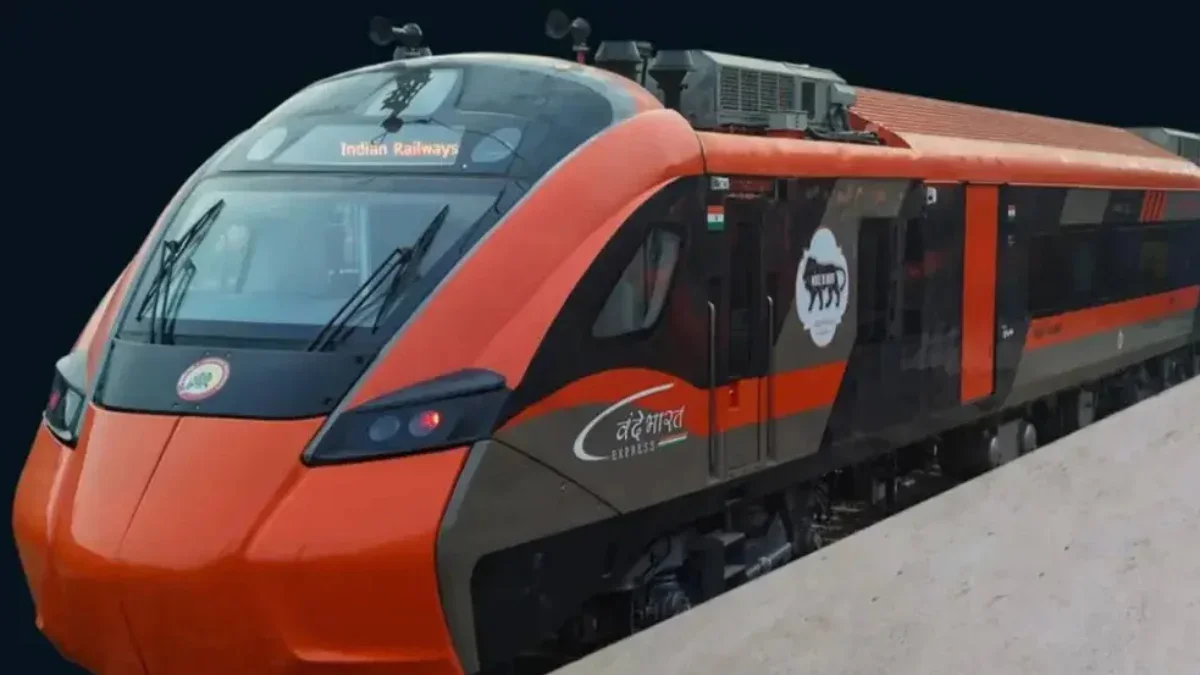
Indian Railways will roll out its next phase of semi-high-speed Vande Bharat trains on November 1, significantly strengthening high-speed rail connectivity across key regional and economic corridors.
What Is the Big Announcement for Indian Railways?
Indian Railways has officially scheduled the launch of new Vande Bharat train services starting November 1. A major highlight of this expansion is the introduction of long-distance Vande Bharat Sleeper trainsets, designed specifically to cater to overnight intercity travel. The initiative marks a major milestone in upgrading India's railway infrastructure by replacing conventional long-haul trains with high-tech, self-propelled rake systems engineered for faster speeds and modern passenger comfort.
Which Routes Are Covered in the New Rollout?
One of the primary routes featured in this launch is the highly anticipated Bengaluru–Mumbai Vande Bharat Sleeper service, which directly links India’s tech capital with its financial hub. Operating between KSR Bengaluru / SMVT Terminal and Chhatrapati Shivaji Maharaj Terminus (CSMT) in Mumbai, this route passes through key industrial and commercial hubs including Anantapur, Guntakal, Raichur, Kalaburagi, Solapur, Pune, and Kalyan. Additionally, rail authorities are introducing supplementary and festival special Vande Bharat services across heavy-passenger routes such as the New Delhi–Patna corridor to manage high travel demand efficiently.
Why Is this Expansion Significant for Passengers?
The introduction of these premium trains fundamentally alters the travel experience for long-distance commuters. The Bengaluru–Mumbai Vande Bharat Sleeper, for instance, reduces travel time from nearly 24 hours on legacy trains down to approximately 16 hours over a 1,118-kilometer journey. Built with advanced bogies, superior suspension systems, and improved aerodynamics, the trains deliver exceptional stability and reduced noise levels. Inside, passengers benefit from ergonomic berths, sensory lighting, automatic plug doors, modernized bio-vacuum toilets, onboard infotainment systems, and enhanced safety features like the indigenous anti-collision system, KAVACH.
Who Benefits the Most From These New Trains?
This railway modernization directly serves frequent business travelers, tourists, and working professionals who seek a reliable, mid-priced alternative to domestic air travel and lengthy highway commutes. Beyond direct passengers, regional economies along the transit corridors receive a major boost. Improved rail access to mid-tier industrial hubs like Solapur, Kalaburagi, and Raichur streamlines commerce, promotes local tourism, and facilitates seamless cross-state mobility.
How Will Operations and Ticketing Work?
The new services will run on high-frequency schedules, with main routes like the Bengaluru–Mumbai sleeper expected to operate six days a week. Passengers will be able to reserve berths across multiple AC sleeper tiers via the IRCTC portal and official railway ticketing counters. Fares are structured dynamically based on distance and class, offering competitive pricing relative to private airliners while delivering significantly higher comfort and shorter transit times than traditional express trains.