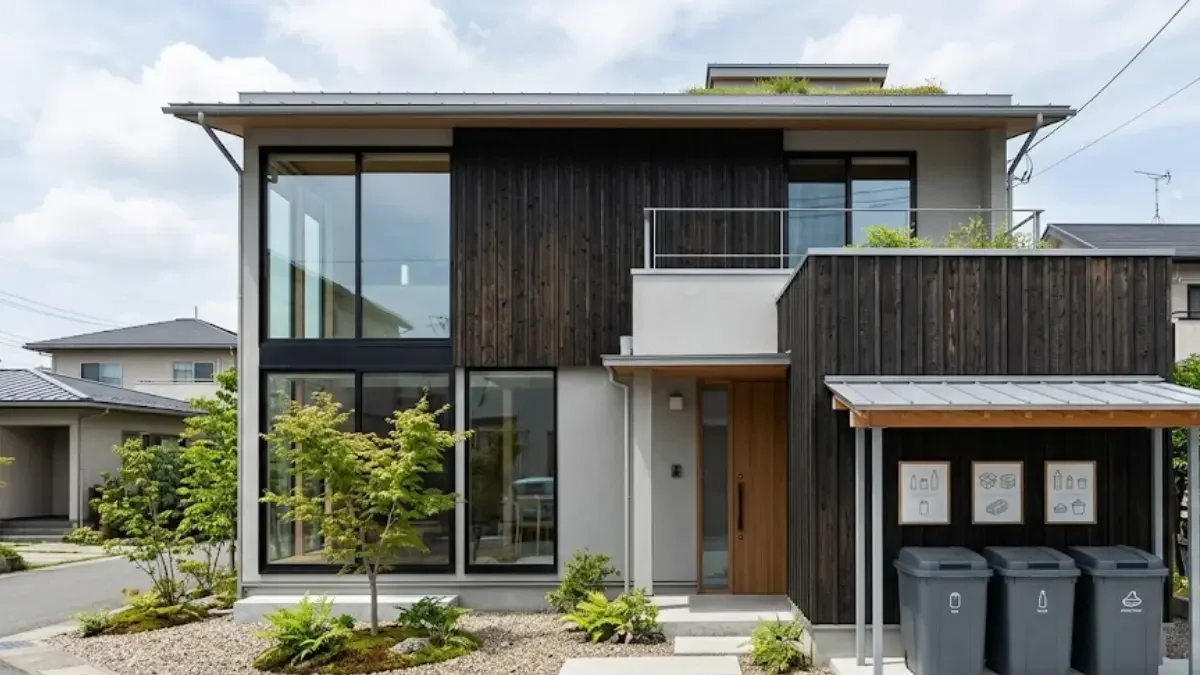
Purchasing a house or condominium unit in Japan is only the first financial step. Once you own property, a series of ongoing monthly and annual expenditures begin. For condominium owners, every month requires paying both a Management Fee (Kanrihi) for daily operational maintenance and a Repair Reserve Fund (Shūzen Takitatekin) intended for future major structural renovations.
These fees routinely cost between ¥15,000 to ¥45,000 ($100 to $300+ USD) monthly and increase as the building ages. For detached homeowner units, exterior upkeep remains entirely the owner's responsibility, demanding reserve savings of ¥500,000 to ¥1,500,000 ($3,300 to $10,000 USD) every decade for repainting, waterproofing, and termite protection. Additionally, owners must account for mandatory government levies, including annual Fixed Asset Taxes and City Planning Taxes.
Why are garbage disposal rules so strict and costly in Japan?
Japan enforces one of the most rigorous waste sorting systems in the world to manage high population density and limited landfill space. Municipalities do not collect mixed, unsorted trash. Instead, residents are required to buy specialized municipal trash bags (Shitei Gomibukuro). The purchase price of these designated bags functions as a direct waste-disposal tax imposed on every household.
Furthermore, large items known as bulky waste (Sodai Gomi)—such as furniture, bicycles, or mattresses—cannot be thrown out with regular household trash. Homeowners must call the local municipality, purchase specific disposal fee stickers (Sodai Gomi Shori-ken) at local convenience stores, attach them to the exact item, and wait for scheduled pickup dates. Large home appliances like refrigerators, washing machines, televisions, and air conditioners fall under the Home Appliance Recycling Act and incur separate recycling processing and transit fees starting from ¥2,500 up to ¥6,000+ per item.
What happens if you dump trash in the wrong place or mix waste categories?
Improper disposal triggers swift local enforcement. If a resident places waste out on the wrong day, uses non-designated bags, or mixes burnable waste with plastics, sanitation workers will refuse collection. They attach a bright red or yellow "Rule Violation" sticker to the bag, leaving it in plain public sight at the collection station.
Neighborhood associations (Jichikai) actively monitor these disposal points. If the offending resident fails to retrieve and re-sort their trash, management boards or local authorities step in. Repeat offenses, abandoned bulky items, or dumping trash in non-designated areas are legally classified as "Illegal Dumping" (Shōkai Kikyū / Inshō Tokki) under Article 25 of the Waste Management Law. This criminal violation carries penalties of up to 5 years in prison or fines reaching up to 10 million yen (roughly $65,000+ USD).
How can homeowners avoid heavy fines and maintain compliance?
Navigating property management and municipal regulations requires proactive community alignment:
Obtain Local Garbage Sorting Charts: Upon moving into any ward or city, request the municipal waste calendar and sorting guide (available in multiple languages).
Buy Local Designated Bags: Always purchase correct municipal bags from local convenience stores or supermarkets.
Join the Neighborhood Association (Jichikai): Paying minor annual dues (¥3,000–¥12,000) keeps you in good standing with neighbors who oversee local waste collection points.
Schedule Bulky Pickups in Advance: Never leave discarded furniture or electronics outside without official disposal stickers properly affixed.
Factor Maintenance Reserve into Budgets: Allocate a dedicated monthly fund (at least ¥20,000–¥30,000) specifically earmarked for long-term building maintenance and property taxes.