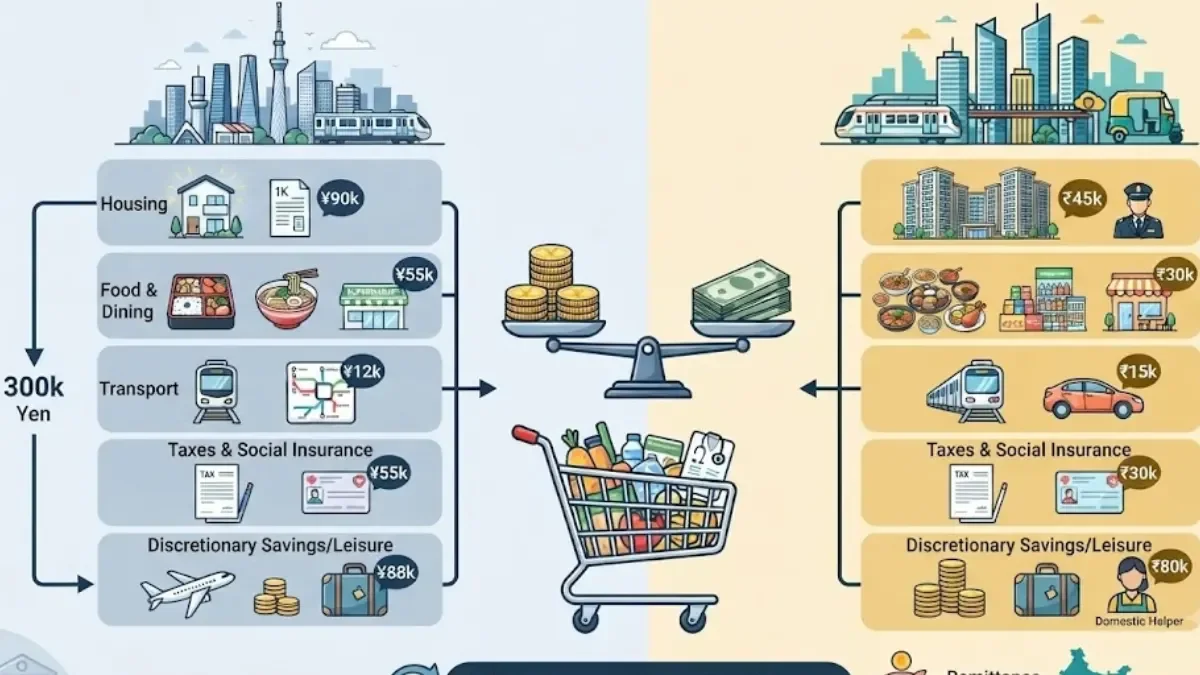
For an expat or professional living in Japan, 300,000 Yen per month is a solid entry-to-mid-level salary. In major metropolitan areas like Tokyo or Osaka, a single person can comfortably cover rent, utilities, groceries, transit, and leisure while still putting away a healthy portion of their income.
Monthly Cost Breakdown in Japan (3 Lakh Yen Gross)
Housing & Utilities: ~¥80,000 to ¥100,000 for a 1K/1DK apartment in suburban Tokyo or a central spot in a mid-tier city, plus electricity, gas, and high-speed internet.
Food & Dining: ~¥50,000 to ¥60,000, combining local supermarkets, convenience stores, and occasional dining out at casual restaurants.
Transportation: ~¥10,000 to ¥15,000 for monthly train commuter passes.
Taxes & Social Insurance: ~¥50,000 to ¥60,000 deducted for resident tax, national health insurance, and pension.
Discretionary Savings / Leisure: ~¥80,000 remaining for savings, travel, and personal hobbies.
Converting to Indian Rupees: How Does It Compare?
At an exchange rate of approximately 1 JPY = ₹0.55 to ₹0.57, 3 lakh yen converts to roughly ₹1.65 lakh to ₹1.70 lakh INR per month (approx. ₹20 lakh annually). While ₹1.65 lakh a month puts an earner in the upper-middle or high-income bracket in most Indian tier-1 cities, the structural cost of living, public infrastructure, and hidden expenses differ vastly between the two nations.
Key Economic and Lifestyle Differences
Purchasing Power Parity (PPP): While imported goods and services are pricier in Japan, daily essentials like public transit, healthcare, and safe housing offer exceptional value relative to wages. In India, equivalent private healthcare, gated-community housing, and imported lifestyle goods can consume a higher percentage of disposable income.
Taxation Systems: Japan's progressive income tax and resident tax structures are strictly enforced, but they fund world-class public infrastructure, universal healthcare safety nets, and ultra-low crime rates. In India, a ₹20 lakh salary faces comparable tax slabs, but individuals often incur private out-of-pocket expenses for security, power backup, and private healthcare.
Remittance and Savings Potential: Earning in Yen and remitting to India yields a massive currency advantage if living expenses in Japan are kept modest, allowing foreign workers to build substantial savings back home.