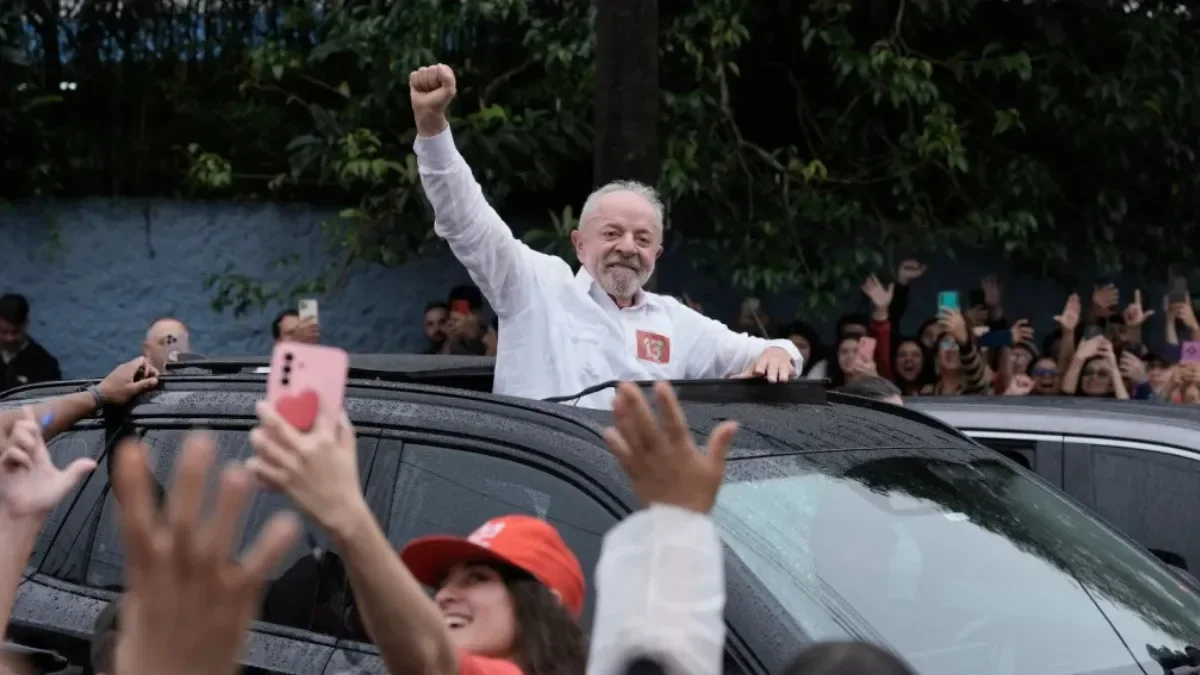
President Luiz Inácio Lula da Silva secured an historic fourth non-consecutive presidential term after winning a high-stakes, knife-edge runoff election against conservative Senator Flávio Bolsonaro. The victory marks a monumental political comeback, solidifying the veteran leftist leader's position at the helm of Latin America's largest economy.
Who Won the 2026 Presidential Election?
Luiz Inácio Lula da Silva emerged victorious in the 2026 Brazilian presidential election after official tallying confirmed his lead over Flávio Bolsonaro in the second-round runoff. Representing the Workers' Party (PT), the 80-year-old president overcame a initial deficit from three weeks prior, where Bolsonaro had led the first round by 2.2 million votes. This achievement marks the first time since Brazil's return to democracy in 1985 that a runner-up from the first round rallied to win the presidency in the runoff.
What Are the Final Vote Shares and Total Vote Tallies?
According to the Superior Electoral Court (TSE), Lula clinched victory with 51.8% of the valid votes cast, defeating Senator Flávio Bolsonaro who earned 48.2%. Lula built a margin of roughly 4.3 to 4.4 million votes over his challenger, representing a significant shift in voter momentum during the final weeks of campaigning.
Candidate | Party | Vote Share (%) | Margin of Victory |
Luiz Inácio Lula da Silva | Workers' Party (PT) | 51.8% | ~4.3–4.4 Million Votes |
Flávio Bolsonaro | Liberal Party (PL) | 48.2% | — |
Which State-Wise Trends and Key Factors Shaped the Outcome?
The electoral battleground reflected Brazil's deep political and regional polarization. Strong turnout in urban centers and traditional strongholds provided Lula with pivotal gains in the second round. Key moments included massive rallies along Rio’s Copacabana beach and São Paulo’s Paulista Avenue in the days preceding the vote, which helped mobilize voters who had abstained or supported other candidates in the first round. While conservative strongholds in the South and West remained largely loyal to the Bolsonaro name, Lula’s surge across major metropolitan zones sealed his narrow national victory.
What Challenges and Controversies Shadowed Election Day?
Election day was marked by high tension following a controversial legal decision by Supreme Court Justice Cristiano Zanin, who ruled to extend voting hours across the country by two hours. The decision delayed the national vote tally and drew immediate criticism from opposition leaders, including Bolsonaro ally Nikolas Ferreira, who pointed out Zanin's historical background as Lula's former legal counsel. Citing the timing extension as unacceptable, Flávio Bolsonaro refused to immediately concede, declaring his intention to seek an annulment of the runoff results through official legal channels.
What Lies Ahead for Brazil's Political Landscape?
Lula’s inauguration for his fourth term is scheduled for January 5, 2027. In his victory speech delivered in São Paulo, Lula framed his success as a defense of national sovereignty and a defeat for political polarization, stating that Brazil would remain an independent actor on the world stage. However, with a highly divided electorate, opposition investigations, and legal challenges underway, the incoming administration faces a complex path toward national reconciliation and legislative governance.