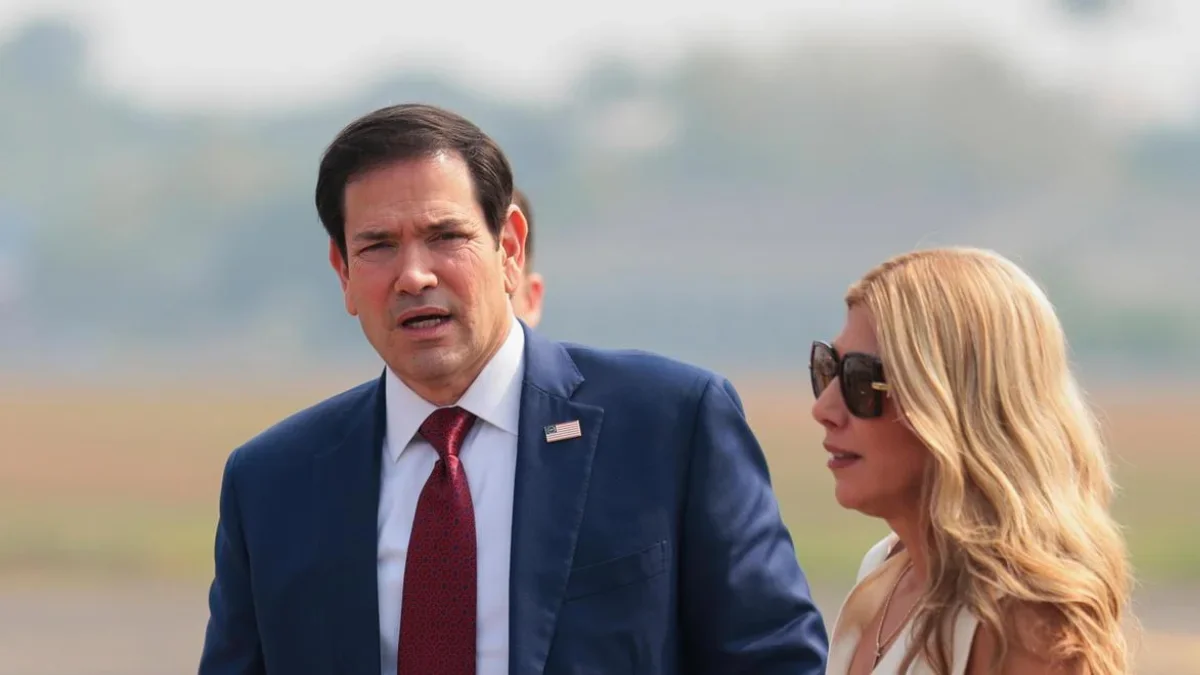
US Secretary of State Marco Rubio has arrived in Jamnagar, Gujarat, to tour Reliance Industries' ultra-complex refining facility, aiming to strengthen energy diplomacy and expand the processing of heavy Venezuelan crude in India
What Brought Marco Rubio to Gujarat's Coastal Hub?
US Secretary of State Marco Rubio landed in Jamnagar as part of his three-day diplomatic visit to India, focusing directly on energy security, global supply chains, and bilateral commerce. Accompanied by economic delegations, Rubio scheduled the stop to inspect Reliance Industries’ massive oil refining infrastructure firsthand. Jamnagar, located along the western coast of India, has transformed into a strategic global energy node. Rather than limiting discussions to political halls in New Delhi, the focus shifted to commercial energy capabilities, bringing high-level American diplomacy directly to India’s industrial heartland.
Why Is India Termed a "Refining Superpower" by the US?
During his statements leading up to the site visit, Rubio explicitly praised India as a "refining superpower". The core of this recognition lies in the sheer technical capabilities of Reliance Industries' Jamnagar complex. Processing over 1.4 million barrels per day across its dual refineries, Jamnagar stands as the largest single-site oil-refining complex on the planet. More importantly, it boasts an extraordinary Nelson Complexity Index, allowing it to process dense, high-sulphur, heavy crude grades that standard facilities cannot handle. Having processed over 216 distinct crude varieties from around the globe, India’s refining infrastructure holds an unmatched technical edge in converting low-grade heavy oil into high-value fuels like diesel, petrol, and jet fuel.
How Does Venezuelan Crude Fit into Global Energy Strategy?
A primary focus of Rubio's agenda centers on re-routing crude flows from Latin America to Asian markets. As Venezuelan oil production gradually increases, Washington is seeking reliable, highly capable international partners to absorb and process these heavy crude volumes. Venezuelan crude is notoriously thick, dense, and difficult to refine. Reliance Industries previously operated within Venezuela and successfully processed its crude grades in past years. By encouraging Indian refiners to step up their intake of Venezuelan oil, the US aims to stabilize global market prices, secure reliable buyers for Latin American suppliers, and open avenues for potential re-investment in Venezuelan production assets.
Where Does Russian Oil Diversification Enter the Equation?
The Jamnagar discussions also carry significant geopolitical weight regarding crude source diversification. Following global sanctions and market shifts since 2022, Indian refiners substantially increased their purchases of discounted Russian crude. Washington has consistently urged Indian energy firms to broaden their import portfolio to reduce market reliance on single suppliers. Acknowledging that supply chains cannot shift overnight, US officials view Venezuelan crude—along with increased shipments of American energy exports—as practical alternatives for India. Diversifying import channels allows Indian facilities to maintain high capacity while aligning with broader international stability efforts.
Who Benefits from Expanded US-India Energy Relations?
The collaboration offers strategic advantages to both nations. For India, securing access to diverse heavy crude grades at competitive terms reinforces national energy security, keeps industrial inputs cost-effective, and maintains its role as a key exporter of refined fuels to global markets, including Europe. For the United States, deep commercial ties with private Indian giants like Reliance help integrate global energy markets, manage international fuel supplies, and establish resilient trade corridors. The Jamnagar visit underlines a shared vision where Indian refining capability meets global energy reallocation needs.