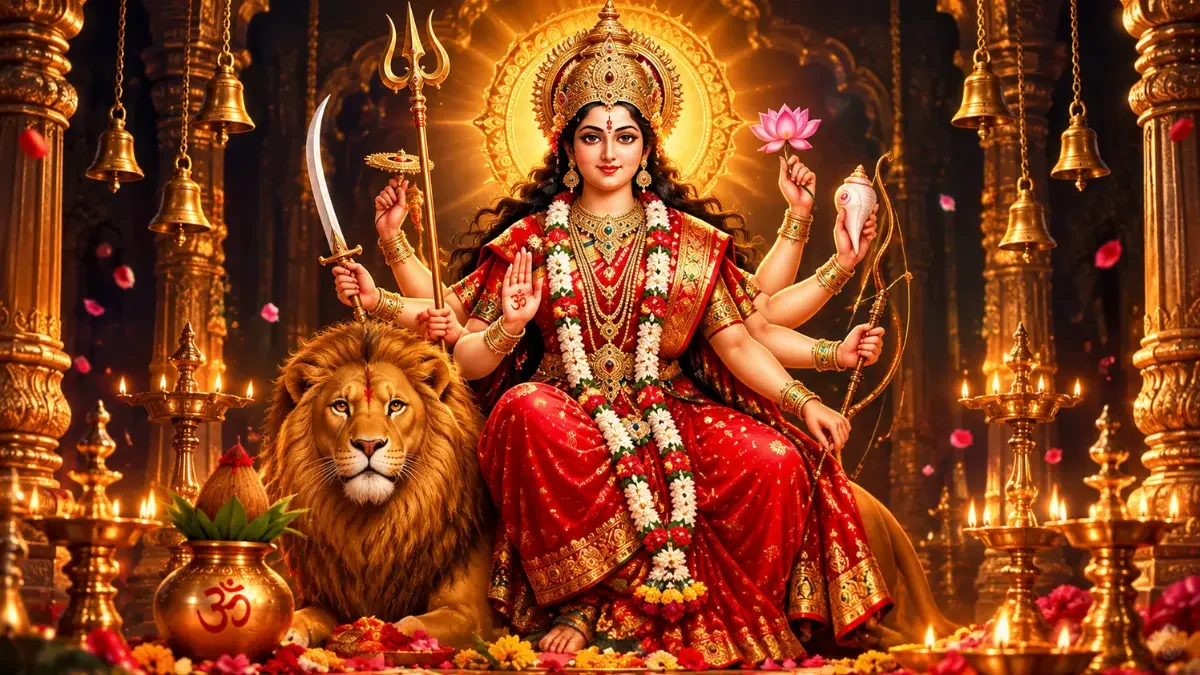
Sharad Navratri, also called Shardiya Navratri, is one of the most significant Navratri observances of the Hindu year. In 2026, the festival begins on Sunday, October 11, with Pratipada and Ghatasthapana, and the main nine-day worship period runs through Monday, October 19. Vijayadashami, popularly known as Dussehra, falls on Tuesday, October 20.
The festival is traditionally observed as a period dedicated to the worship of the Divine Mother in her different forms. Many devotees use these days to reduce distractions, follow a disciplined routine and spend more time in prayer and spiritual practices.
Navratri 2026 Important Dates
Here are the major dates devotees should keep in mind:
October 11 — Day 1: Ghatasthapana and Shailputri Puja
October 12 — Day 2: Brahmacharini Puja
October 13 — Day 3: Chandraghanta Puja
October 14 — Day 4: Kushmanda Puja
October 15 — Day 5: Skandamata Puja
October 16 — Day 6: Katyayani Puja
October 17 — Day 7: Kalaratri Puja and Saraswati Puja
October 18 — Day 8: Ashtami observances begin in some calendars
October 19 — Day 9: Durga Ashtami, Mahagauri Puja and Maha Navami
October 20 — Vijayadashami/Dussehra: Navami Homa and Vijayadashami observances
The exact ritual timing can vary according to location and Panchang, so devotees performing specific rituals should check timings for their own city.
Why Is Ghatasthapana Important?
Ghatasthapana marks the formal beginning of Navratri worship. A sacred kalash is established and devotees begin their nine-day observance with prayers to Maa Shakti. Traditional practice gives particular importance to performing the ritual during an appropriate muhurta while Pratipada is prevailing.
For Delhi in 2026, the listed Ghatasthapana muhurta is 6:19 AM to 10:12 AM on October 11, with an additional Abhijit Muhurta from 11:44 AM to 12:31 PM. Since muhurta calculations are location-specific, people in other cities should use their local Panchang rather than automatically copying Delhi timings.
Which Days Are Most Important During Navratri?
Although all nine days are traditionally significant, Ashtami and Navami hold particular importance for many devotees. October 19 is especially notable in the 2026 calendar because Durga Ashtami and Maha Navami observances occur on the same date.
Many families perform special puja, kanya pujan, havan or other traditional rituals around Ashtami and Navami. Practices differ between regions and family traditions, so there is no single ritual that every Hindu family must follow.
Vijayadashami on October 20 marks the transition from Navratri into the celebration of victory associated with Dussehra.
How Can Devotees Experience Navratri More Deeply?
Navratri does not have to be limited to visiting a temple or observing a fast. For someone who wants to experience the spiritual atmosphere of the festival more deeply, the nine days can become a period of discipline and focused devotion.
A simple daily routine can include taking a bath early, cleaning the place of worship, lighting a diya, offering flowers and prasad, and spending a few minutes in quiet prayer. Devotees may also recite Durga mantras, Durga Chalisa, Durga Saptashati or other prayers according to their tradition.
The most important element is consistency. Instead of performing an elaborate ritual on one day and forgetting the practice afterward, maintaining a simple daily routine throughout Navratri can make the festival feel more meaningful.
What Should You Do During Navratri?
Devotees who want to observe Navratri can choose practices according to their family tradition and personal capacity. Common practices include:
Visiting a Maa Durga or Shakti temple.
Lighting a diya during morning or evening prayer.
Offering flowers, fruits and traditional prasad.
Reciting Durga-related prayers or mantras.
Maintaining a sattvic diet if observing the festival in that manner.
Observing a fast according to personal health and family tradition.
Giving food, clothes or other appropriate donations to people in need.
Spending some time in meditation or quiet prayer.
Avoiding unnecessary arguments, excessive entertainment and distractions.
Keeping the home and puja area clean.
Fasting should also be approached according to individual circumstances. People with medical conditions, children, older adults or anyone taking medication should not undertake restrictive fasting simply because others are doing so.
What Makes Ashtami and Navami Special?
Ashtami and Navami are among the most spiritually important days of Navratri for many Hindu communities. Devotees may perform special worship of Maa Durga, conduct havan and offer bhog.
Kanya Puja, also known as Kanjak Puja in parts of North India, is commonly performed around Ashtami or Navami. Young girls are traditionally worshipped as manifestations of the feminine divine, and families offer them food, gifts and blessings.
The precise customs differ between regions. Some families perform Kanya Puja on Ashtami, while others choose Navami.
How Can You Experience Maa Durga During These Nine Days?
The deeper experience of Navratri can come from treating the festival as more than a celebration. Devotees can use the nine days to consciously develop qualities associated with Shakti: courage, discipline, compassion, patience and inner strength.
For example, someone may decide to wake up earlier, reduce unnecessary social-media use, maintain a daily prayer routine and dedicate a few minutes each evening to reading or listening to sacred teachings. Another person may focus on seva, helping family members or contributing food and essentials to someone who needs them.
Temple visits can also become more meaningful when approached with attention rather than simply as a routine. Sitting quietly for a few minutes after darshan, listening to the aarti and offering a sincere prayer can provide a more personal devotional experience.
Navratri is therefore not only about what is offered to the deity but also about the discipline, devotion and intention with which the devotee observes the period.
What Happens After Navratri?
The nine-day observance leads into Vijayadashami on October 20, 2026. Dussehra is widely associated with the victory of good over evil and is celebrated through different regional traditions across India.