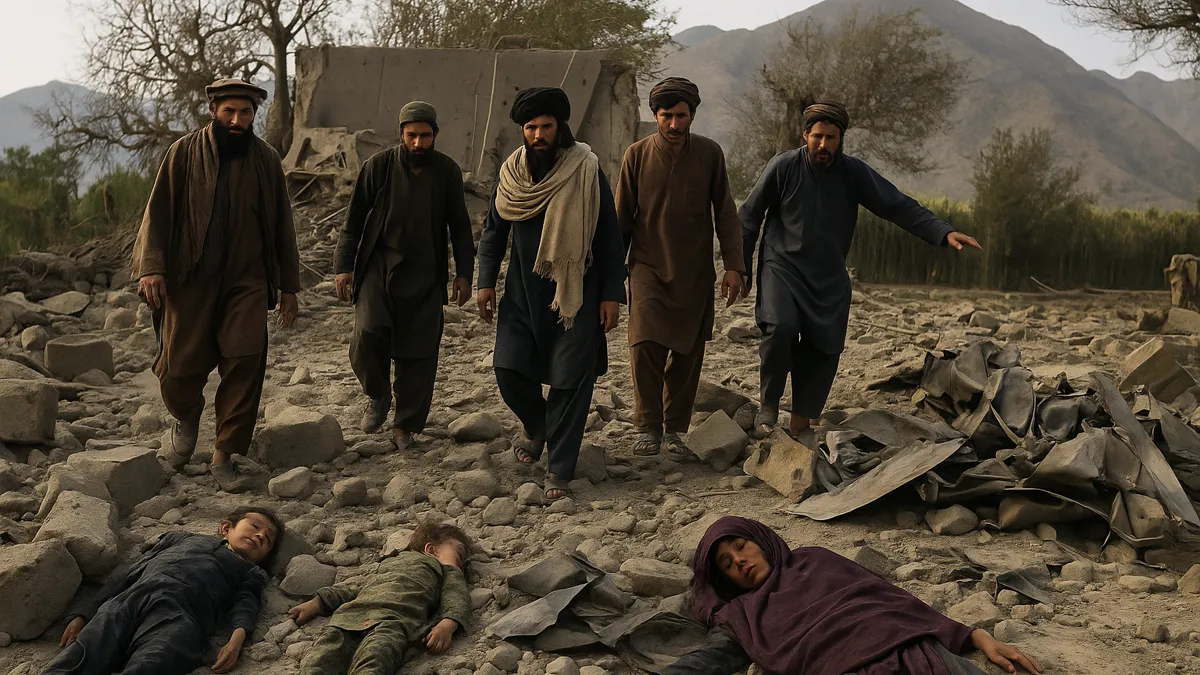
On October 1, 2026, Pakistan executed airstrikes in Afghanistan's Kunar and Helmand provinces, resulting in the deaths of at least ten civilians, most of whom were children, according to reports from the United Nations Assistance Mission in Afghanistan (UNAMA) and the Associated Press (AP). In addition to the fatalities, nine individuals suffered injuries due to the strikes. Both the Afghan government and UN officials corroborated the civilian casualties reported by UNAMA, while Pakistan's Ministry of Information asserted that the airstrikes were aimed at militant hideouts, claiming the elimination of 22 militants, a figure that has not been independently confirmed as per the reviewed reports [1].
Pakistan has framed these airstrikes as part of a broader effort to combat militants that allegedly utilize Afghan territory to launch attacks against Pakistan. Islamabad has publicly accused the Taliban-led Afghan government of allowing the Tehrik-i-Taliban Pakistan (TTP) to operate from Afghan soil, although Kabul vehemently denies these claims. A statement from Pakistan's ministry emphasized, "The threat to Pakistan emanates from Afghanistan," insisting that the actions taken in the airstrikes were precisely targeted at terrorist hubs [1].
In the context of regional security agreements, Pakistan's airstrikes fall under scrutiny concerning the Mecca Joint Defense Agreement, signed by Saudi Arabia, Pakistan, and Turkey on August 7, 2026. This agreement, described by its signatories as "purely defensive" and not directed against any specific nation, includes a stipulation that an attack on any member state will be considered an attack on all three. However, as reported by AP, the connection between these airstrikes and potential obligations under the Mecca agreement remains unverified and speculative [2].
Following the airstrikes, on October 2, 2026, the governor of Kandahar refuted claims made by Pakistan asserting his involvement in meetings with militant figures concerning attacks on Pakistan. This denial highlights the contentious atmosphere surrounding the two countries, where accusations of harboring militants are commonplace and ongoing. In response to the tragic loss of civilian lives, the European Union's diplomatic service expressed its dismay regarding the civilian casualties that resulted from the strikes [3].
UNAMA painted a broader picture of the violence affecting civilians in the region, indicating that cross-border armed conflict had led to significant civilian casualties in 2026. Citing a separate briefing from June, UNAMA reported that between October 1, 2025, and June 30, 2026, there had been 499 civilian deaths and 1,216 injuries due to cross-border violence, underscoring the grave security situation in the area despite not directly linking this context to the motive for the latest airstrikes [4].
Ultimately, while the airstrikes and subsequent civilian deaths are confirmed by multiple sources, the justification provided by Pakistan centered on combating militants is documented, yet the specific claim that these military actions were intended to sidestep commitments to the Mecca agreement remains unsubstantiated in the available evidence [1].
Sources
- [1] Pakistani airstrikes in Afghanistan kill 10 civilians, Kabul and UN say
- [2] Saudi Arabia, Turkey and Pakistan have signed a key defense agreement
- [3] Kandahar governor denies hosting militant leaders' talks on attacks in Pakistan
- [4] Secretary-General/Cyprus, Refugee Convention, Security Council & other topics - Daily Press Briefing
Researched and edited with AI assistance.
Featured image: AI-generated representative image.