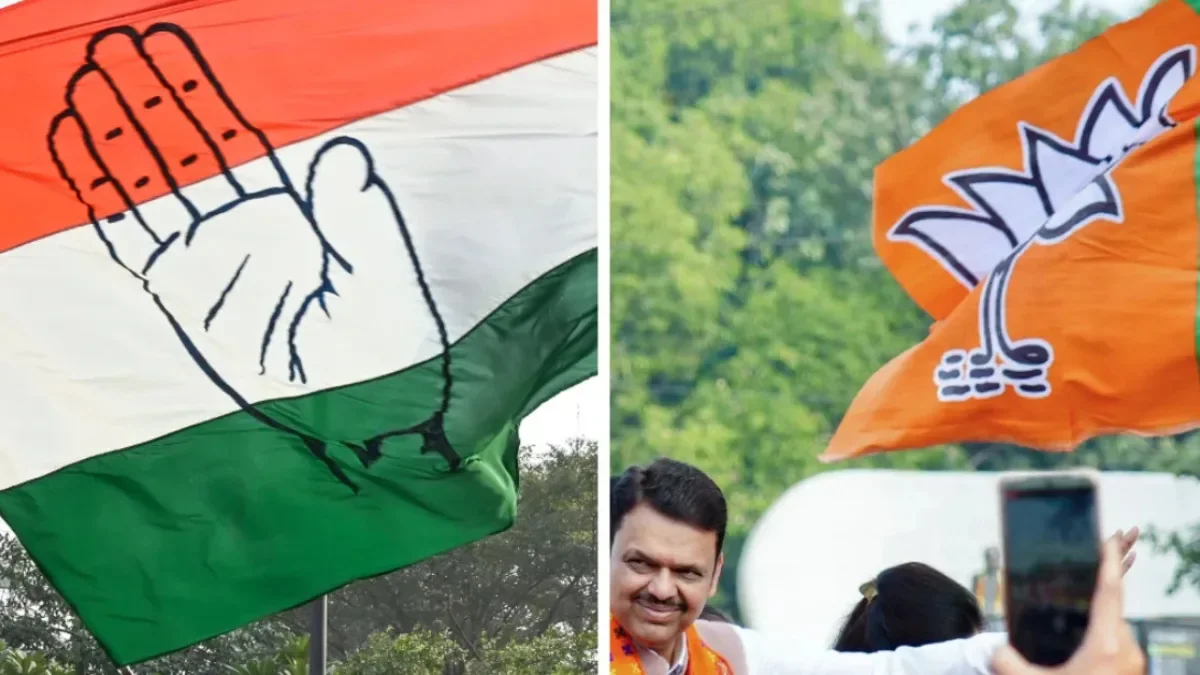
Prime Minister Narendra Modi targeted the Indian National Congress over the political party's performance in the recent Legislative Council (MLC) elections across Uttar Pradesh, Maharashtra, Bihar, and Karnataka. In a post published on social media platform X, PM Modi emphasized that voting across all 28 contested seats was conducted entirely via traditional physical ballot papers. He invited citizens to examine how the primary opposition party fared in an election format free from EVM-related controversies, pointing out that Congress drew a blank without winning a single seat.
What Prompted PM Modi's Remarks on Social Media?
The Prime Minister’s commentary directly addresses a long-standing political debate surrounding the use of Electronic Voting Machines (EVMs) in Indian elections. Congress and several opposition parties have repeatedly alleged that EVMs are vulnerable to tampering and manipulation, frequently demanding a return to paper ballots for state and national polls.
By highlighting the outcomes of these Legislative Council elections—where paper ballots were used exclusively under the preferential voting system—PM Modi underscored that Congress lost across all four states even under their preferred voting methodology. His social media post read: "MLC elections in 28 seats across 4 big states — Uttar Pradesh, Maharashtra, Bihar and Karnataka. Elections held using ballot papers. Guess how many seats Congress won?"
Where Did these Elections Take Place and What Were the Outcomes?
The 28 Legislative Council seats were spread across four major Indian states:
Karnataka: Despite Congress currently holding power in the state assembly, the party failed to secure any of the seats contested in the Legislative Council elections, with the BJP-JD(S) alliance winning all four contested constituencies.
Uttar Pradesh: The Bharatiya Janata Party (BJP) demonstrated strong organizational dominance across the specialized graduate and teacher constituencies, leaving Congress without representation.
Maharashtra: The ruling Mahayuti coalition maintained its strong performance in graduate and teacher sectors, where Congress lost ground and ended without seats.
Bihar: Across the eight contested council seats, victories were split among the BJP, RJD, Jan Suraaj, and independent candidates, leaving Congress completely empty-handed.
How Has the Political Leadership Responded?
Following PM Modi's sharp criticism, leaders from the Bharatiya Janata Party echoed his stance, stating that the result clearly exposes the disconnect between opposition rhetoric and ground-level voter sentiments. Party spokespersons argued that Congress raises doubts about EVMs primarily to cover up its own organizational shortcomings and lack of public trust.
In response, Congress leaders pushed back against the Prime Minister's commentary. Party representatives pointed out that Legislative Council elections involve restricted electorates—such as registered graduates and teachers—and follow a complex preference-based voting system rather than a general public vote. Congress leaders challenged the ruling party to test paper ballots in upcoming high-stakes state assembly elections and future Lok Sabha general polls to truly validate electoral preferences across the broader electorate.
Why Are these MLC Results Significant for Indian Politics?
While Legislative Council elections do not alter state government majorities, these results carry substantial symbolic and political weight. The outcome challenges the core opposition narrative that paper ballot voting would inherently yield different electoral results for non-ruling parties. Furthermore, because these elections represent key professional and educated demographics—specifically teachers and university graduates—the political feedback serves as an indicator of public mood regarding government policies and regional administration ahead of upcoming electoral cycles.