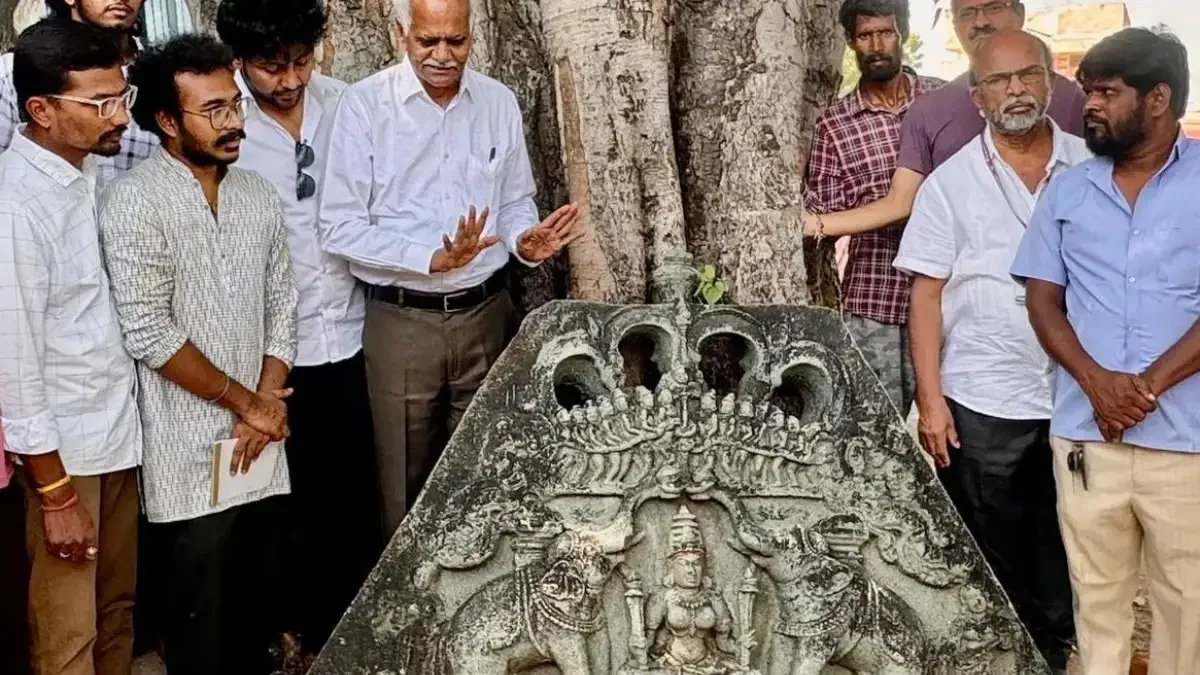
A rare 9th-century CE Gajalakshmi sculpture belonging to the Rashtrakuta dynasty was discovered lying in neglect at Yanagandla village in the Kulcharam mandal of Telangana’s Medak district. Following an alert from local heritage enthusiast Burra Santosh, a delegation of historians—including Dr. E. Sivanagireddy, CEO of the Pleach India Foundation, and Sriramoju Haragopal, convener of the Kotha Telangana Charitra Brundam (KTCB)—visited the Hanuman temple site to examine the artifact.
+-------------------------------------------------------------+
| RARE GAJALAKSHMI SLAB |
+-------------------------------------------------------------+
|
+----------------------+----------------------+
| |
+--------------------+ +--------------------+
| FRONT SIDE | | REVERSE SIDE |
+--------------------+ +--------------------+
| • Goddess Lakshmi | | • 12-Armed Shiva |
| (Padmasana) | | performing |
| • Anointing | | Ananda Tandava |
| Elephants | | • Flanked by |
| • Samudra Manthan | | Brahma & Vishnu |
| (Ocean Churning) | | |
+--------------------+ +--------------------+
What makes this discovery historically significant?
The sculpture, carved out of fine black granite, represents an extraordinary artistic achievement of 9th-century Rashtrakuta craftsmanship. While Gajalakshmi panels are frequently encountered in ancient Indian temple art, this particular slab stands out because it integrates a depiction of Samudra Manthan (the churning of the ocean) directly above the deity. Archeological experts noted that such a thematic combination has never been documented before in Telangana or Andhra Pradesh, making it an invaluable addition to the region's cultural iconography.
What are the distinct artistic features of the sculpture?
The front portion of the slab depicts Goddess Lakshmi seated in Padmasana (lotus pose) on a lotus pedestal, holding lotus buds in both hands while elephants perform anointing rites (abhishekam) over her. Above this panel, the cosmic ocean-churning scene unfolds, showing devas and asuras pulling the serpent Vasuki around Mount Mandara. On the reverse side, the sculpture features a 12-armed Lord Shiva performing the Ananda Tandava (cosmic dance of bliss), flanked on either side by Brahma and Vishnu depicted with folded hands.
Why is the sculpture currently under threat?
Despite its immense historical and spiritual value, the centuries-old artifact was found discarded under a tree near a village temple, fully exposed to weather-induced deterioration and human carelessness. Historians voiced deep concern over the lack of protection for such a unique piece of heritage. Without immediate restoration and shelter, exposure to rainfall, direct sunlight, and physical abrasion could permanently erode the delicate carvings on both sides.
How are heritage experts responding to save the artifact?
The visiting team of historians and activists interacted with local residents, explaining the historical weight of the sculpture and its connection to the Rashtrakuta dynasty. They urged village leaders to safeguard the artifact by erecting a raised stone pedestal and building a protective canopy over it. Additionally, the KTCB plans to notify state archeological authorities to ensure the sculpture is formally documented and protected for future generations.