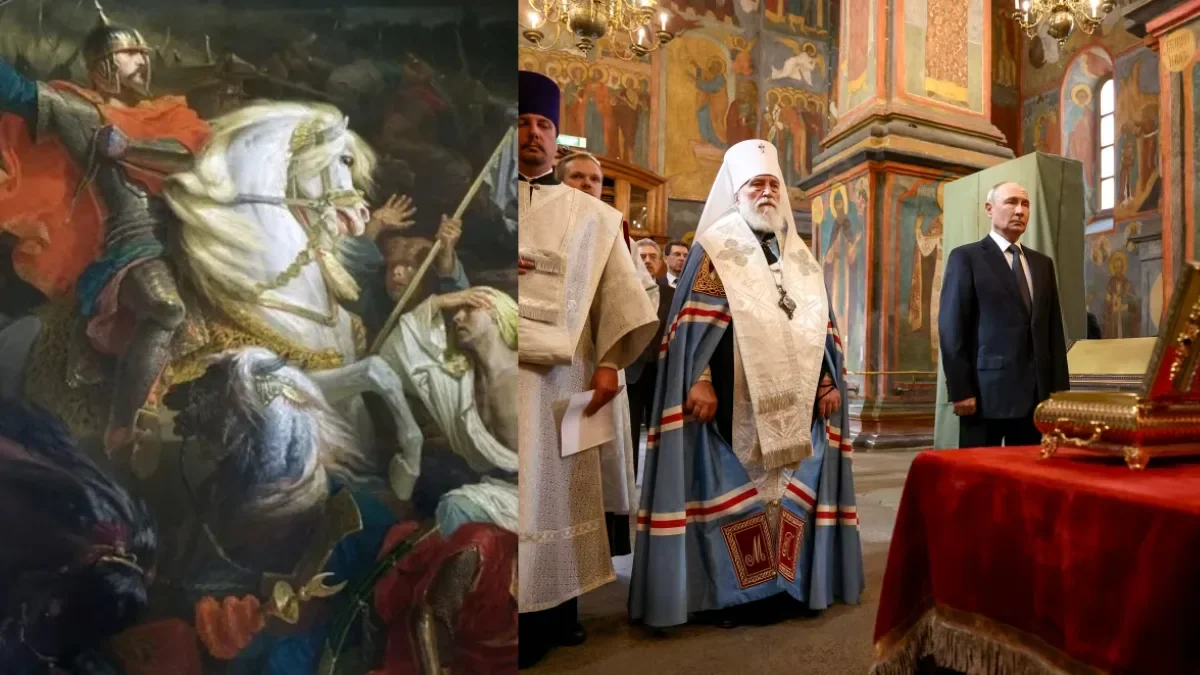
The strategic integration of centuries-old remains into active combat zones represents an intersection of modern statecraft and clerical backing. The military department of the Moscow Patriarchate maintains that bringing sacred artifacts closer to active zones offers invisible spiritual fortitude to fighting units. Rather than relying solely on conventional tactical reinforcement, leadership utilizes historical symbolism to cultivate ideological resilience among personnel.
How Does the Church Justify Using Historical Icons?
Historical military commanders canonized as saints, such as Dmitry Donskoy—celebrated for his 1380 victory at the Battle of Kulikovo—are framed as active participants in contemporary defense. Church officials emphasize that fragments of the exact hand once used to wield a sword during historical campaigns now serve as a morale-boosting emblem for contemporary troops. This practice connects deep-rooted national mythos directly to current military operations.
What Role Do Relics Play in Wartime Propaganda?
The exhumation and mobilization of saintly remains serve as powerful instruments for shaping public perception and domestic unity. By framing current engagements as sacred struggles mirroring past historical triumphs, authorities seek to solidify internal support. Analysts note that utilizing canonized leaders helps align patriotic duty with religious devotion, reinforcing official state narratives about sovereignty and historical destiny.