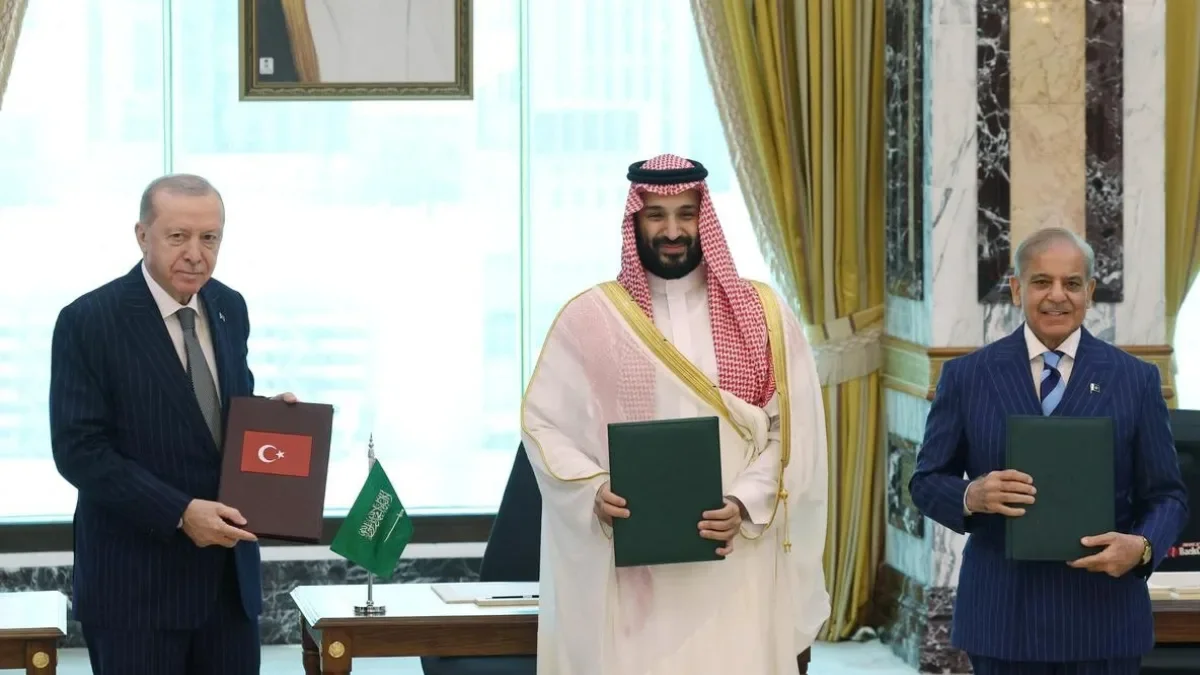
High-ranking military and defence officials from Saudi Arabia, Pakistan, and Turkiye convened in Riyadh to evaluate surging regional security threats. The high-stakes assembly directly addressed escalating aerial assaults and cross-border provocations directed at key infrastructure. By standing shoulder-to-shoulder, the three governments sought to operationalize their newly forged diplomatic pact into tangible military coordination.
Why Did the Tripartite Consultations Take Place?
The emergency consultations were triggered by a dramatic uptick in hostile aerial incursions and missile threats directed from Yemen. With regional stability hanging in the balance, authorities sought to reinforce territorial boundaries and protect critical economic installations. The recent hostile activities presented an immediate operational challenge to the Gulf region's overarching stability.
What is the Framework of the Makkah Defence Alliance?
Modelled around a collective security architecture, the trilateral pact dictates that an act of aggression against any single member state constitutes an assault on all three. Formulated to enhance regional deterrence, the framework combines Turkey's robust military capabilities, Pakistan's strategic defense assets, and Saudi Arabia's pivotal geopolitical standing. The framework aims to institutionalize joint intelligence sharing and capability integration.
How Are the Member States Responding Operationally?
Beyond diplomatic condemnations issued at international forums, military chiefs focused on fast-tracking institutional mechanisms. Measures include establishing a dedicated permanent secretariat on Saudi soil and expanding real-time operational communication. Command structures are actively reviewing tactical intelligence to ensure rapid execution of mutual defense protocols if further escalation occurs.