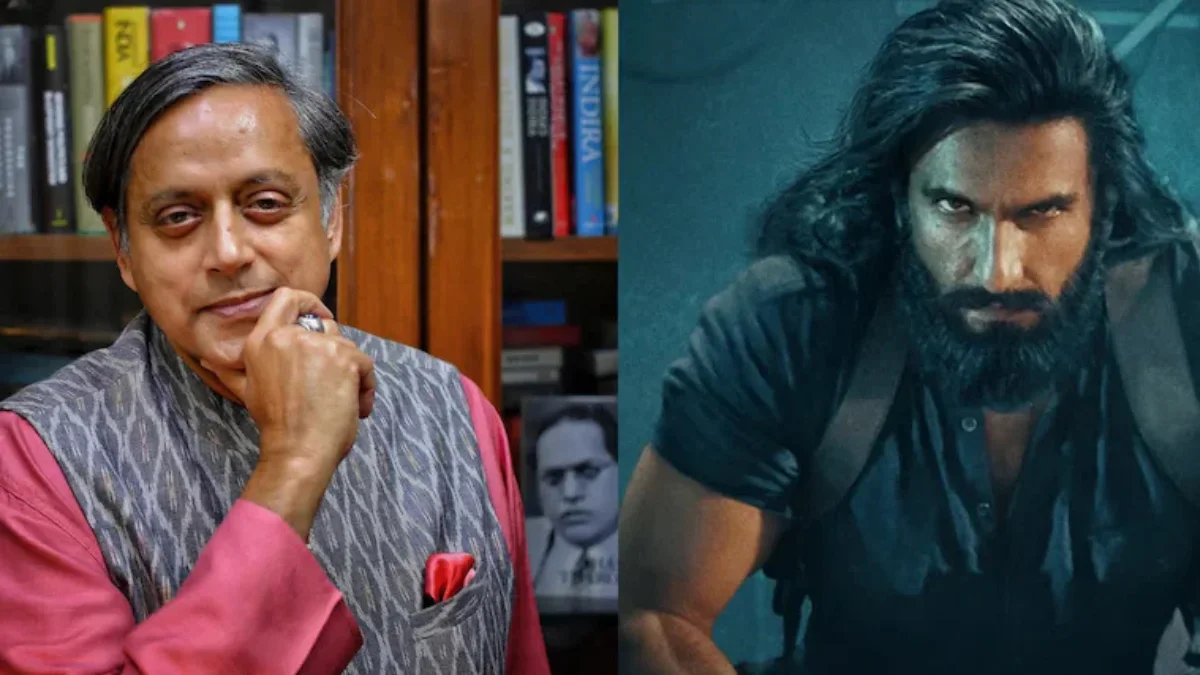
In a comprehensive review posted on his official YouTube channel, Congress MP Shashi Tharoor described Aditya Dhar's Dhurandhar franchise as a major cinematic achievement while sharply criticizing its excessive graphic violence and overt political propaganda.
What Praises Did Shashi Tharoor Offer to Aditya Dhar's Filmmaking?
Shashi Tharoor praised the craftsmanship, sheer scale, and high-energy direction behind the Dhurandhar saga. He singled out the second installment, Dhurandhar: The Revenge, as an exceptionally entertaining and gripping thriller that succeeds immensely as a work of fiction. Watching both films back-to-back—an experience spanning roughly eight hours—left the politician feeling that he had witnessed a landmark moment in Indian action cinema. He praised the technical design, atmospheric sets, and competent performances from lead actors like Ranveer Singh, Akshaye Khanna, and R. Madhavan.
Why Did Tharoor Label the Violence and Propaganda as Problematic?
Despite his praise for the storytelling and execution, Tharoor voiced severe reservations about the explicit nature of the visual imagery. He labeled several sequences as containing "some of the most disgusting scenes ever seen in Indian cinema," stating that the excessive blood, mayhem, and cruelty were largely unnecessary to advance the plot.
Furthermore, Tharoor pointed out the strong political undertones woven into the narrative. Addressing the film’s international reception, he noted that the franchise has reportedly faced bans in Pakistan and several Gulf nations due to concerns over inflaming cross-border hostility between Indian and Pakistani audiences. While acknowledging that some Pakistani viewers might find parts of the film's dialogue humorous, he suggested others might reflect deeply on the real-world consequences of historical events portrayed on screen.
How Does the Film's Espionage Differ From Real Intelligence Work?
Drawing from his own past interactions with top Indian intelligence officials, Tharoor highlighted a stark contrast between cinema and reality. He observed that real-world intelligence operations are far more civilized, revolving around detailed analytical discussions, geopolitical strategy, and information exchanges rather than dramatic cloak-and-dagger operations or foreign explosions.
Tharoor also questioned the narrative timeline regarding Ajay Sanyal—a key character played by R. Madhavan and loosely based on National Security Advisor Ajit Doval. He pointed out that bureaucratic structures in India rarely allow a single official to hold the exact same position for decades without administrative rotation. Consequently, he urged viewers to treat the franchise as an entertaining piece of fictional storytelling rather than an exact historical documentary.