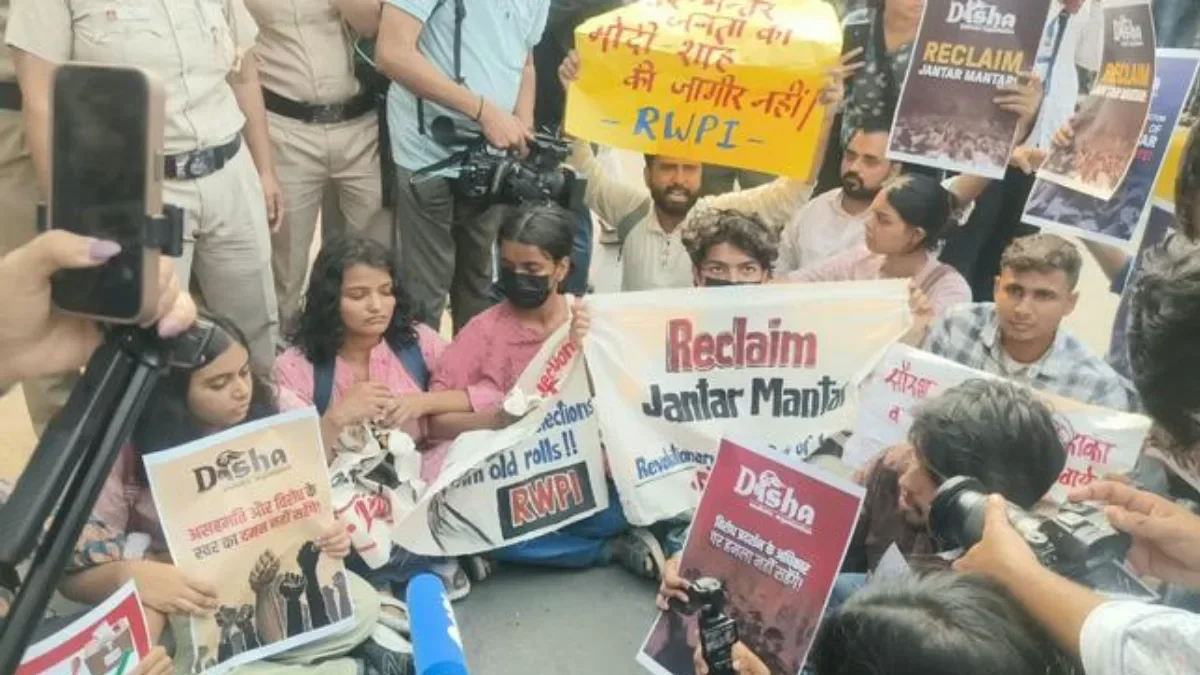
On October 13, 2026, the Supreme Court deferred hearings on petitions regarding Delhi Anti-CEC protest restrictions and transport closures to October 15 due to a judge's ill health, while Delhi Police detained CJP leaders Saurav Das, Ashutosh Ranka, and Ajinkya Shinde at Jantar Mantar.
What Led to the Supreme Court's Deferment?
The Supreme Court of India was set to consider a batch of petitions challenging state-imposed restrictions, preventive detentions, and sweeping public transport curbs in the national capital. The petitions focus on heavy barricading, closure of several Delhi Metro gates, and train service alterations put in place ahead of anti-Chief Election Commissioner (CEC) demonstrations.
However, a three-judge bench consisting of Chief Justice of India Surya Kant, Justice Joymalya Bagchi, and Justice V. Mohana deferred proceedings to Thursday, October 15, 2026. The postponement occurred because Justice V. Mohana was indisposed. While the judge initially joined proceedings briefly, Solicitor General Tushar Mehta and senior advocate Gopal Sankaranarayanan mutually agreed that the bench should grant time for recovery. The court also extended the deadline for the Union Government and Delhi Police to submit detailed response affidavits regarding alleged illegal detentions and transport shutdowns.
Who Are the CJP Leaders Detained in Delhi?
Amid high security and perimeter blockades around central Delhi, key members of the Cockroach Janta Party (CJP) attempted to enter Jantar Mantar to stage a demonstration against Chief Election Commissioner Gyanesh Kumar.
Delhi Police detained CJP chief spokesperson Saurav Das, national spokesperson Ashutosh Ranka, and leader Ajinkya Shinde. Visuals from the scene showed CJP members scaling security gates carrying national flags before law enforcement officers restrained and transported them to Jaffarpur Police Station. CJP leadership condemned the action, arguing that citizens' rights to peaceful assembly cannot be neutralized by denotifying long-standing demonstration sites.
Why Are Agitators Protesting Against the CEC?
The ongoing unrest stems from widespread political friction surrounding the functioning of the Election Commission of India (ECI). Demonstrators and opposition leaders have demanded the resignation of CEC Gyanesh Kumar, alleging severe irregularities in electoral roll management—specifically under the Special Intensive Revision (SIR) process.
Critics assert that the electoral roll revisions led to wrongful voter deletions and institutional opacity. Multiple political entities and student groups, including the Disha Students Organisation and Naujawan Bharat Sabha, joined the agitation to demand both the release of detained CJP leaders and an immediate halt to controversial ECI revision measures.
Where and When Did Police Deploy Curbs?
Heavy security deployments were established across vital transit hubs in New Delhi, including Connaught Place, Jantar Mantar, and key border checkposts. Transit authorities regulated metro entry and exit points, causing commuting delays across the National Capital Region (NCR).
Traders and local business bodies expressed concern over transit roadblocks, pointing out significant financial losses in commercial sectors near Central Delhi due to restricted foot traffic. The Delhi High Court and Supreme Court are evaluating standardized guidelines to balance public protest rights with urban mobility and commercial operations.