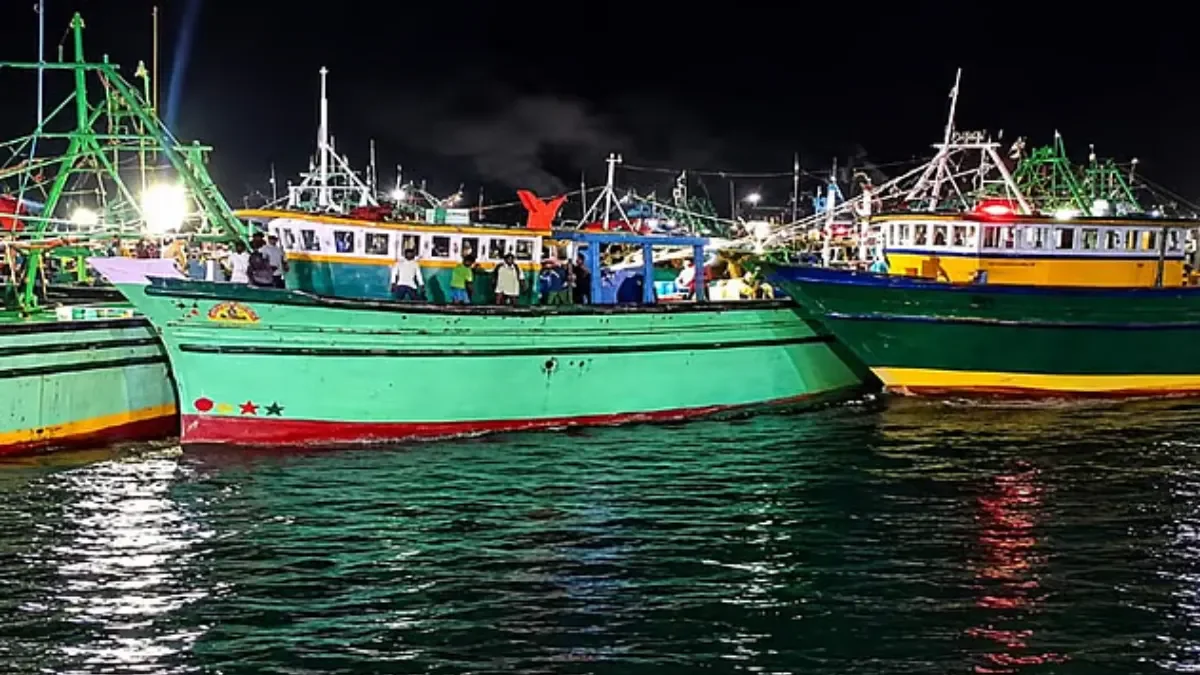
Thoothukudi fishermen returned to sea on Saturday morning as local authorities lifted coastal weather restrictions following a six-day precautionary shutdown. Around 260 mechanised boats ventured out into the Bay of Bengal, ending nearly a week of enforced inactivity and financial stagnation for the local maritime community.
What Triggered the Six-Day Shutdown?
The shutdown began earlier in the week when weather monitoring authorities issued safety alerts warning of rough conditions and potential cyclonic developments along the Tamil Nadu coastline. To protect lives and property, maritime safety departments prohibited deep-sea mechanised vessels from operating out of the harbour. Heavy swells, strong surface winds, and unpredictable oceanic currents made deep-sea navigation highly risky, forcing hundreds of boat owners to keep their vessels anchored along the wharves.
Who Was Affected by the Inactivity?
The six-day disruption severely impacted the socio-economic setup of the fishing ecosystem in southern Tamil Nadu. Beyond the crew members aboard the 260 mechanised boats, thousands of allied workers lost their daily earnings.
Direct Fishing Personnel: Boat captains, engine operators, net throwers, and deck hands who depend directly on daily catches.
Harbour Supply Chains: Ice plant workers, fuel suppliers, and transport drivers responsible for moving fish across regional markets.
Market Traders & Loaders: Fish auctioneers, local fishmongers, and manual loaders whose daily trade paused without fresh arrivals.
The local fish markets experienced a steep drop in supply over the week, causing local prices for fresh ocean catches to rise sharply.
Why Did Authorities Lift the Restrictions?
The decision to grant clearance came early Saturday after weather stations recorded improved sea surface dynamics. With wind velocities dropping to safe thresholds and cyclonic threats receding away from the immediate coastal zone, officials from the fisheries department gave green signals for mechanised operations to resume.
Before setting sail, boat owners conducted routine checks on diesel engines, stocked up on food and fresh ice, and inspected their nets. Many fishermen expressed relief, stating that prolonged shutdowns create immediate debt cycles for families dependent on day-to-day income.
How Does the Fishermen's Return Boost the Local Economy?
The resumption of fishing activities acts as a major driver for the district's coastal economy. Mechanised boats usually spend multiple days out at sea, bringing back diverse species including tuna, seer fish, prawns, and crabs.
Market Stabilization: The expected arrival of heavy catches over the coming days will normalize prices across wholesale and retail markets.
Employment Revival: Processing plants, export units, and logistics networks will resume full operations.
Debt Relief: Daily wage earners can secure stable earnings to offset the losses accumulated during the six days ashore.
As the fleet moved toward deep-sea fishing zones on Saturday dawn, the harbour returned to its characteristic activity. Workers across all sectors hope that calm weather persists and that their initial trips yield substantial catches.