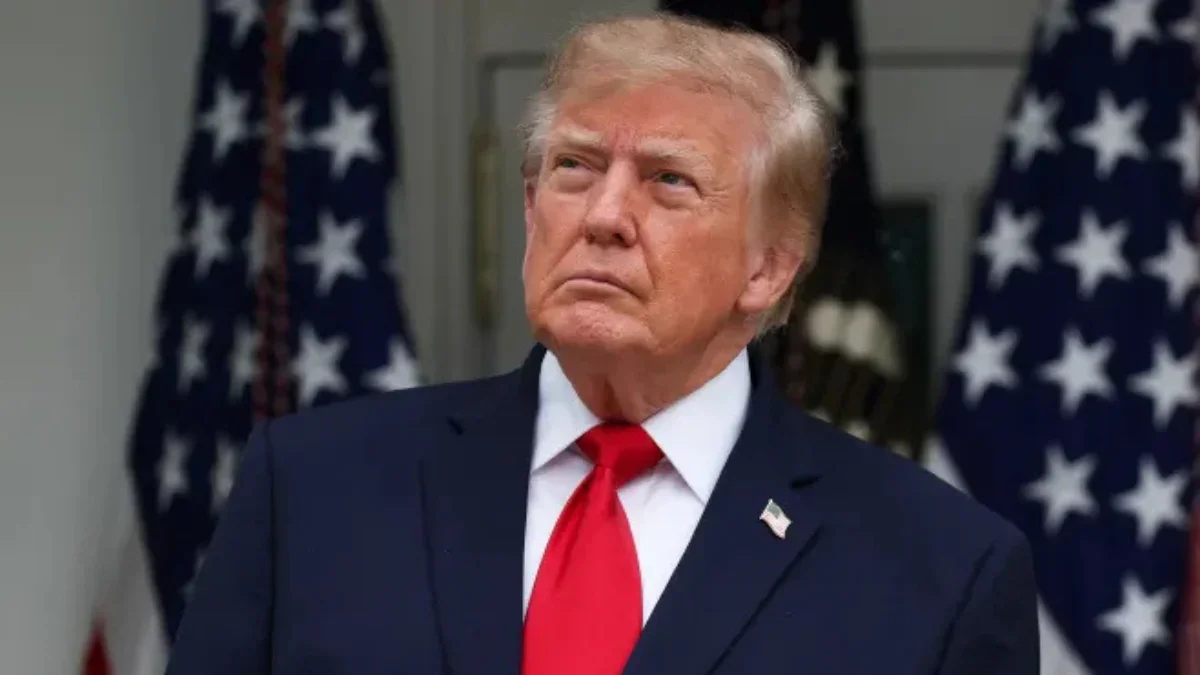
US President Donald Trump stated that he does not foresee deploying American ground forces or resorting to nuclear weaponry in the escalating situation involving Iran. Simultaneously, security forces in the Middle East remain on high alert as the Saudi-led military coalition confirmed the interception of a hostile aerial threat directed toward critical infrastructure in Saudi Arabia’s Eastern Province.
What Did Donald Trump Announce Regarding US Military Operations?
President Donald Trump directly addressed public concerns regarding potential American involvement in large-scale combat operations in Iran. Speaking on military engagement strategies, Trump made it clear that deploying boots on the ground is highly unlikely, emphasizing a deliberate effort to avoid an invasive ground force model that characterized previous regional conflicts.
Furthermore, the President explicitly ruled out the use of tactical or strategic nuclear weapons against Iranian targets. He reiterated that conventional defense mechanisms and deterrence capabilities remain fully sufficient to address current threat vectors, mitigating fears of extreme escalations while reinforcing American military readiness.
Why Is the Saudi Interception Significant for Regional Defense?
In a parallel development, the spokesperson for the Saudi-led coalition announced that coalition defense systems detected, targeted, and successfully destroyed an incoming drone. The unmanned aerial vehicle was directed toward Saudi Arabia’s oil-rich Eastern Province, a critical center for global energy supply.
The successful air-defense operation highlights the persistent tactical security risks threatening regional stability across the Arabian Peninsula. Military units operating integrated air and missile defense systems continue to shield civilian population zones and strategic economic sites from asymmetric aerial strikes.
Who Are the Primary Actors and What Threat Vectors Exist?
The primary actors engaged in these security operations include the United States Armed Forces, the Saudi-led military coalition, and defensive counter-drone units active across the region. Countering these operations are regional armed groups and Iranian-backed entities utilizing long-range unmanned aerial systems and specialized missile technology.
The primary threat vector remains asymmetric warfare—specifically cheap, long-range attack drones designed to evade standard radar capabilities and strike crucial industrial zones. By coordinating international monitoring efforts and defense responses, the regional security apparatus aims to intercept these aerial threats before they impact energy security or civilian infrastructure.
How Does Strategic Air Defense Protect Economic Stability?
The proactive deployment of anti-air defenses plays a essential role in safeguarding economic infrastructure across the Gulf region. The Eastern Province of Saudi Arabia houses major petroleum reserves, processing plants, and marine shipping hubs vital to worldwide commerce.
A successful unmanned strike on these facilities could cause volatile fluctuations in global oil markets and disrupt trade pipelines. Consequently, the rapid neutralization of incoming air threats by coalition forces prevents economic shocks and stabilizes energy distribution networks worldwide.
Where Will US Policy and Coalition Strategy Move Next?
Looking ahead, international policy will likely emphasize diplomatic pressure, severe targeted sanctions, and strategic aerial deterrence rather than ground invasions. By ruling out both nuclear weapons and land-based troop deployments, the United States signals a defense strategy focused on high-tech standoff capabilities, intelligence sharing, and targeted actions.
Concurrently, the Saudi-led coalition is expected to reinforce coastal and inland radar surveillance, expanding quick-reaction air defense forces around vulnerable assets. Global powers continue to track these developments closely to preserve international maritime navigation, maintain airspace security, and prevent regional hostilities from escalating into a wider international confrontation.